RevOps & Stack
What confidence scores in AI sales tools actually tell you
What a confidence score in an AI sales tool measures, what moves it, how reps should act on high and low scores, and red flags when vendors hide uncertainty.
By Rishi Patel, Founder & CEO, RevSage.ai · · 6 min read
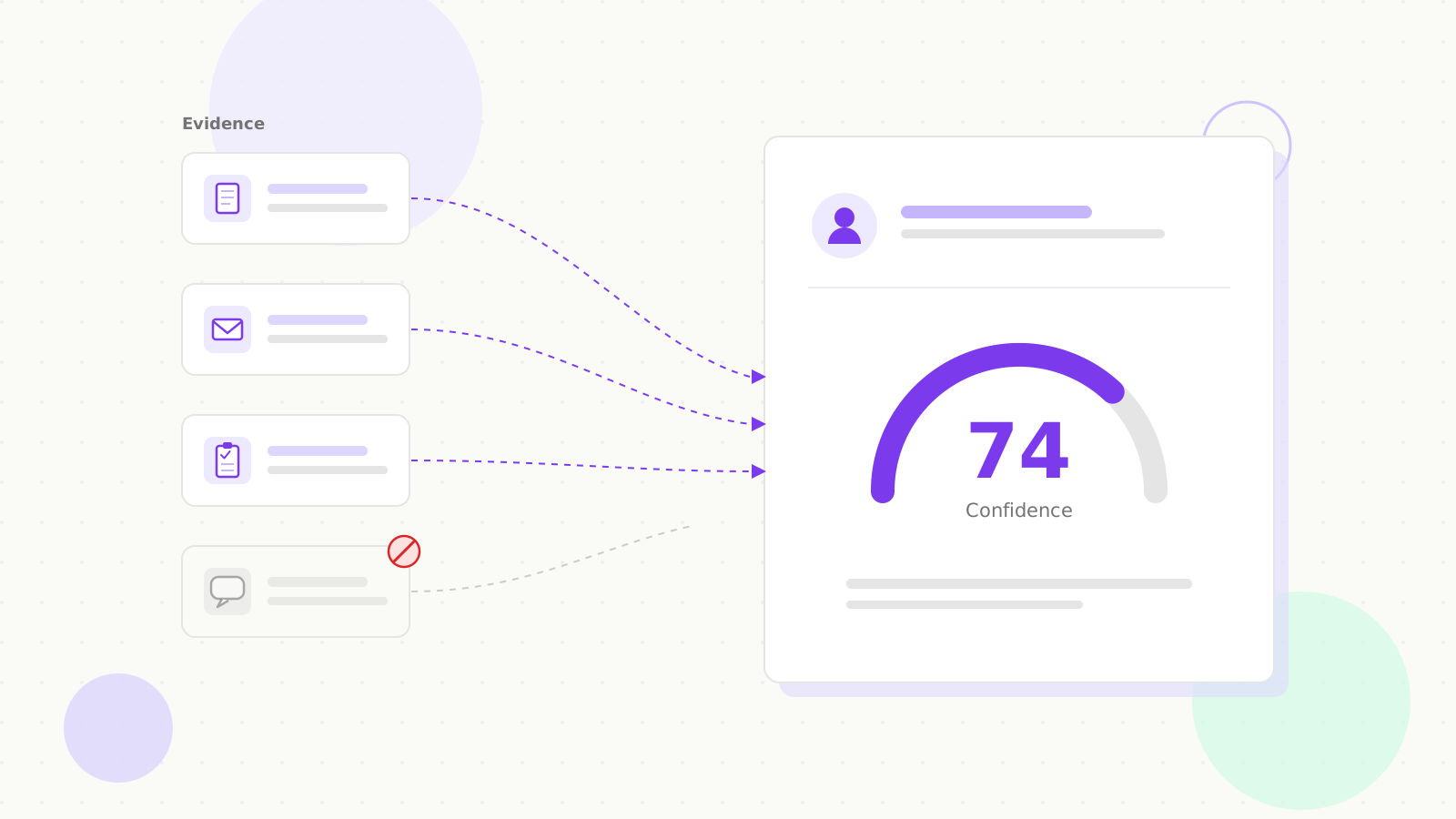
A vendor demo last year told me a prospect was "a results-oriented decision maker motivated by innovation." I asked how confident the model was in that. The founder said the profiles were very accurate. I asked what would make one wrong. He moved to the next slide.
That exchange, more than any missing feature, is why reps stop trusting AI sales tools. The output arrives as flat certainty, and the first time flat certainty is flatly wrong, the rep discounts everything the tool says afterward. Fair enough, honestly.
I build in this category, so I have opinions and a conflict of interest, and I'll be specific about both: what a confidence score actually measures, what moves it, how to use it, and what its absence tells you about a vendor.
Key takeaways
- Most AI sales tools present outputs with no uncertainty attached, and one visibly wrong "certain" claim destroys rep trust in everything after it.
- A confidence score measures the evidence behind a claim: volume, consistency, and confirmation. It says nothing about whether the deal will close.
- Scores should rise with more data, assessment data, and behavioral confirmation in the live deal, and fall when signals are thin or conflicting.
- Use high confidence as a green light to act. Use low confidence as a hypothesis to test on the next call.
- A vendor who never communicates uncertainty is usually telling you the marketing team outran the engineering team.
Flat certainty is how tools lose reps
AI sales tools mostly write in the declarative. Sarah is analytical. Lead with ROI. This deal is at 72%. No hedge, no source, no sense of what would make the claim wrong.
Reps aren't naive about this. The first thing a skeptical rep does with a profiling tool is point it at an account they know cold. Some claims come back right, and some come back wrong, and every one of them arrives wearing the same confident voice. Since right and wrong are indistinguishable until reality grades them, the rational response is to discount everything, and that's exactly what reps do.
Weather forecasting solved this problem decades ago. Nobody abandons the forecast because a 30% chance of rain stayed dry, because the number taught you how to weight it. AI sales tools that skip the number also skip the mechanism that lets a user keep trusting them after a miss.
What a confidence score actually measures
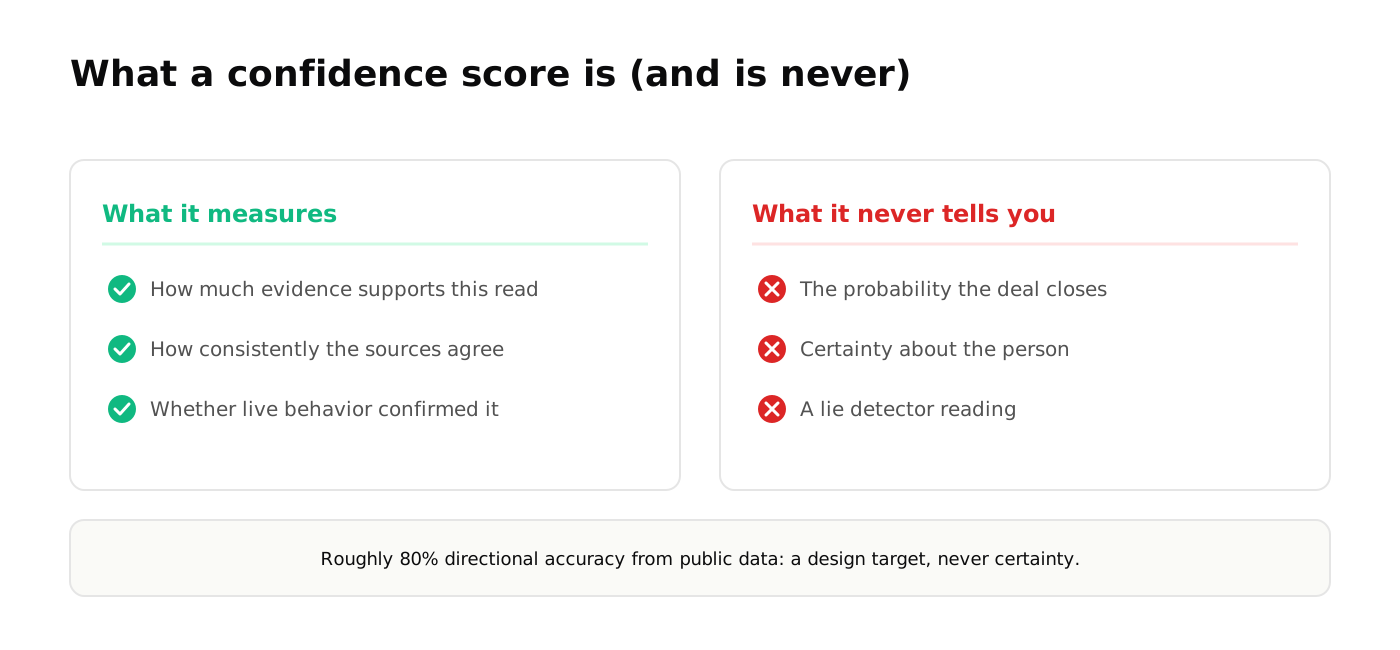
A confidence score attached to a buyer profile or a recommendation answers one narrow question: how strong is the evidence behind this specific claim?
The claim in question is usually a read on how a stakeholder decides, the kind of profile we cover in the field guide to buyer psychology. The score is evidence weighting on that read: how much source material exists, how consistently it points one way, and whether anything in the live deal has confirmed it.
Two things it does NOT measure, and both get assumed constantly.
It does not estimate the probability the deal closes. Deal scoring is a separate discipline with different inputs. An 85 on a stakeholder profile means the read on that human is well supported. The deal can still die for a dozen reasons the profile has no view of.
And it is never a lie detector. A 90 doesn't mean the person can't surprise you on Thursday. It means the available evidence points one way with unusual consistency. People stay people.
What moves a score up or down
Three inputs do most of the honest work.
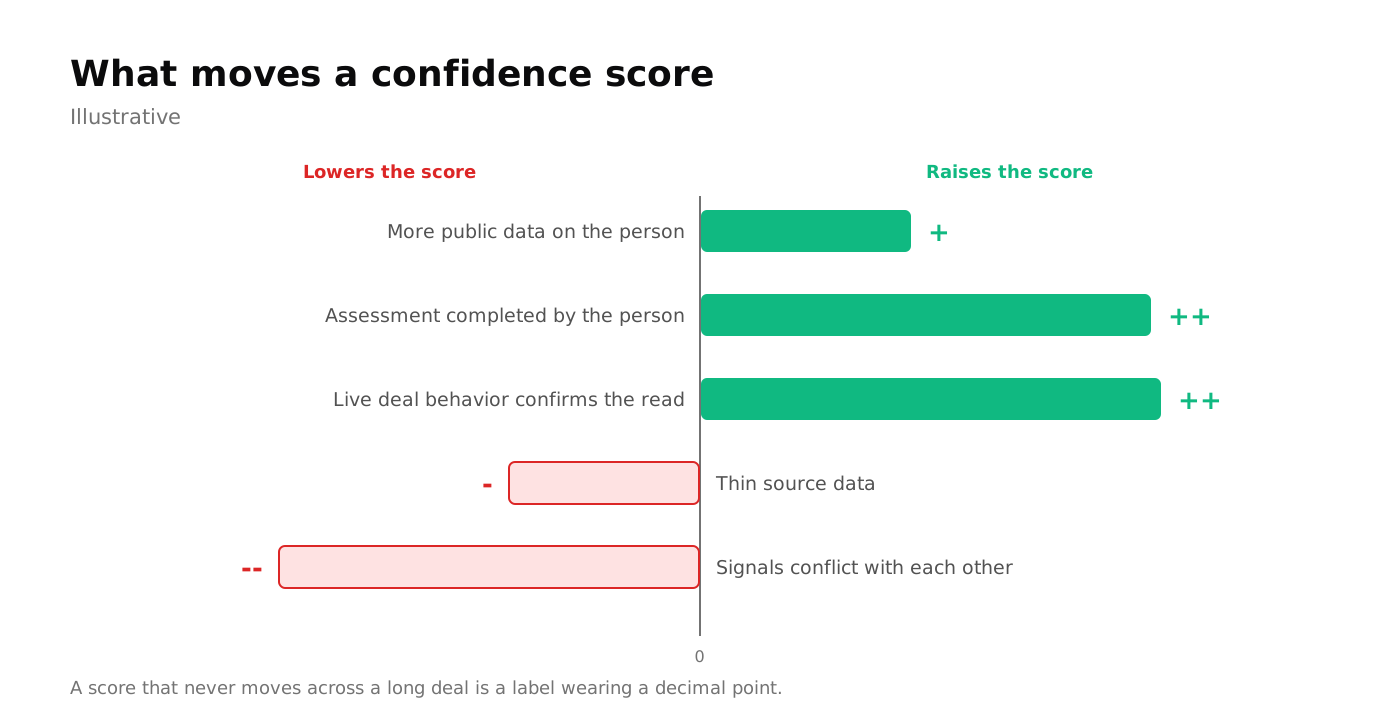
Data volume. A profile assembled from years of public writing, talks, and posting history starts from far more evidence than one built off a two-line LinkedIn bio. More raw material means more support, which means a higher starting score. Thin material should produce a visibly low one.
Assessment data. When the actual person completes an assessment, inference gets replaced by self-report. Scores should jump when that lands, and a tool that doesn't distinguish inferred data from assessed data is blending two very different grades of evidence and hiding the blend from you.
Behavioral confirmation in the live deal. The strongest evidence is the deal itself. The read said this buyer moves fast on short emails with a number in them. You sent one. They replied in nine minutes. That's a prediction surviving contact with reality, and the score should move on it. Conflicting behavior should drag it down just as visibly.
The corollary is worth stating: a score that never moves across a three-month deal is a label wearing a decimal point. Real evidence accumulates, agrees, and argues, and an honest score shows the argument.
How reps should use the number
The operating rule I give teams is two-sided and simple.
High confidence: act. Take the recommended angle, use the suggested channel, spend your prep time somewhere else. High-confidence reads are where the tool pays for itself, because they compress hours of research you'd otherwise do by hand into a decision you can make in seconds.
Low confidence: treat it as a hypothesis. A 45 on "this stakeholder is risk-averse and will want references" is an invitation to probe, so probe it. Ask the question whose answer confirms or kills the read. You're doing discovery anyway. Low-confidence reads just make it targeted.
What you never do with a low-confidence read is recite it as fact. "I know you prefer data-driven decisions" delivered to someone who doesn't is worse than no personalization at all, and it's the classic failure mode of personality-based selling run off thin evidence.
This split matters most where scores attach to recommended actions, because acting on a wrong read costs real deals. It's why I treat visible confidence weighting as a core requirement for next best action software as a category, not a nice-to-have.
The honest limits
Since my company builds these systems, here's exactly how we frame ours at RevSage. A profile built from public data targets roughly 80% directional accuracy, and we treat that number as a design target, never a certainty about any individual. Assessment data raises it. Live behavior sharpens it. None of it ever becomes a lie detector.
"Directional" is the load-bearing word. A directional read tells you which opening is more likely to land, which stakeholder probably needs references, which channel usually gets a reply. Used that way, being right most of the time compounds into a real edge across a pipeline. Used as gospel on any single human, the same read fails ugly on the exceptions, and every pipeline contains exceptions.
Red flags when evaluating vendors
When you're evaluating AI sales tools, uncertainty communication is the fastest integrity test available. Three questions expose it.
Ask what the confidence score means. If the answer can't cleanly separate evidence quality from close probability, the number is decoration on the interface.
Ask what makes a score go down. A team that engineered for conflicting signals answers instantly, with examples. A team that didn't will improvise, and you can hear the improvisation.
Ask to see a low-confidence output. Every honest system produces them constantly, because thin-data prospects are everywhere. A vendor who can't show you one is telling you the product never admits it doesn't know, which means you'll be finding its blind spots with your own deals.
A product with no uncertainty communication anywhere usually means marketing outran engineering. The engineers know precisely how uncertain these models are. Whether the interface tells you is a values decision, and it predicts how that vendor will behave about everything else in the relationship.
Calibration is the point
The purpose of a confidence score is calibration: over time, the 80s should be right far more often than the 50s, and a user should be able to see that pattern hold.
When it does hold, something changes in how reps work. They stop asking whether to trust the tool and start asking how much, claim by claim. That's the right question to ask of any intelligence source, human or machine. A vendor who builds so you can ask it is a vendor expecting to be checked, and in this category, that's the one worth shortlisting.
Frequently asked questions
- What does a confidence score mean in an AI sales tool?
- It measures the evidence behind a specific claim: how much data supports it, how consistent that data is, and whether live behavior has confirmed it. It does not estimate the probability a deal closes, and it never means certainty about a person. A high score means the read is well supported, and nothing more.
- Can you trust AI sales recommendations?
- Trust them in proportion to their communicated confidence. Treat high-confidence recommendations as a green light worth acting on, and low-confidence ones as hypotheses to test with a targeted question on the next call. A tool that presents everything with equal certainty has removed your ability to do this, which is itself a reason for caution.
- What makes an AI confidence score go up or down?
- Up: more source data on the person, assessment data the person provided directly, and behavioral confirmation in the live deal, where the stakeholder responds the way the read predicted. Down: thin data and conflicting signals. A score that never moves across a long deal is a decoration, because real evidence accumulates and argues.
- How accurate are AI buyer profiles?
- The honest framing is directional intelligence that sharpens over time. At RevSage we target roughly 80% directional accuracy from public data as a design target, higher when the person completes an assessment, and we treat none of it as certainty about an individual. Any profile presented as a lie detector is being oversold.
About the author
Rishi Patel, Founder & CEO, RevSage.ai. Rishi has spent 11 years building and scaling B2B SaaS companies, most of it obsessing over why some reps consistently read buyers right and most don't. He founded RevSage to give every rep the buyer intuition of their best teammate.