Pipeline
A next step without an owner and a date is a wish
Deals rarely die from bad meetings. They die from good meetings that end with nothing enforceable. The anatomy of a next step that actually happens.
By Rishi Patel, Founder & CEO, RevSage.ai · · 6 min read
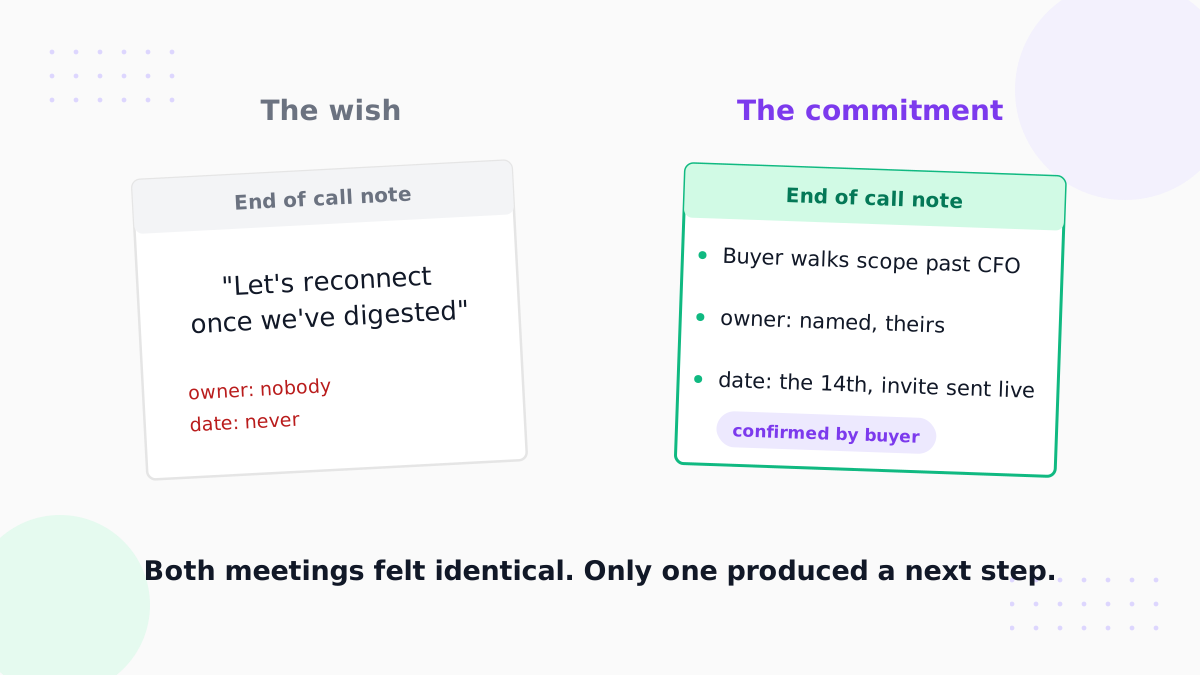
The most dangerous meeting in a sales cycle is a good one that ends warmly and produces nothing enforceable.
You know the ending I mean. Energy's high, the demo landed, everyone's nodding. Someone says "this is great, let's reconnect once we've had a chance to digest." The other side says "absolutely, we'll look everything over and circle back." Smiles, waves, leave. Everyone involved would swear the deal advanced.
Then look at what actually got created in those closing seconds: an action ("reconnect") with no owner, no date, and no definition of what "digest" means or when it ends. Three weeks later this deal is in your stall column and the CRM note says "waiting to hear back." Nobody is lying. There was simply never anything to hear back about.
Key takeaways
- An enforceable next step has four parts: a specific action, a named owner, a date, and the buyer's confirmation. Each missing part quietly converts commitment into intention.
- "We'll circle back" and "let's reconnect soon" are wishes. They feel like progress in the room and evaporate within days on both sides.
- The deals most at risk are the ones whose most recent call ended with zero owned-and-dated steps. That's a checkable condition, and it's worth checking weekly.
- Conditional steps ("if you decide to move forward...") and steps delegated to someone who wasn't on the call can't carry real dates. Treat both as unowned until proven otherwise.
- A calendar action taken during the call beats any promised follow-up. Book it while everyone's still in the room.
The anatomy of a step that actually happens
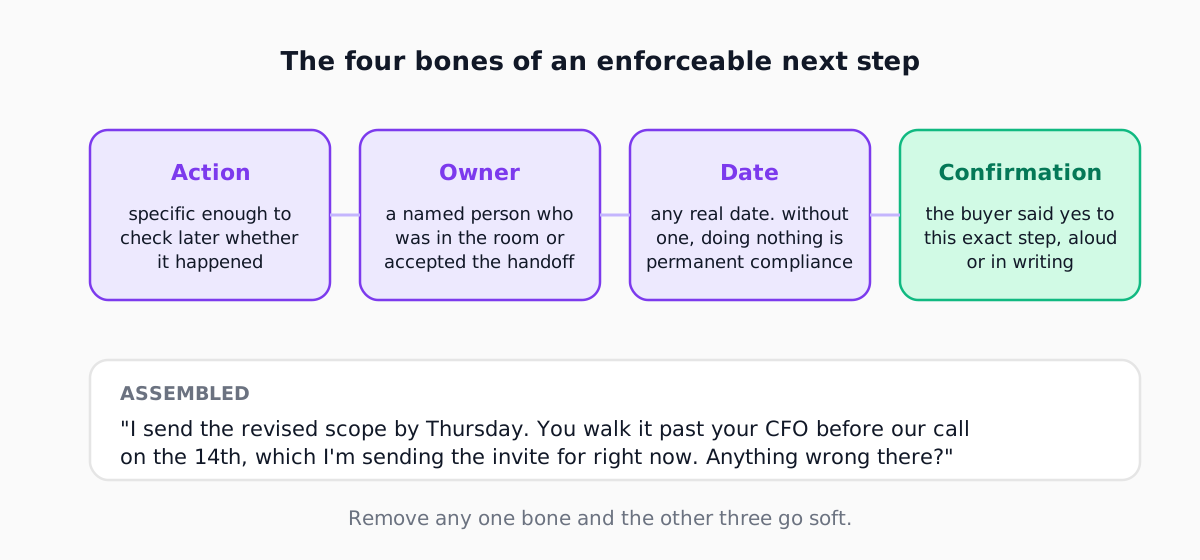
Strip any completed next step down and you'll find the same four bones.
A specific action. "Review the proposal" is weaker than "review the proposal's pricing section with your CFO." Specificity is what lets everyone later agree on whether the thing happened.
A named owner. A person, with a name, who was in the conversation or has explicitly accepted the handoff. "The team will look at it" means no individual has agreed to do anything.
A date. Any date. A generous date is fine. "By end of next week" works. What doesn't work is the absence of time, because an owner with no deadline is in permanent compliance while doing nothing.
The buyer's confirmation. Said out loud or in writing, by them. A step only you articulated is a plan you have for their company. Those have a low completion rate.
The magic is that the four parts reinforce each other. A date makes the owner accountable. An owner makes the date credible. The confirmation makes both of them mutual. Remove one bone and the others go soft too.
Where wishes come from
I don't think reps produce wish-steps out of carelessness. The mechanics of the end of a call practically manufacture them.
The warmth trap
Asking for a concrete commitment introduces a moment of friction into a conversation that's going well. "Can we put thirty minutes on the calendar for the 14th right now" risks a no, or a "let me check," and it interrupts the glow. So the ask gets softened to something that can't be refused, and the reason it can't be refused is that it doesn't ask for anything. The warmth was real. It just never got converted into anything that survives contact with Monday morning.
The conditional step
"If you decide to go ahead, we'd kick off with your ops team." Perfectly reasonable sentence, and completely inert as a next step, because the trigger belongs entirely to the buyer's internal process. A conditional can't carry a date. When you hear yourself agreeing to one, the actual next step is upstream of the condition: what would it take to make the decision itself, and when, and with whom?
The absent owner
Late in a deal, buyers often route execution to someone who wasn't on the call: "our procurement person will pick this up from here." Note what just happened to your four bones. The new owner never confirmed anything, never heard the context, and inherited no date. The step left the room with nobody carrying it. The recovery is to keep a bone in the room: "great, and can you introduce us by Thursday so we can get time with them next week?"
The end-of-deal collapse
Here's the pattern that shows up over and over in stalled-deal reviews: the final recorded call of the deal is the one with zero owned-and-dated steps. Mid-deal calls tend to end with logistics because there's an obvious next meeting. The late-stage call, where the buyer says they'll "take it from here" or "review everything internally," is exactly where discipline evaporates, and it's the worst possible place for it. If the last thing that happened in a deal produced no enforceable commitment from anyone, that deal isn't waiting. It's over, and no one has said so yet. I covered the longer arc of this decay in why deals stall.
The five-minute discipline
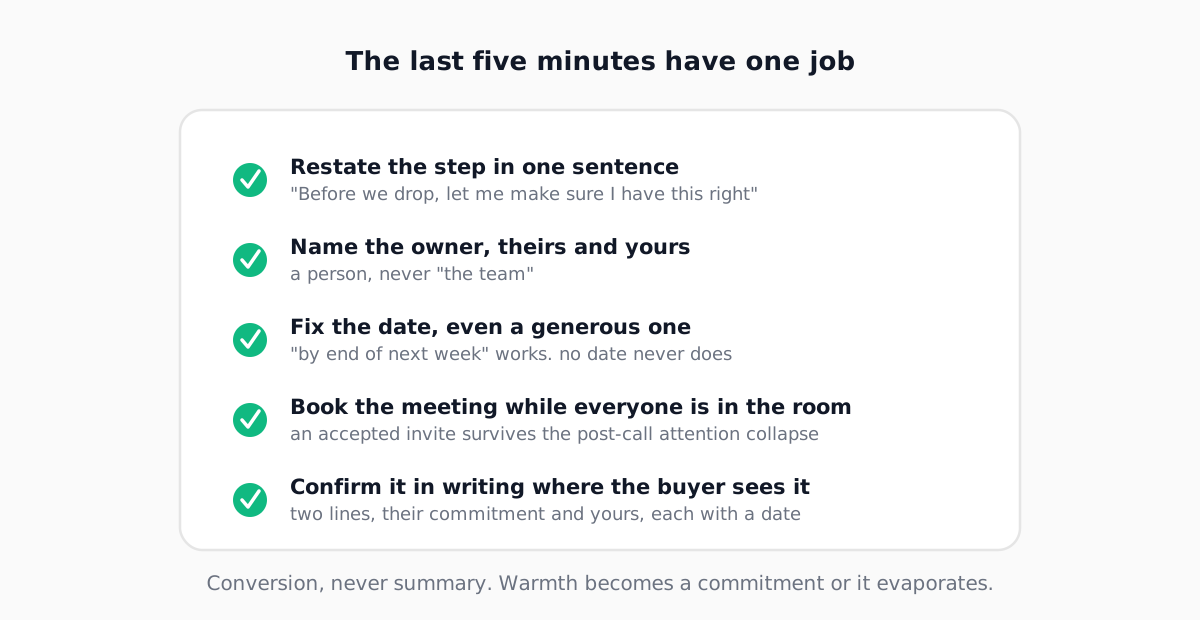
Everything above gets prevented in the last five minutes of the call, which is why I treat those minutes as a distinct phase with its own job. Not summary. Conversion.
The move is to restate, sharpen, and get a yes:
"Before we drop, let me make sure I have this right. I'm sending the revised scope by Thursday. You're walking it past your CFO before our call on the 14th, which I'll send an invite for right now. Anything I've got wrong?"
Notice the invite goes out during the call. A meeting accepted while everyone's in the room survives the attention collapse that follows every call. A meeting promised over email has to win a fight against two inboxes. Ebsta and Pavilion's GTM benchmark research has repeatedly found that faster, structured follow-through correlates with win rate, but honestly you don't need a benchmark for this one. Compare your own show rates for meetings booked live versus meetings "coordinated later." I've never seen the comparison come out close.
When the buyer's version is vague, offer the sharp version and let them accept it. Vagueness is usually habit. Most buyers, handed "so, review with your CFO by the 14th?" will simply say yes, and mean it more than they meant "we'll digest and circle back."
And then put the confirmed step in writing where they can see it. A two-line note, their commitment and yours, each with a date. The point of writing it down where the buyer can see it is that the absence of pushback becomes agreement, and the step acquires a paper trail. My deeper breakdown of what to send between meetings is in the follow-up strategy piece, but the two-line version beats nothing by a mile.
Auditing your pipeline for wishes
Here's an exercise that takes an hour and reliably hurts. Go through every active deal and ask one question: does the most recent interaction end in a step with all four bones, action, owner, date, confirmation?
Sort your pipeline into deals that pass and deals that don't. In my experience the failing group is bigger than anyone expects, and it overlaps heavily with the deals already flagged as "slipping." That overlap is the point. The wish-step didn't accompany the stall. It preceded it, predictably, and it was visible in the call itself weeks before the stage field ever moved.
This audit is mechanical, which means it's automatable. RevSage does this continuously as part of its live root-cause analysis on every deal: it reads each call, extracts every stated next step, checks it for an owner and a date, verifies whether earlier steps actually got completed, and flags the deals whose forward motion rests on nothing enforceable. The rep gets the flag, the quote, and a drafted confirmation note while there's still time to convert the wish into a commitment.
The habit stands on its own, though, tooling or not. Deals run on commitments. Wishes are what commitments look like when nobody wants to risk the warmth of a good meeting, and the pipeline doesn't distinguish between the two until it's too late to matter. End every call with the four bones and you'll feel slightly pushier for about a week. After that, you'll just notice fewer deals mysteriously going quiet.
Frequently asked questions
- What makes a sales next step enforceable?
- Four elements: a specific action, a named owner, a date, and the buyer's explicit confirmation. Remove any one of them and the step loses its ability to generate follow-through. An action with no owner belongs to nobody, an owner with no date can comply forever by doing nothing yet, and a step the buyer never confirmed was only ever your plan, not theirs.
- Why do deals stall even after positive sales calls?
- Because warmth and momentum are different things. A call can feel excellent and still end with nothing enforceable: a mutual intention to reconnect, owned by nobody, due never. Stalls that get blamed on ghosting or timing very often trace back to the final five minutes of a good call where no one converted goodwill into a commitment.
- Should you book the next meeting during the current sales call?
- Yes, whenever the next step is a meeting. A calendar invite accepted during the call is worth more than any promised email, because it survives the post-call attention collapse on both sides. The moment of highest mutual commitment in the whole cycle is while everyone is still in the room.
- What should you do when a buyer gives a vague next step?
- Restate it back with a proposed owner and date, and ask a question that can only be answered yes or no. Something like: so I'll send the revised scope by Thursday, and you'll review it with your CFO before our call on the 14th, right? Vagueness usually reflects habit rather than evasion, and buyers generally accept the sharper version when offered.
About the author
Rishi Patel, Founder & CEO, RevSage.ai. Rishi has spent 11 years building and scaling B2B SaaS companies, most of it obsessing over why some reps consistently read buyers right and most don't. He founded RevSage to give every rep the buyer intuition of their best teammate.