Buyer Psychology
Buyer Psychology in B2B sales: A Field Guide for Revenue Teams
Why B2B buyers decide emotionally and justify rationally, how committees really buy, and the behavioral signals top reps read to win deals.
By Rishi Patel, Founder & CEO, RevSage.ai · · 9 min read
Most of the B2B deals I've watched die didn't die in a meeting. They died between meetings, in a Slack thread the rep never saw, when someone on the buying side asked whether the team was really sure about this and nobody had a good answer ready.
After 11 years building and scaling B2B SaaS companies, I've stopped believing the tidy story we tell about enterprise buying. The story goes like this: buyers gather requirements, score the vendors against them, and pick the highest number. That version exists in procurement templates. It almost never describes the deal you're working right now.
The real version is messier and more human. Buyers decide with their gut, then build a spreadsheet to defend the decision. Committees converge on whatever feels safest and call it strategy. The reps who win consistently are reading those dynamics in real time while everyone else is updating the CRM.
Here's what I've learned about how buyers actually decide, and what to do about it this week.
Key takeaways
- Buyers form an emotional preference early and construct the rational case afterward. Sell to the preference, then arm the justification.
- Your fiercest competitor is inertia. The research behind The JOLT Effect found 40 to 60% of qualified deals end in no decision.
- Complex purchases are decided by groups of six to ten people in rooms you'll never enter. Your champion sells there, so equip them.
- Behavior leaks intent. Response latency, channel choice, and question types tell you where a deal stands before the forecast call does.
- Top reps change the play per buyer. The approach that wins an impatient operator quietly kills the deal with a methodical analyst.
Buyers decide first and justify second
I've sat in hundreds of deal reviews, and the most useful question I ask is never about the business case. I ask the rep what the champion personally gains if the project succeeds. When the rep can't answer, the business case is decoration.
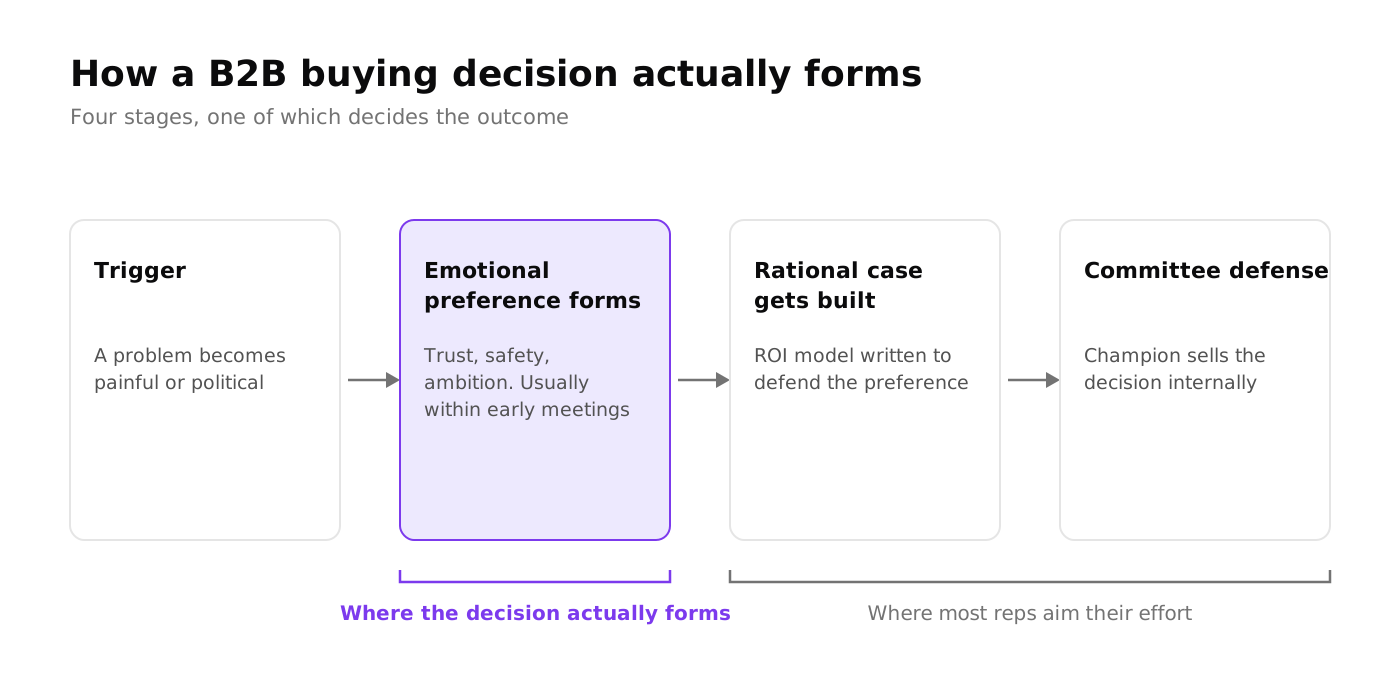
B2B buying decisions form the way most human decisions form: as a feeling of confidence or unease that arrives before the analysis does. The buyer meets you, watches how you handle a hard question, imagines defending you to their boss, and somewhere in there a preference quietly hardens. The ROI model gets built afterward, by someone who already knows what answer they want it to produce.
You can watch this happen if you pay attention. A buyer who has emotionally committed asks questions that help them justify the purchase: implementation timelines, security reviews, contract terms. A buyer who hasn't asks questions that keep their options open. The questions are the tell. Listen for whether this person is gathering reasons to move or reasons to wait, because the two sound nothing alike once you start sorting for them.
Two tactical consequences follow.
First, sell to the feeling. The feeling is usually some mix of relief (this problem could finally go away), safety (this vendor won't embarrass me), and ambition (this project could get me promoted). Speak to those directly. "If this works, you're the person who fixed onboarding" lands harder than any feature list.
Second, arm the justification. Once the preference exists, your champion needs ammunition to defend it: a one-page summary, a cost model they can edit, answers to the three hardest questions they'll face. The spreadsheet's job is to make a decision that has already formed feel safe to say out loud.
Status quo bias kills more deals than competitors do
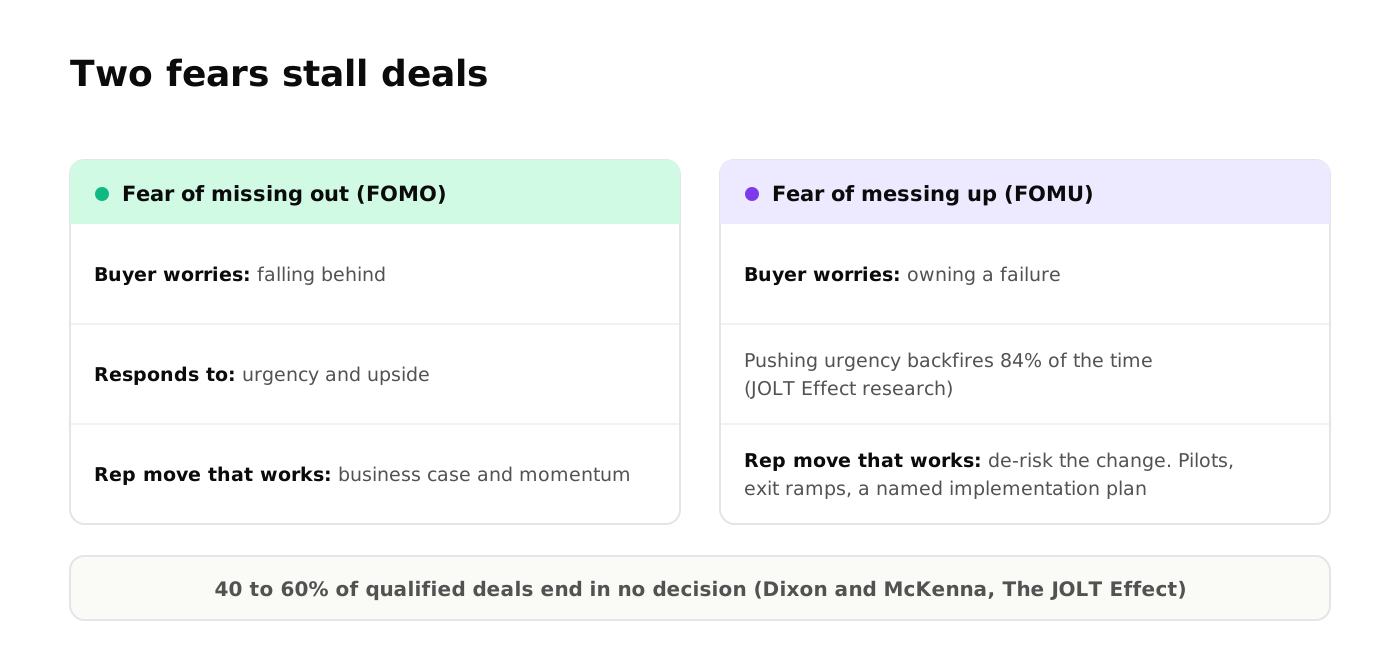
Check your closed-lost reasons from last quarter. I'd wager "no decision" beats any single competitor, and the research agrees. Matt Dixon and Ted McKenna's analysis of two and a half million sales conversations found that 40 to 60% of qualified deals are lost to no decision.
The standard explanation says buyers love their current tools. The data disagrees. Most of those no-decision losses traced to indecision: buyers who agreed change was needed and still couldn't pull the trigger, because the fear of messing up outweighed the fear of missing out.
Behavioral economics predicted this decades ago. Kahneman and Tversky's work on loss aversion showed that losses weigh roughly twice as heavily as equivalent gains in human judgment. So a buyer never weighs your upside against the incumbent's downside on a fair scale. The potential loss (a botched rollout, a credibility hit, a wasted budget cycle) gets double weight.
Here's where most teams get it wrong: when a deal wobbles, reps instinctively turn up the urgency and re-pitch the benefits. Dixon's data shows that move backfires 84% of the time. You can't FOMO a buyer out of FOMU.
What works instead is de-risking the change itself:
- Shrink the first step. A 30-day pilot with one team beats a company-wide commitment.
- Show them the exits. Month-to-month terms and a clear off-ramp make saying yes cheaper.
- Make the path boring. A named implementation owner and a week-by-week plan remove imagination, and imagination is where fear lives.
- Offer your judgment. What an indecisive buyer wants is a confident recommendation from someone who has watched this movie before.
Stalled deals deserve their own playbook, and I've written one in why deals stall.
How buying committees actually decide
Gartner puts the typical buying group for a complex B2B purchase at six to ten decision makers, each arriving with research they gathered on their own. The same work finds buyers spend just 17% of their journey meeting with potential suppliers. That's all suppliers combined. With three vendors in the running, your slice is a rounding error.
So the decisive conversations happen without you. Plan for that instead of resenting it.
The committee dynamic that matters most: groups converge on the most defensible option, which is rarely the same thing as the best one. Every member is partly optimizing against being blamed later. Understand what each role fears and you can read the whole room.
| Committee role | The question they're really asking | What they fear |
|---|---|---|
| Economic buyer | What does this do to my budget and my credibility? | Owning a visible failure |
| Champion | Will this make my career or burn my political capital? | Backing a loser |
| Technical evaluator | Will this break what we already run? | Getting paged at 2 a.m. |
| End users | Does this make my week lighter or heavier? | Another tool to babysit |
| Procurement | Where is the leverage, and where is the risk? | Signing a bad contract |
Your champion is your proxy in every internal meeting. Most reps hand them a deck and hope. Better: rehearse them. Spend twenty minutes before the big internal review asking what the hardest question will be, then draft the answer together. I've seen that single habit rescue more committee deals than any pricing concession.
The signals buyers leak between meetings
Buyers tell you where the deal stands constantly. Just rarely in words.
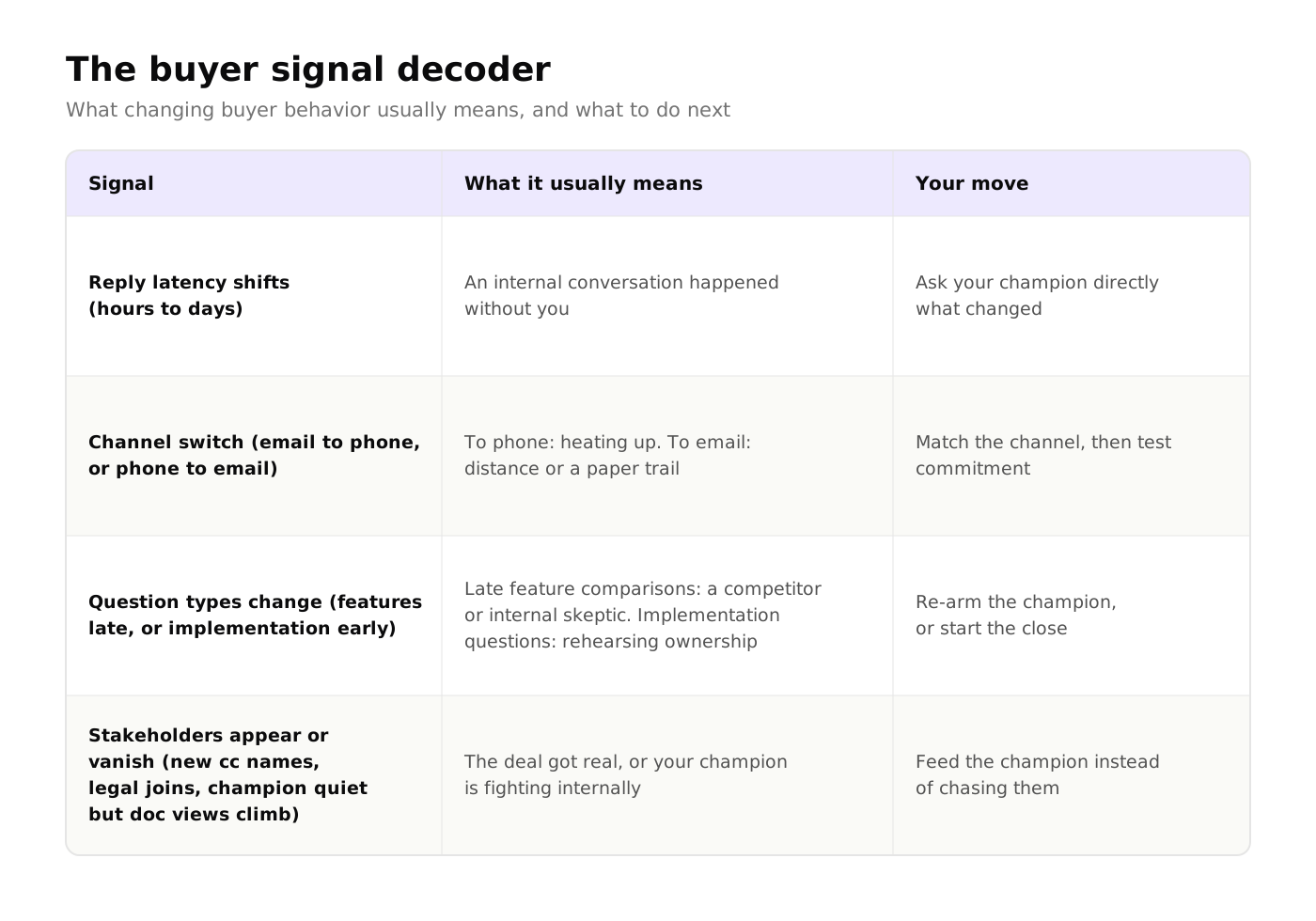
Four signal families are worth tracking on every active deal:
Response latency. Absolute speed means little; shifts mean everything. A champion who replied within an hour for three weeks and now takes two days has had an internal conversation you weren't part of.
Channel choice. A buyer who moves you from email to phone is heating up, because phone feels committal. A buyer who answers your calls with emails is creating distance, or creating a paper trail. Both are worth knowing.
Question types. Feature questions early are healthy curiosity. Feature comparisons late usually mean a competitor entered, or a skeptic inside the committee is forcing your champion to re-justify the pick. Implementation, security, and contract questions are the sound of a buyer rehearsing ownership.
Stakeholder behavior. New names on the cc line mean the deal got real. Legal showing up is progress. A champion who goes quiet while your proposal doc shows fresh views is fighting for you internally, so feed them instead of chasing them.
Reading one buyer this way is craft. Reading every buyer across a 150-account book is arithmetic no rep has time for, which is candidly why we built RevSage.ai: it assembles public signals and engagement behavior into a psychology dossier per buyer, then suggests the next message and channel. One note, because I'm allergic to overclaiming: profiles built from public data are directional, roughly 80% accurate as a design target, and they sharpen as the buyer interacts. Anyone who promises certainty about another human being is selling you something worse than nothing. We've written more about what signal data can and can't tell you in our overview of buyer intelligence.
Top reps run a different play for every buyer
The best rep I ever worked with closed at roughly double the team average, and her calendar explained it. Before every first call she'd skim the buyer's LinkedIn activity and prior emails, then write one sentence at the top of her notes: a prediction about how this person decides. "Wants the bottom line in five minutes." "Will need to see the methodology." Then she'd test the prediction early and adjust.
That habit of adapting the play to the buyer separates top performers more cleanly than product knowledge or hustle. Most methodologies skip it entirely. MEDDIC tells you what to learn about the deal. It says almost nothing about how this specific human prefers to receive information, and that second part decides whether your perfectly qualified deal actually closes.
Pace is the most common mismatch I see. Reps who push a deliberate buyer create suspicion, and reps who slow down a decisive one create boredom. Either error feels, from the buyer's side, like being misread, and misread buyers stop returning calls.
The same behavioral patterns recur often enough that you can plan for them. I've mapped the four I see constantly, with the adjustments each one demands, in the four buyer types every B2B rep sells to.
Three frameworks to run this week
The two-minute pre-call read
Before any first meeting, skim public signals (LinkedIn activity, role history, how their emails read) and write a one-sentence hypothesis about how this buyer decides. Test it in the first ten minutes of the call. Being wrong is fine; forming and testing a read is the habit that compounds.
Ladder your discovery questions
Gong's analysis of over 500,000 sales calls found discovery works best with 11 to 14 targeted questions spread across the conversation, rather than a checklist sprint at the start. Ladder them: situation, then problem, then stakes, then personal stakes. "What happens to your team's quarter if this stays broken?" reveals more psychology than ten feature-fit questions. I keep a running list of discovery call questions organized by what each one reveals about the buyer.
Pre-mortem the no-decision loss
On any deal past stage two, ask your champion: imagine it's three months out and this initiative quietly died. What killed it? Buyers answer that question with startling honesty, and the answer is your real objection list. De-risk each item explicitly instead of waiting for it to surface in a room you're never invited to.
Read the buyer, then run the play
Process gets you to a qualified deal. Psychology gets you to a signature. The reps who hit number after number have simply stopped selling to a generic "decision maker" and started selling to the specific, loss-averse, committee-entangled human in front of them.
Pick one live deal today. Write down what the economic buyer is afraid of, who on the committee can veto, and what your champion needs to survive the next internal meeting. If you can't fill in those three blanks, you've found your next call. That's the whole discipline: read first, then sell.
Frequently asked questions
- Why are B2B buying decisions emotional if buyers use business cases?
- Buyers form a preference early, based on trust, perceived risk, and how a vendor makes them feel about their own judgment. The business case usually comes afterward, built to justify that preference to colleagues. Treat the spreadsheet as the defense of a decision and the meetings as the place where the decision actually forms.
- What is status quo bias in B2B sales?
- Status quo bias is a buyer's tendency to prefer doing nothing over making a change, even when the change looks better on paper. In pipeline terms it shows up as deals lost to no decision rather than to a competitor. Beating it means lowering the perceived risk of changing, because adding more benefits rarely moves a frightened buyer.
- What buyer signals should sales reps pay attention to?
- Watch shifts in response latency, the channel a buyer chooses, the kinds of questions they ask, and which stakeholders join or leave the thread. A buyer moving from feature questions to implementation questions is progressing. A champion whose replies slow from hours to days is telling you something changed internally.
- How do buying committees make B2B purchase decisions?
- Gartner research puts the typical buying group for a complex B2B purchase at six to ten people, and most of their deliberation happens in internal meetings the seller never attends. Committees tend to converge on the option that feels safest to defend, so equipping your champion to sell internally usually matters more than another demo.
About the author
Rishi Patel, Founder & CEO, RevSage.ai. Rishi has spent 11 years building and scaling B2B SaaS companies, most of it obsessing over why some reps consistently read buyers right and most don't. He founded RevSage to give every rep the buyer intuition of their best teammate.