Sales Execution
Zombie objections: why handled objections come back to kill deals
An objection that returns weeks after you handled it was never resolved, only deferred. Why re-answering fails and what to do when it rises again.
By Rishi Patel, Founder & CEO, RevSage.ai · · 6 min read
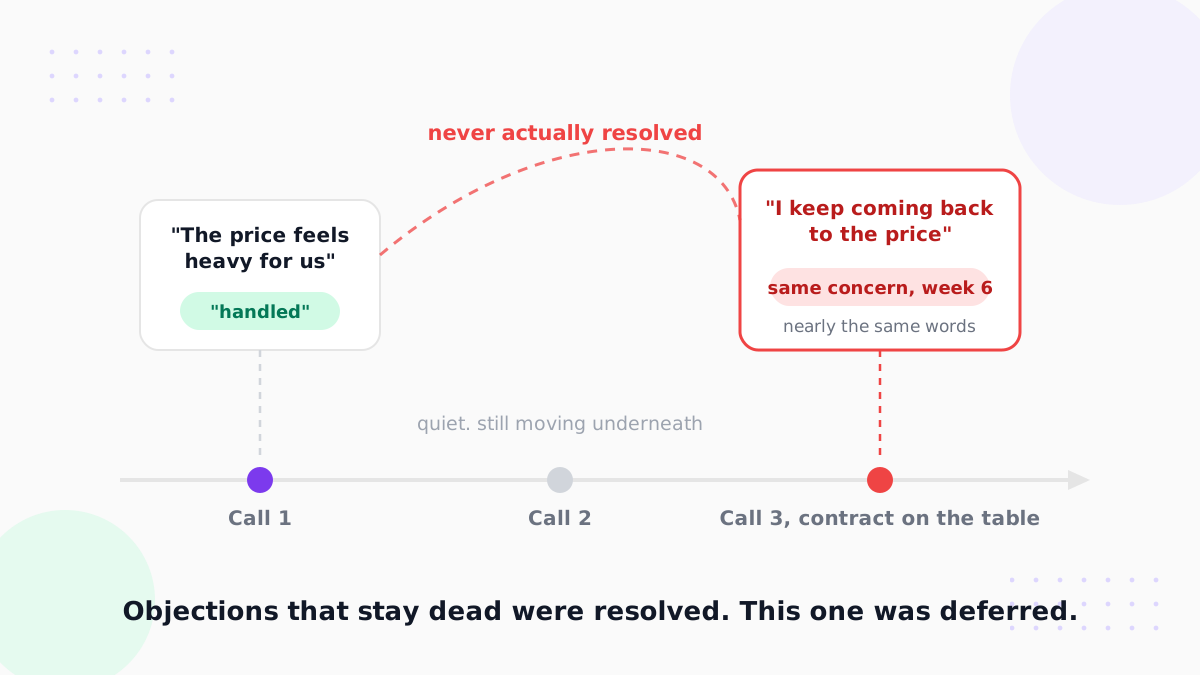
Every experienced seller has lived this one. The pricing concern from the first call, the one you answered so well that the buyer nodded and said "that makes sense," walks back into the room five weeks later. Same words, almost. Same concern, exactly. Except now it's sitting between you and a signature.
Objections that stay dead were resolved. Objections that come back were deferred. The buyer chose, probably without much conscious thought, to stop arguing rather than to agree. Those are different events that look identical in the moment, and the difference decides deals.
I think of the returning kind as zombie objections. Not because the buyer is being dishonest, but because the concern was never actually killed. It just went quiet, kept moving, and picked its moment.
Key takeaways
- An objection marked handled on one call that reappears on a later one was never resolved. The recurrence itself is the evidence.
- Buyers defer disagreements because agreeing is socially cheaper than arguing. "That makes sense" often means "I'd like to stop discussing this now."
- Recurrence in near-identical phrasing, unprompted, is the strongest form of the signal. The buyer has been rehearsing the concern internally between calls.
- The instinctive response, repeating your original answer louder and slower, is exactly wrong. The answer already failed once, on the record.
- The play that works is concession first: name the fact that your previous answer didn't land, then ask what would resolve the concern.
The moment of false resolution
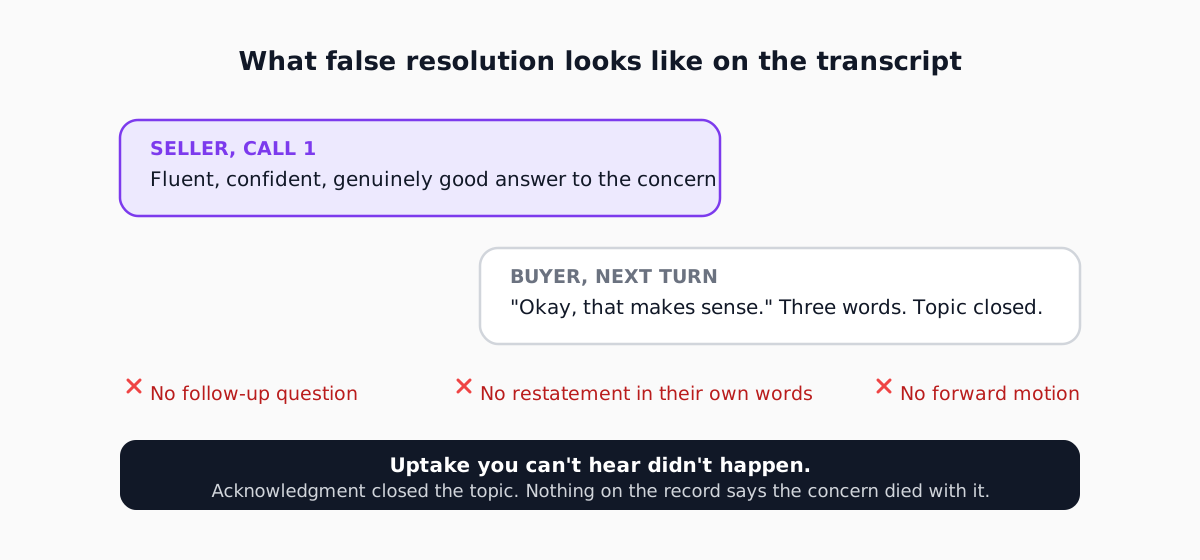
Watch a recorded call where an objection gets "handled" and you can usually see the machinery. The buyer raises the concern. The seller delivers a fluent answer, often a genuinely good one. And the buyer responds with a short acknowledgment: okay, fair enough, that makes sense.
That acknowledgment is doing a lot of load-bearing work in the seller's memory of the call. It gets logged, mentally or literally, as objection overcome. But look at what actually happened: the buyer's next turn was three words with no substance in it. No follow-up question. No restatement of the answer in their own words. No "so that means we could..." forward motion. Just a polite full stop.
Uptake you can't hear didn't happen. When a buyer genuinely absorbs an answer to something that worried them, they almost always do something with it: they test it, they extend it, they connect it to their situation. When they just close the topic, what you've usually witnessed is conflict avoidance. Arguing with a confident seller in a group call is expensive. Nodding is free.
I went deep on the live mechanics of this in handling objections in live sales meetings. The short version relevant here: the quality of your answer matters less than the quality of the buyer's engagement with it.
Why they come back at the worst time
A deferred objection doesn't sit still between calls. The buyer keeps living with their concern. They mention it to a colleague, who agrees it's a problem. They notice a line in your proposal that seems to confirm it. By the time it resurfaces, the concern has compounded interest on it.
And the timing of the resurfacing follows a grim logic: deferred objections return when the cost of staying silent finally exceeds the cost of speaking up. Early in a deal, staying quiet is cheap because nothing is being committed. At contract, staying quiet means signing something they're not sure about. So the zombie shows up precisely when stakes peak, which is why it so often reads as a late-stage ambush.
It never was one. Check the recording from five weeks ago. It's right there, timestamped, wearing the same phrasing.
That phrasing similarity deserves attention, because it's diagnostic. When a buyer re-raises a concern in nearly the same words, unprompted, weeks apart, you're hearing something they've been saying to themselves in between. That's rehearsal. A concern the buyer rehearses internally is one of the most reliable predictors of a stall I know of, and it's related to the quieter signals I covered in the dropped thread problem: what buyers say once and never get answered on tends to come back too, just without the courtesy of an announcement.
The re-answering trap
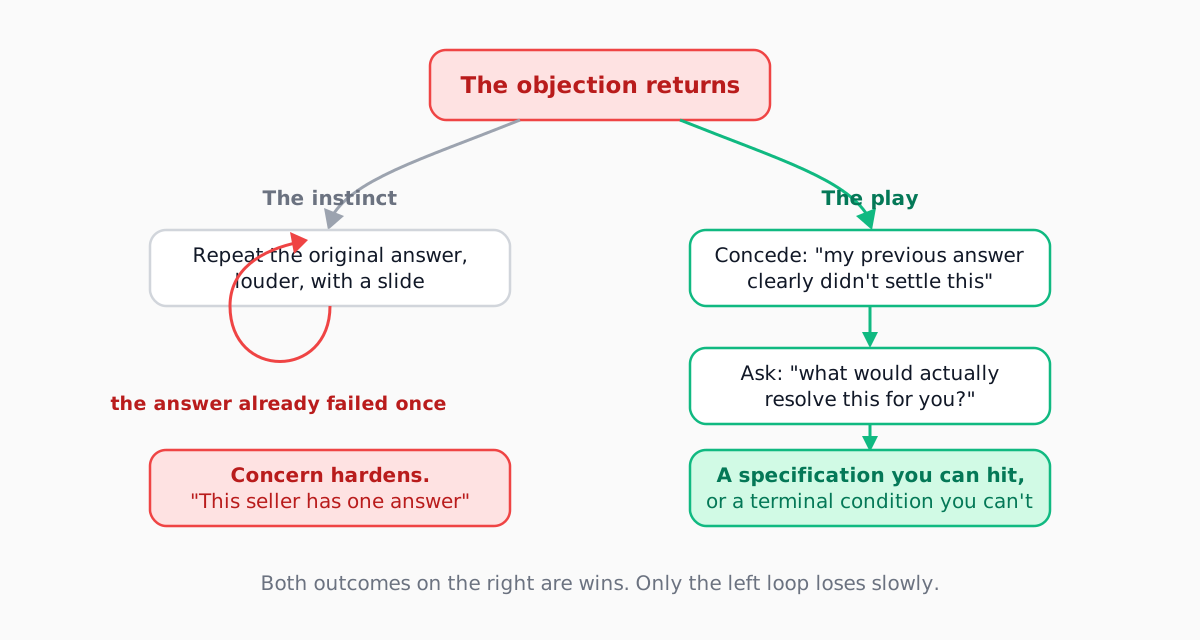
Here's the moment where deals get lost. The objection returns, and the seller, recognizing it, reaches for the answer that "worked" last time. Same logic, more emphasis, maybe a slide this time.
Think about what this communicates from the buyer's side. They raised a concern. They got answer A. Weeks later, the concern still alive, they raised it again, at real social cost, and received... answer A, again, louder. The message they hear: this seller has one answer, and my actual worry has nowhere to go.
Re-answering also misdiagnoses the failure. The first answer didn't fail because it was inaudible. It failed because it didn't connect to what the concern was really made of. Maybe the stated objection about price was carrying an unstated one about internal approval. Maybe the timeline worry was really a capacity worry. Repeating the surface answer harder does nothing about any of that.
There's one important exception to all of this: check who is raising it. When a new stakeholder voices the same objection fresh, that's a different event entirely. Your answer never reached them, which is a committee coverage problem, the kind I wrote about in multithreading B2B sales, and they deserve the full answer delivered as if for the first time, without a trace of "as I told your colleague."
The play: concede first, then reframe
The response that actually works starts with a small, deliberate loss of face. You concede that your previous answer didn't do its job.
Something like: "You raised this in our first conversation, and I gave you an answer that clearly didn't settle it, because here it is again. So let me stop re-answering and ask instead: what would actually resolve this for you?"
Three things make this work.
First, it's honest, and buyers can tell. You've named the elephant: the concern survived your answer. Pretending otherwise insults everyone's memory of the last call.
Second, it converts a repeated argument into a specification. "What would resolve this" invites the buyer to describe the evidence, the structure, or the assurance they actually need. Sometimes the answer is disarmingly concrete: a reference customer in their industry, a phased commitment, a number in writing. You can't hit a target they've never described.
Third, it separates the resolvable from the terminal. Some zombie objections, pressed this way, turn out to be conditions your deal genuinely can't meet. That's painful and useful. A deal that's going to die of this concern should die now, cheaply, rather than after three more months of mutual politeness.
What you're not doing: apologizing for the product, or abandoning your position. Concede the failed answer, never the whole case. The reframe is where your case gets rebuilt, this time on their specification.
Making recurrence visible before it's expensive
The reason zombies get to contract stage undetected is that objection tracking, where it exists at all, is a checkbox: raised, handled, done. Recurrence has no field. Matching a concern on call five to its first appearance on call one requires either an unusually good memory or actually re-reading transcripts, and nobody re-reads transcripts on a Tuesday.
This is mechanical work, and it's exactly the kind of thing we built RevSage to do: it reads every call in the deal, recognizes when a concern marked resolved has reappeared, in the same voice or a new one, and flags the pair with both quotes and timestamps as part of its live root-cause analysis on every deal. The rep walks into the next call knowing the objection is back, who's carrying it, and that the previous answer is the one thing they shouldn't repeat.
With or without tooling, the discipline transfers: stop trusting the checkbox. An objection is resolved when the buyer does something with your answer, builds on it, tests it, moves forward on the strength of it. Anything less is a concern that has merely stopped being spoken. And concerns that stop being spoken have a long history of speaking up again, right at the end, when it costs the most.
Frequently asked questions
- What is a zombie objection in sales?
- A zombie objection is one that was raised on an earlier call, treated as handled, and then reappears on a later call, often in nearly the same words. The recurrence is the tell: the buyer deferred the disagreement to avoid friction, and the concern kept working underneath the deal the whole time.
- Why do buyers say an objection is resolved when it isn't?
- Because agreeing is cheaper than arguing. Pushing back on a seller's answer costs energy and goodwill, so many buyers nod, say that makes sense, and move on. The objection didn't die in that moment. It just stopped being spoken.
- How should you respond when the same objection comes back a second time?
- Don't repeat your original answer with more force. Acknowledge openly that your previous answer didn't land, then ask what would actually resolve the concern. Conceding that the first attempt failed is what reopens honest conversation, because repeating a failed answer is what created the zombie.
- Is a returning objection different from a new stakeholder raising the same issue?
- Yes, and the difference matters. The same person re-raising a concern means your answer failed. A new stakeholder raising it for the first time means the concern is spreading through the buying committee, which is a multithreading problem, and they deserve a fresh answer rather than a frustrated repeat.
About the author
Rishi Patel, Founder & CEO, RevSage.ai. Rishi has spent 11 years building and scaling B2B SaaS companies, most of it obsessing over why some reps consistently read buyers right and most don't. He founded RevSage to give every rep the buyer intuition of their best teammate.