Sales Execution
Objection handling in live sales meetings: why scripts fail
Why objection scripts fail in live meetings, how the same objection changes meaning across buyer types, and a framework for answering the person, live.
By Rishi Patel, Founder & CEO, RevSage.ai · · 7 min read

I once watched a rep field the same objection twice in one week. "This seems expensive." Same product, same price, same textbook response off the battlecard: reframe to ROI, cite the payback window. One deal moved forward. The other went quiet and died a month later.
The battlecard didn't fail because the ROI math was wrong. It failed because the two people raising the objection were asking different questions, and the script only answered one of them.
After 11 years of building B2B SaaS and sitting in more sales calls than I can count, I've landed on a blunt version of this: objection handling fails in live meetings because we train reps to answer objections, when the job is to answer people.
Key takeaways
- Scripts and battlecards address the objection, and objections are raised by people, each with a different fear underneath the same words.
- A price objection from an evidence-driven Examiner and one from a time-pressed Operator call for opposite responses.
- Most stated objections are proxies. The skill is hearing the objection behind the objection.
- A live response has three moves: acknowledge, diagnose whose fear this is, then answer the fear instead of the words.
- Post-call coaching improves future deals. It arrives too late for the deal it reviews.
Why scripts and battlecards fail
Battlecards exist for a reasonable purpose. Competitive claims need consistent answers, and new reps need something to hold onto in their first quarter. The failure starts when teams treat them as live-meeting tools.
A battlecard maps objection text to response text. "Too expensive" returns the ROI reframe. "We already use a competitor" returns the differentiation grid. The mapping assumes the words carry the meaning.
In a live meeting the words carry maybe half of it. The rest lives in who is speaking, what they're afraid of, and what happened in the room during the ninety seconds before they spoke. A script can't see any of that, so a rep reciting one often answers a version of the objection that was never actually raised.
There's a tell when this is happening. The buyer says "that makes sense" and their position doesn't move an inch, because the answer landed on the words instead of the person.
Timing makes it worse. Battlecard training rewards speed, so reps fire the counter within a second of the objection landing. To the buyer, an instant rebuttal signals that the concern wasn't heard, only matched against a database. The fastest possible answer is often the least persuasive one in the room.
The same objection from different people
Take the most common objection in B2B: "this seems expensive."
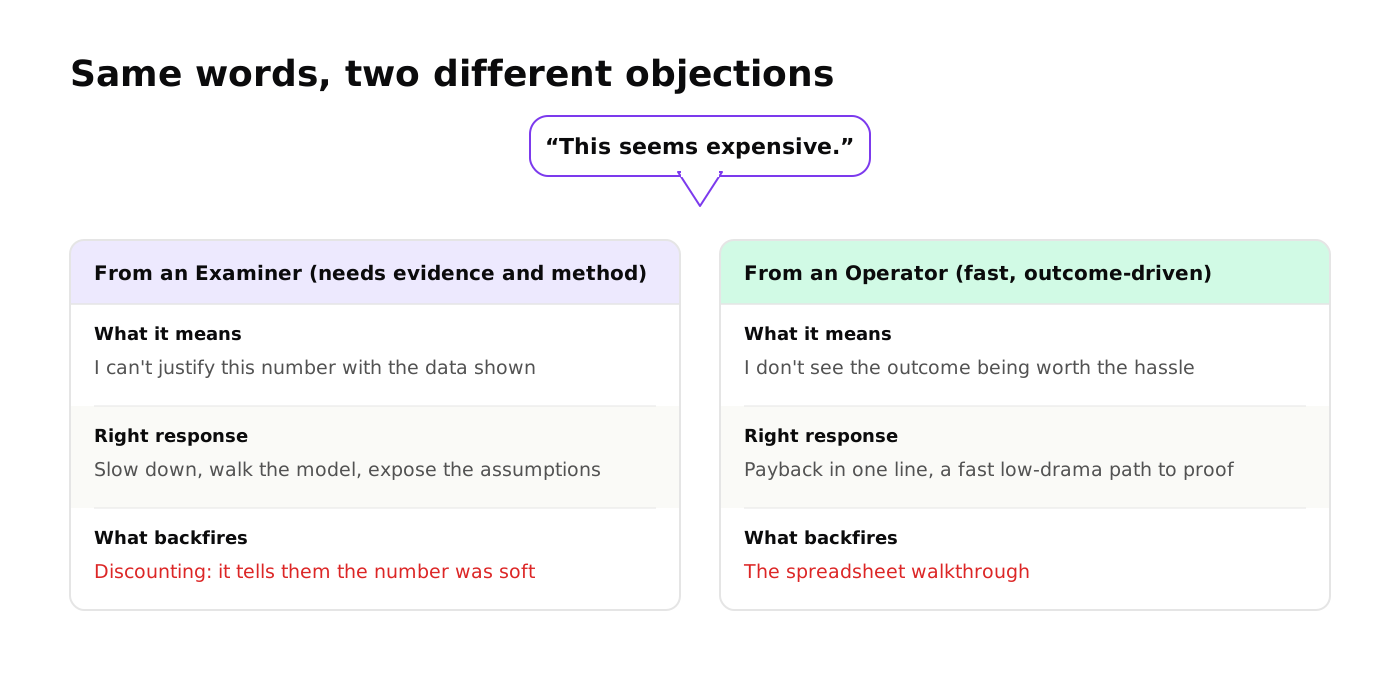
From an Examiner, the evidence-driven buyer who needs method and proof, that sentence usually means I can't yet justify this number with the data you've shown me. The right response is to slow down. Walk through the model, expose the assumptions, offer the methodology behind your numbers. Discounting at this moment actively hurts you, because an unexplained price drop tells an Examiner the original number was soft.
From an Operator, the fast, outcome-driven buyer, the same sentence usually means I don't yet see the outcome being worth the hassle. The Operator has no appetite for your spreadsheet. They want the payback stated in one line and a fast, low-drama path to seeing it for themselves. Give them the model walkthrough you'd give an Examiner and you can watch them start checking their phone.
The other two patterns show up on price as well. From a Diplomat, the consensus builder, "this seems expensive" usually means I can't sell this spend to my team yet, and what they need is help making the internal case. From a Guardian, the risk protector, it usually means what does this cost us when something breaks, and the answer they need is about exit terms and failure modes, with the price almost incidental.
Same five words. Four different questions. I keep a fuller map of these patterns in the four buyer types, but the operating point here is simpler: an objection has no fixed meaning until you know who's raising it.
The objection behind the objection
Most stated objections are proxies: socially acceptable stand-ins for a fear the buyer doesn't want to say out loud.
"Send me more information" often means I don't have the authority to decide and I'd rather not admit it here. "We need to think about it" often means someone outside this room will object and I can't defend this purchase yet. "The timing isn't right" often means championing this feels personally risky.
The fears underneath are personal. Looking foolish for backing the wrong vendor. Creating work for a team that's already stretched. Getting blamed if the migration goes badly. In my experience career risk drives more objections than price does, and almost no battlecard has a row for it.
You hear the real objection by treating the stated one as a symptom. Ask what would need to be true for this to be an easy yes. Ask who else would need to be comfortable. Watch which part of your answer they engage with and which part they let pass without a word.
And remember that the deadliest objections never get voiced at all. They sit with a stakeholder who skipped the meeting, compounding quietly, which is a big part of why deals stall after calls that felt great.
Acknowledge, diagnose, answer the fear
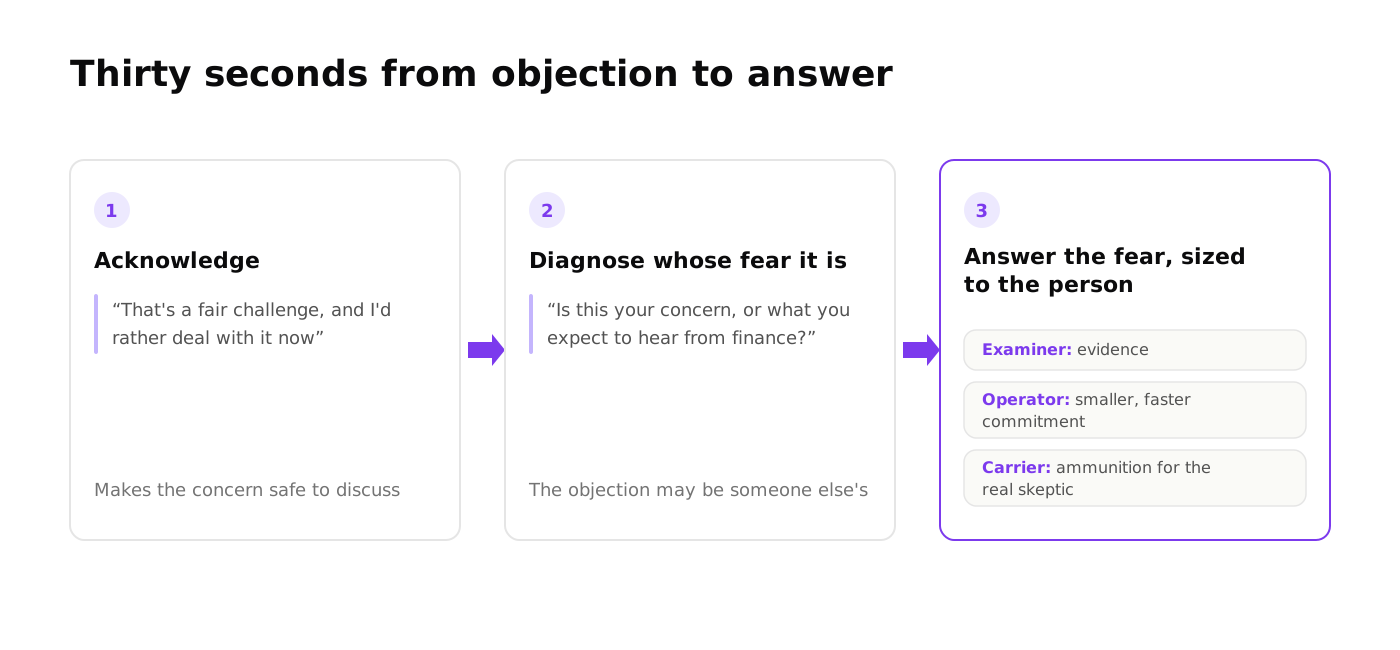
Here's the live framework I coach. Three moves, and they fit inside thirty seconds.
Acknowledge without folding. "That's a fair challenge, and I'd rather deal with it now than after you've bought." You're buying two seconds to think while telling the person their concern is safe in this room. Reps who skip this and leap straight to the rebuttal teach buyers to stop raising objections, which feels like winning and is actually losing the information war.
Diagnose whose fear this is. One clarifying question, aimed at the person. "Expensive against the budget, or against what you'd expect this outcome to cost?" Or the one I use most: "Is this your concern, or something you're expecting to hear from finance?" That second version regularly reveals the objection was never theirs. They're rehearsing the internal meeting they'll have after you leave.
Answer the fear, sized to the person. The Examiner's fear of being fooled gets evidence and method. The Operator's fear of wasted time gets a smaller, faster commitment. The buyer carrying a colleague's objection gets ammunition: a one-pager written for the actual skeptic, in the skeptic's language. Answer the fear well and the words tend to take care of themselves.
None of this requires the diagnosis to be certain. A read on another person is always directional, and it sharpens as they respond. Directional is still a large upgrade on reciting the average answer to a specific human.
Post-call coaching reviews a deal that already moved
Most teams try to build this skill with call recordings. Record everything, review on Friday, tag the objections, coach the responses. I like the practice, and over a couple of quarters it genuinely improves reps.
It just does nothing for the deal the objection happened in. By the review, the meeting is five days old, the buyer has met your competitor, and the moment when the right diagnosis would have changed the trajectory is gone. Coaching compounds across future deals. Live deals get decided in the room.
That gap is why the interesting tooling in this category has moved into the meeting itself. The approach we take with RevSage's real-time objection handling is to keep a live read on who is in the room and how each person decides, so that when the objection lands, the rep can see whose fear it likely is and what that person needs to hear next. The read is directional intelligence that sharpens over time, never a certainty. Directional still beats a script recited to the wrong person.
Drill the diagnosis
If you run enablement, one change pays for itself within a month: stop drilling responses first. Drill diagnosis first.
Take one real objection from last week's calls and make the team argue about who was raising it and what that person was afraid of, before anyone is allowed to propose an answer. You'll be surprised how often five reps produce three different diagnoses from the same clip, and the argument itself is the training.
Reps who internalize this habit stop fearing objections entirely. An objection is the buyer telling you, in code, exactly what stands between you and the signature. Learn to read the code and you stop needing the script.
Frequently asked questions
- Why do objection handling scripts fail in live meetings?
- Scripts map objection text to response text, which assumes the words carry the meaning. In a live meeting the meaning depends on who is speaking, what they fear, and what happened in the room just before they spoke. A script answers the average version of the objection, and the average buyer is never the one in the room.
- What is the objection behind the objection?
- The stated objection is often a socially acceptable stand-in for a personal fear: looking foolish for backing the wrong vendor, creating work for a stretched team, or carrying career risk. 'Send me more information' or 'the timing isn't right' usually encode one of these. Treat the stated objection as a symptom and diagnose before you answer.
- How should you handle a price objection in a live meeting?
- First find out what the price objection means for this person. Evidence-driven buyers usually mean 'I can't justify this number yet' and need the model and its assumptions. Outcome-driven buyers usually mean 'I don't see the payback' and need one line of value math and a faster path to proof. Discounting before diagnosing tends to make both cases worse.
- Why doesn't call recording and coaching fix objection handling?
- Post-call coaching genuinely improves reps, but it compounds across future deals. It does nothing for the deal the objection surfaced in, because by the Friday review the meeting is days old and the buyer has already moved. Only diagnosis in the room helps the current deal.
About the author
Rishi Patel, Founder & CEO, RevSage.ai. Rishi has spent 11 years building and scaling B2B SaaS companies, most of it obsessing over why some reps consistently read buyers right and most don't. He founded RevSage to give every rep the buyer intuition of their best teammate.