Pipeline
Why deals stall: how to read pipeline silence and restart momentum
Deals rarely die with a no. They stall for five diagnosable reasons. Read reply latency, attendance, and language shifts, then run the restart play that fits.
By Rishi Patel, Founder & CEO, RevSage.ai · · 8 min read
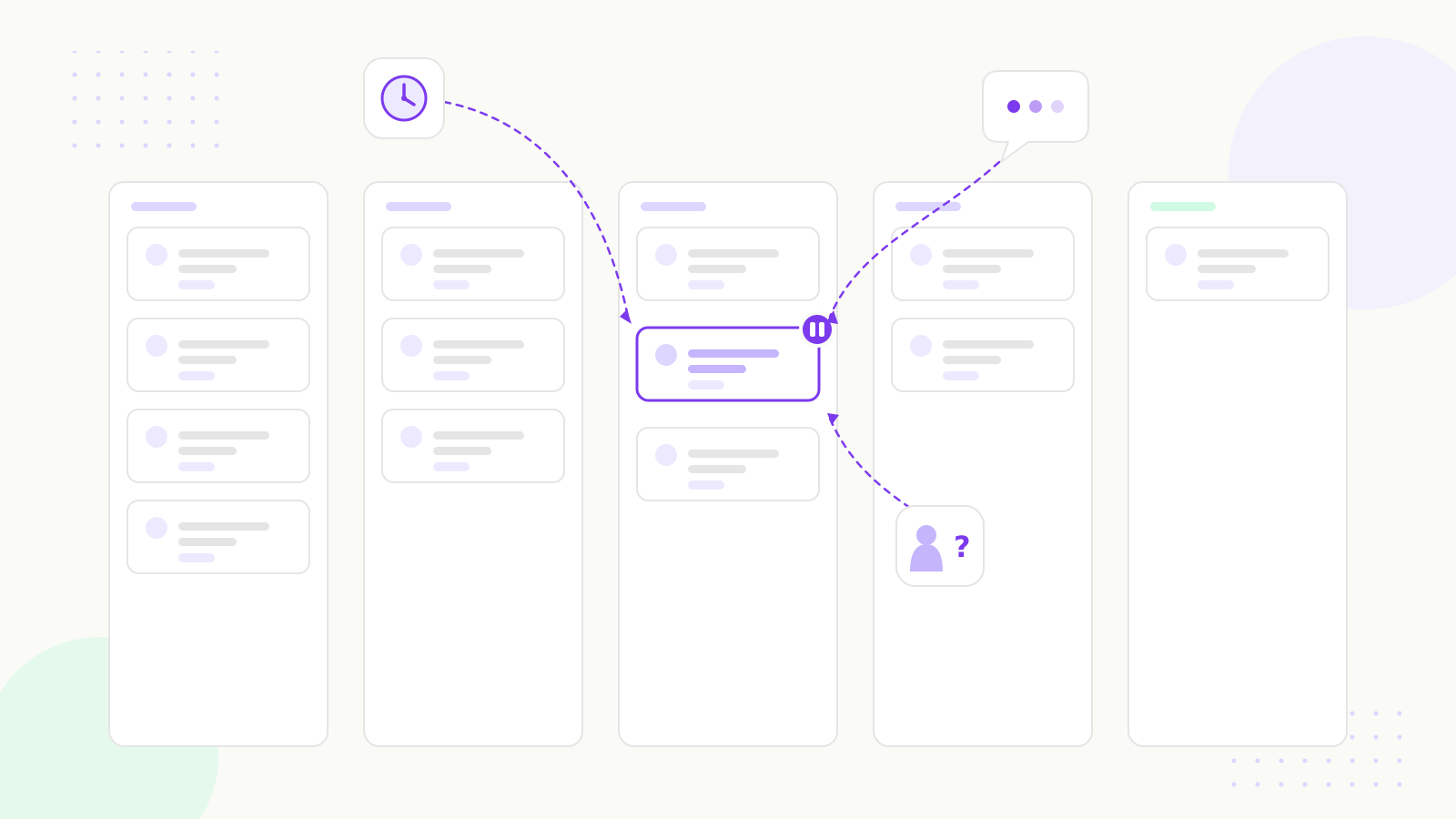
A stalled deal almost never announces itself. The demo lands, the champion says the right things, and then the thread thins out. Replies that took an hour start taking four days. The VP who joined the second call skips the third. Nobody says no. Nobody says anything.
Eleven years of building B2B SaaS companies has put me in more deal reviews than I can count, and the most common note in the CRM is also the least useful one: "went dark." It records the symptom and skips the diagnosis. Deals stall for specific, diagnosable reasons, and each reason calls for a different restart play.
The generic "just checking in" email matches none of them, which is why it has become the most ignored message in B2B. Before you write anything, figure out which stall you're actually in.
Key takeaways
- Almost every stall traces to one of five causes: status quo bias, a silent unconvinced stakeholder, a champion who lost internal capital, a priority shift, or buyer indecision.
- Indecision is the biggest killer. Research behind The JOLT Effect found 40% to 60% of deals are lost to no decision, and most of those buyers wanted to move forward.
- The cause shows up in behavior before anyone says a word. Watch reply latency, meeting attendance, who stopped engaging, and how the buyer's language changes.
- Match the play to the stall. Re-selling the problem works on status quo bias and actively backfires on indecision.
- After two well-aimed restart attempts with zero new buyer effort, mark the deal lost and recycle it on a trigger event.
The five reasons deals actually stall
Ask a rep why a deal stalled and you'll usually get a shrug. Pull the deal history instead and you'll almost always find one of these five patterns.
Status quo bias
The buyer's current process hurts, but it hurts in a familiar way. Change requires effort, carries risk, and creates accountability, so doing nothing feels like the safe vote even when the spreadsheet everyone hates costs real money. This stall often follows your best meeting, because a strong pitch raises the stakes of the decision without lowering its risk.
A silent stakeholder isn't convinced
Gartner puts the typical buying group for a complex B2B purchase at six to 10 decision makers. You're probably talking to two of them. Many stalls begin the day someone you've never met asks your champion a question they can't answer, and the deal sits frozen while that objection goes unaddressed. Single-threaded deals manufacture this stall on schedule, which is why I wrote a whole piece on multithreading in B2B sales.
Your champion lost internal capital
A reorg, a missed quarter, a project that went sideways. Your champion still believes in the purchase; they just can't spend credibility sponsoring it right now. The deal still has a believer. It no longer has a sponsor, and those are different things.
Priorities shifted above your deal
A budget freeze, a new executive, a security incident, an acquisition. Your project slid from third on the list to eighth. Nothing about your deal caused the slide, which is also why nothing about your pitch can reverse it.
Indecision quietly beat you
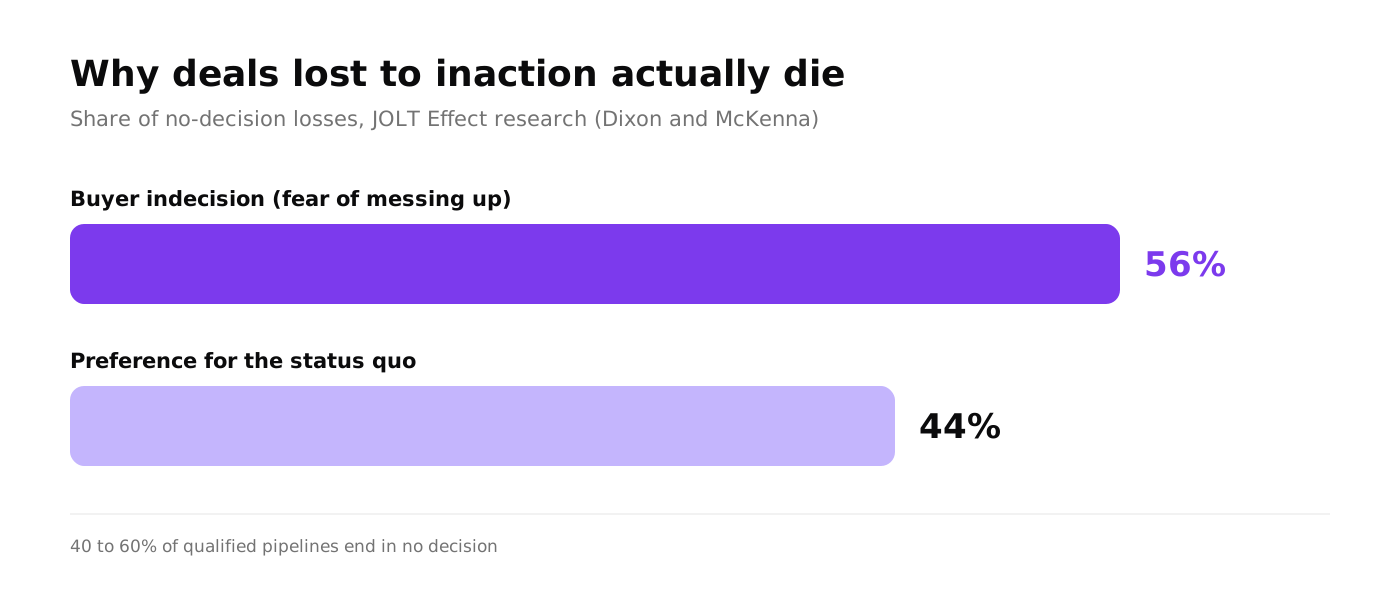
This is the cause most reps never consider, and the research says it should be their first guess. The team behind The JOLT Effect found that 40% to 60% of deals are lost to no decision. Within those lost-to-inaction deals, 44% died from a preference for the status quo, while 56% died from indecision: buyers who wanted the solution but froze, afraid of messing up. In most committee rooms, fear of messing up beats fear of missing out, and your real competitor is the buyer's own anxiety.
How to diagnose which stall you have
Buyers rarely tell you why they stalled. They show you. Four signals carry most of the diagnostic weight, and all four are sitting in your inbox and calendar right now.
Reply latency. Watch the shape of the slowdown. Replies that stretch gradually from hours to days over several weeks usually mean a priority shift; each response costs the buyer more justification than it used to. Replies that stop cold after one specific meeting point to a stakeholder event: someone objected, or someone told your champion to pause.
Meeting attendance. Seniority draining off the invite list means sponsorship is weakening. A champion who suddenly attends alone means the committee has disengaged. And one person rescheduling the same meeting three times is usually protecting you from a no they can't say out loud yet.
Who stopped engaging. Everyone at once suggests the project itself moved. One specific role going quiet suggests that role owns an unresolved concern, with security and finance the usual suspects. Champion-only silence, while others still open your emails, points at a capital problem.
Language changes. "When we roll this out" turns into "if we move forward." "We" turns into "I." Specific implementation questions turn into vague pleasantries. Tense and pronouns are the cheapest deal intelligence you will ever collect.
| What you observe | Most likely stall |
|---|---|
| Replies stretch gradually over weeks | Priority shift |
| Replies stop cold after one meeting | Silent stakeholder |
| Champion replies fast but dodges next steps | Champion lost capital |
| Warm language, zero commitment to dates | Indecision |
| Pushback on the cost of change, talk of "timing" | Status quo bias |
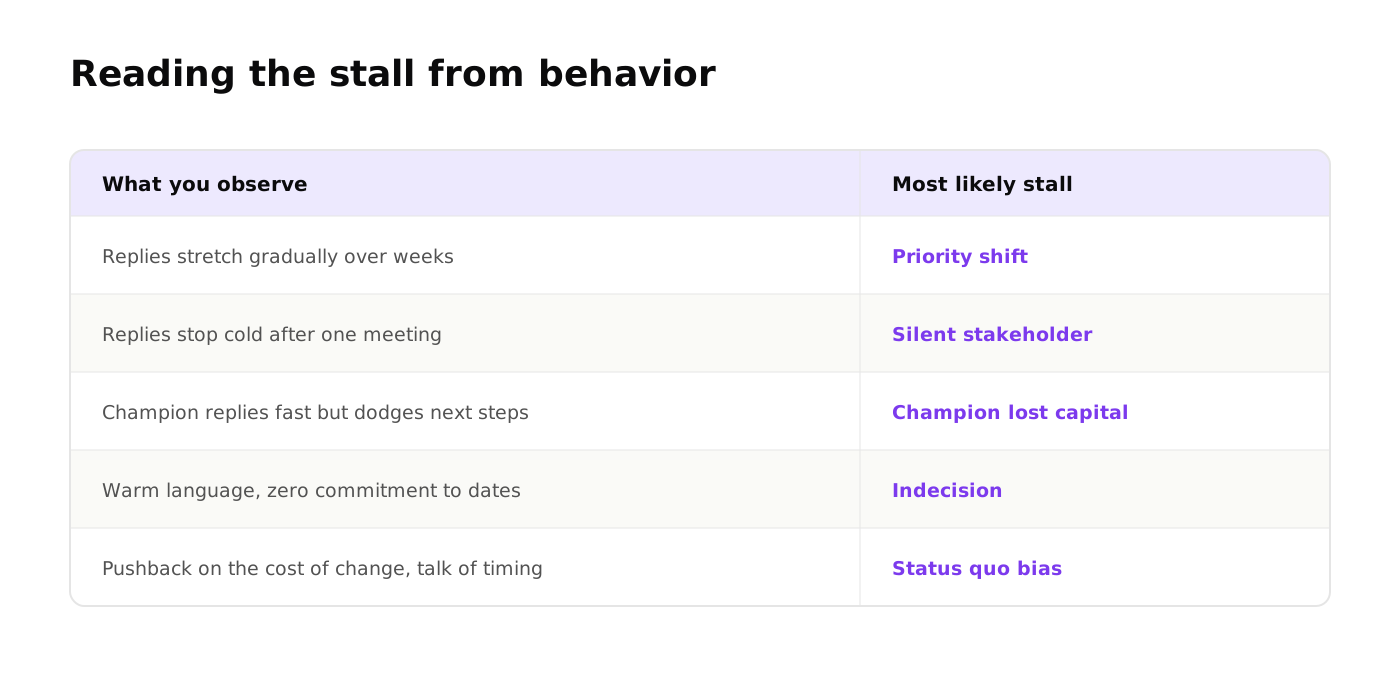
None of this is certain, and treating it as certain is how reps talk themselves into bad plays. Behavioral signals are directional. Treat each one as a hypothesis you test with your next touch. The psychology underneath these patterns is worth studying on its own, and I covered the foundations in buyer psychology in B2B sales.
Reading these signals across forty deals at once used to be the private skill of a team's best rep. That's the reason we built buyer intelligence into RevSage.ai: it reads the same behavioral signals on every deal and flags the likely stall type as a starting hypothesis, so reps test the right play first instead of guessing.
Restart plays for each stall type
Diagnosis without a play is trivia. Here is what I'd actually send, by stall type.
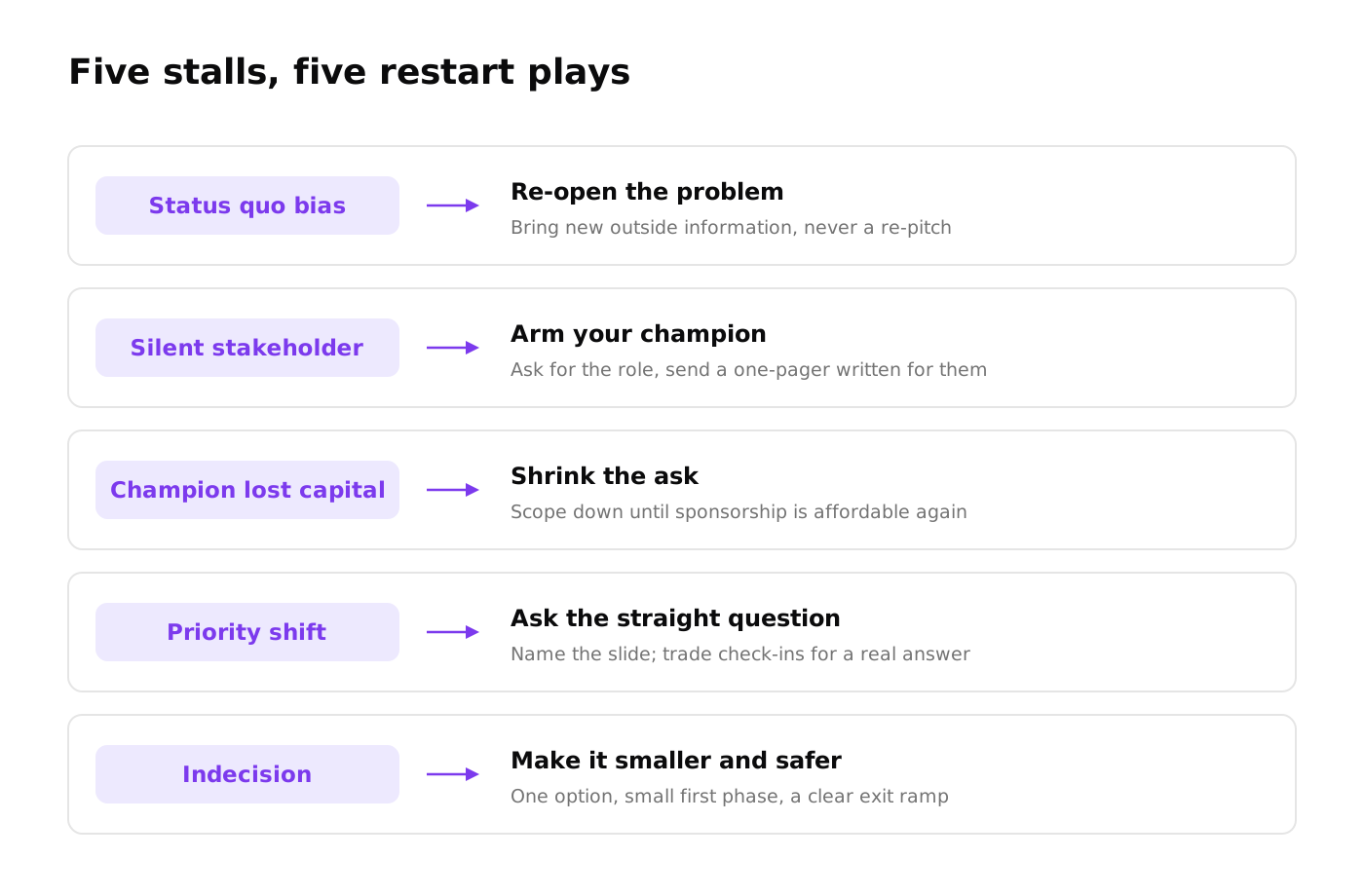
Re-open the problem (status quo bias)
Bring new outside information instead of repeating your pitch. The buyer already heard your case and chose familiar pain anyway, so the next touch has to change what they know.
"[Analyst firm] just published benchmarks on what [problem] costs teams your size, and two of the numbers made me think of you. Worth ten minutes to pressure-test them against your own?"
Arm your champion (silent stakeholder)
You can't answer an objection you've never heard from a person you've never met. Make it easy for your champion to tell you who's holding out.
"My guess is someone on your side has a question we haven't answered. Tell me the role, and I'll send over a one-pager written for them. No meeting required."
Shrink the ask (lost capital)
Credibility is a budget, and your champion's is overdrawn. Lower the price of sponsorship until they can afford to back you again.
"Sounds like the internal timing got harder. What if we scoped this to just [one team] for a quarter? A small decision shouldn't cost you much capital, and the results make the bigger case for you."
Ask the straight question (priority shift)
Stop the polite fiction. Buyers respect the rep who names the situation, and you'll trade weeks of dead check-ins for one real answer.
"Straight question: has this dropped down the priority list? If so, that's genuinely useful to know. I'd rather plan a real conversation for Q3 than keep sending check-ins you have to ignore."
Make the decision smaller and safer (indecision)
Here's the counterintuitive part. The JOLT research found that dialing up the cost of inaction, the classic FOMO play, backfired 84% of the time with indecisive buyers. An indecisive buyer needs less fear, fewer options, and a smaller blast radius.
"You've seen three configurations from us, which was probably my mistake. Based on everything you've described, option B fits. If we start with [small phase] and it underperforms, you can stop with 30 days' notice. Want me to write that up?"
One restart touch is a play. Six identical ones in a sequence are spam. The spacing and ordering of these messages matter as much as the words, and I broke that cadence down in sales follow-up strategy.
When to mark it dead
Every pipeline carries zombie deals, kept alive because closed-lost feels like the rep's failure. My rule is two restart attempts: two correctly diagnosed, well-aimed plays. If both produce zero new buyer effort, no reply, no attendance, no internal action your champion can point to, the deal is dead, and pretending otherwise corrupts your forecast.
Code the loss honestly. "Went dark" tells your future self nothing, while "stalled, silent CFO objection on integration cost" tells the next rep exactly where to start. Then set a recycle trigger instead of a reminder: a champion job change, a new fiscal year, a funding announcement, the departure of the executive who blocked you. I'm convinced a clean closed-lost with a trigger-based recycle beats month seven of hopeful check-ins, for pipeline accuracy and for the rep's sanity.
Silence is information
The best reps I've worked with treat a quiet deal the way a good doctor treats a symptom, with curiosity first and a prescription second. The silence has a shape. Reply latency, attendance, engagement patterns, and language shifts will tell you which of the five stalls you're in, usually within ten minutes of honest review.
So before your next check-in email, diagnose. Pick the play that matches. And if two good plays move nothing, have the discipline to call it, code it, and set the trigger that brings it back when the timing is real. Stalled deals are rarely mysteries. Mostly they're unread messages.
Frequently asked questions
- Why do B2B deals stall after a good demo?
- Most stalls trace to one of five causes: status quo bias, a silent stakeholder who was never convinced, a champion who lost internal credibility, a shift in company priorities, or buyer indecision. Research behind The JOLT Effect found 40% to 60% of B2B deals are lost to no decision rather than to a competitor. The demo usually went fine; the internal conversations afterward are where deals quietly freeze.
- How do you revive a deal that went dark?
- Diagnose the cause before sending anything, using observable behavior such as reply latency, meeting attendance, and language changes. Then match the restart play to the cause: new outside information for status quo bias, stakeholder-specific material for a silent objector, a smaller ask for a champion who lost capital, and a narrowed, de-risked decision for indecision. A generic check-in email matches none of these causes, which is why it rarely works.
- How many times should you follow up on a stalled deal before closing it as lost?
- Two well-aimed restart attempts is a sensible limit. If both plays produce zero new buyer effort, meaning no replies, no meeting attendance, and no internal action your champion can point to, mark the deal closed-lost with an honest reason code. Then recycle it on a trigger event such as a champion job change, a new fiscal year, or a funding announcement.
- What does it mean when a buyer's replies get slower but never stop?
- Gradually stretching reply times usually signal a priority shift: your project slid down the buyer's list, so each reply costs more internal justification than it used to. A sudden stop right after a specific meeting points instead to a stakeholder event, such as an objection from someone you have never met. The shape of the slowdown is often more diagnostic than the silence itself.
About the author
Rishi Patel, Founder & CEO, RevSage.ai. Rishi has spent 11 years building and scaling B2B SaaS companies, most of it obsessing over why some reps consistently read buyers right and most don't. He founded RevSage to give every rep the buyer intuition of their best teammate.