Buyer Psychology
The four buyer types every B2B rep sells to (and how to win each)
A practical taxonomy of four B2B buyer types, with the emails, call tactics, and demo adjustments that win each one and the mistakes that kill deals.
By Rishi Patel, Founder & CEO, RevSage.ai · · 8 min read
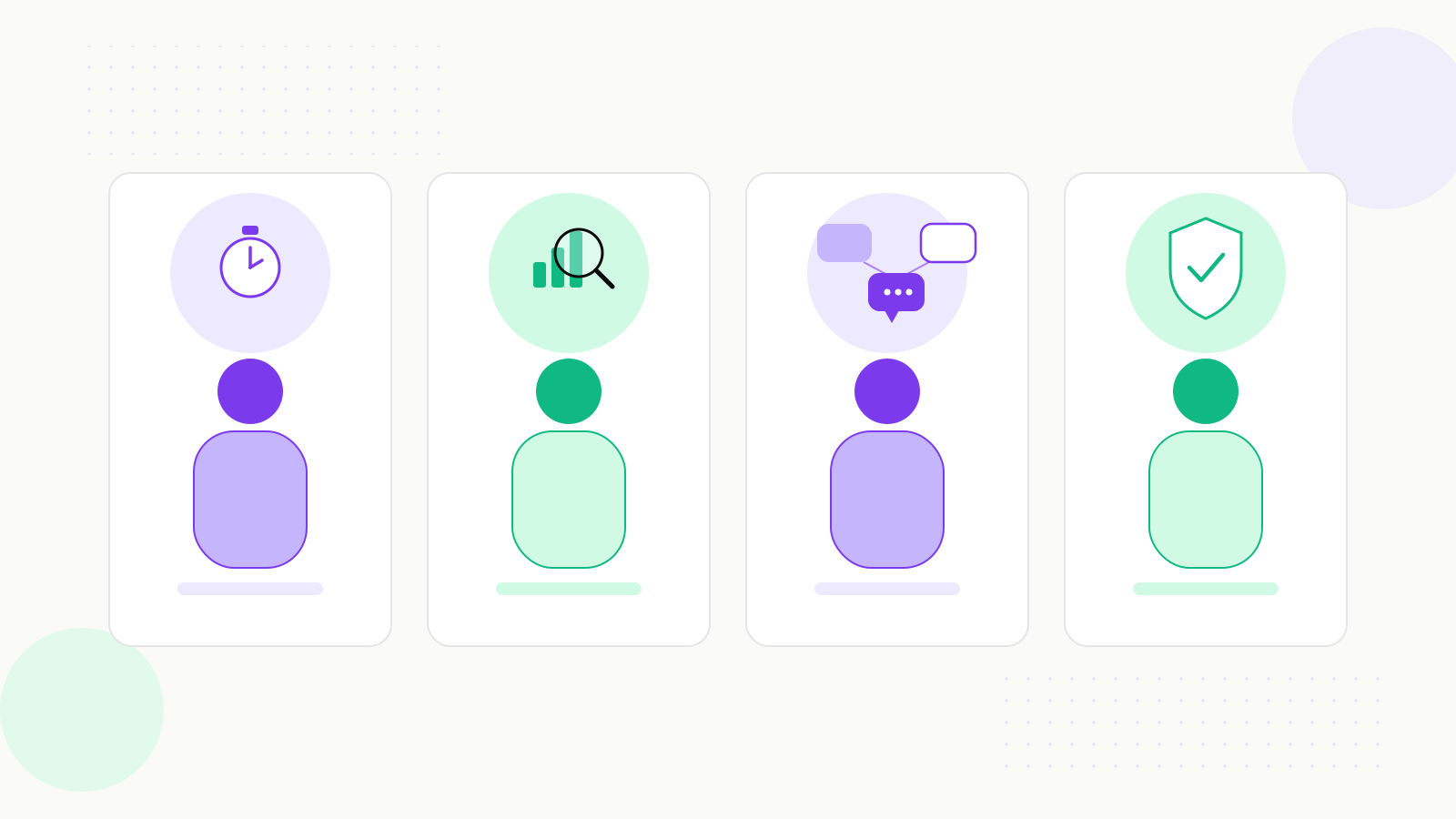
For my first two years selling software, I ran one pitch. It was a decent pitch. It closed founders and ops leaders reliably, it died horribly with finance and security people, and for an embarrassingly long time I told myself those lost deals were unqualified.
They were qualified. They were different humans. The energy a COO read as confidence, a compliance lead read as recklessness. Same deck, same words, opposite outcome.
Eleven years of building B2B SaaS later, I've reviewed enough deals to say this with conviction: the same four behavioral patterns walk into every evaluation, and the rep who recognizes them inside ten minutes wins a disproportionate share of the close-calls.
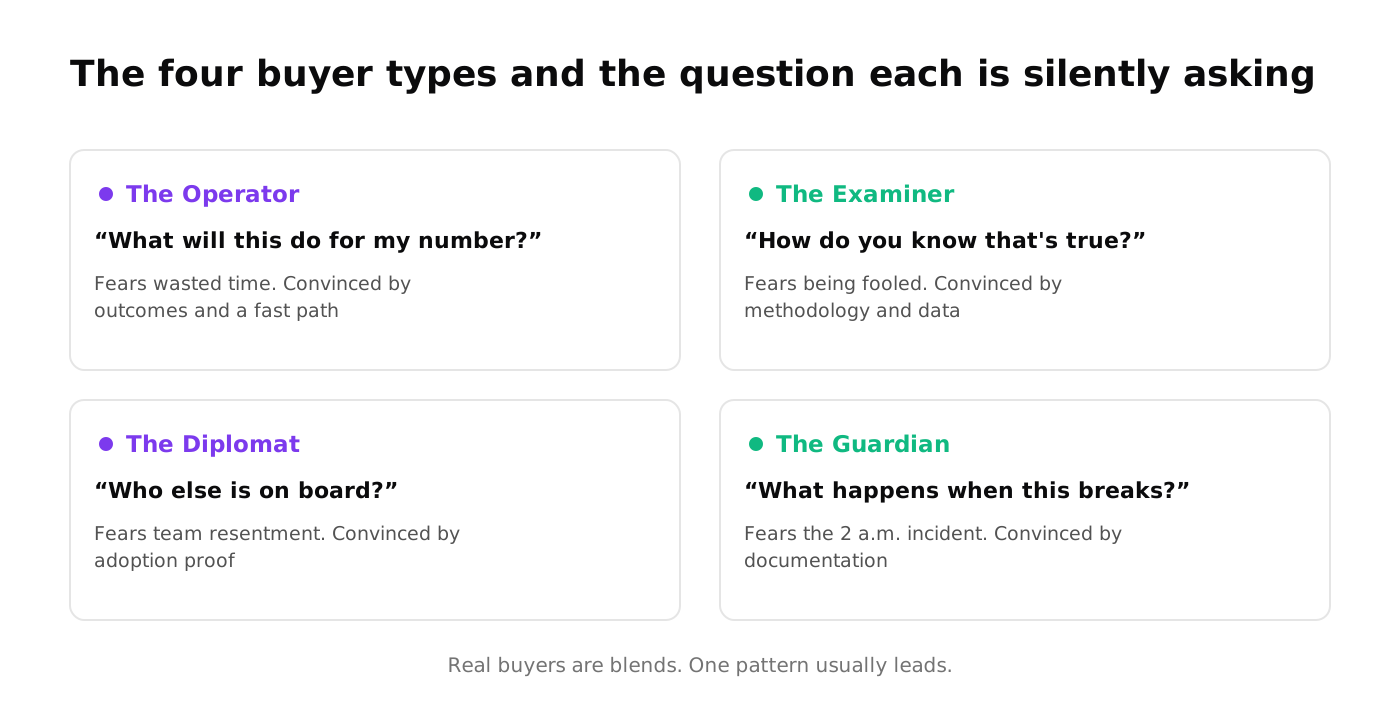
I call them the Operator, the Examiner, the Diplomat, and the Guardian. The psychology underneath them (status quo bias, loss aversion, how committees converge) gets the full treatment in our field guide to buyer psychology in B2B sales. This piece is the field manual: how each type communicates, what each one fears, and the exact phrasings that move them.
Key takeaways
- Most B2B buyers lead with one of four patterns: the Operator (speed and outcomes), the Examiner (proof and method), the Diplomat (consensus and adoption), or the Guardian (risk and protection).
- Type dictates format more than content. Same truth, different order, length, channel, and pace.
- Pace mismatch is the quietest deal-killer. Rushing an Examiner or slow-walking an Operator ends deals politely and invisibly.
- You can type a buyer from one email and ten minutes of conversation, then refine the read as evidence arrives.
- Committees serve you all four at once. Sequence materials per stakeholder instead of blasting one deck to the whole cc line.
Why typing your buyer beats polishing your pitch
Buyers keep telling us what they want. In Salesforce's research, 84% of business buyers expect sales reps to act as trusted advisors, yet 73% say most sales interactions feel transactional. Advisor is an earned word, and you earn it by working the way the buyer works: their format, their pace, their definition of proof.
Two honest caveats before the taxonomy. First, these are lenses rather than boxes. Real buyers are blends with one pattern leading, and context moves the lead; a Guardian buying office chairs behaves like an Operator. Second, any read of another human is directional. It should sharpen with evidence and never harden into a horoscope. Where this approach sits relative to DISC and the older frameworks gets a full airing in personality-based selling.
The Operator wants the bottom line
You know this buyer. VP of sales, COO, founder. Runs on a calendar sliced into 30-minute blocks, reads your email on a phone between meetings, and decides about you before finishing it.
How they communicate. Two-line emails with no greeting. Calls that open with "what have you got." They interrupt, and the interruption is a gift: it tells you exactly what they care about.
What they fear. Wasted time. Losing the quarter while a "transformation project" crawls. Being slowed down by their own organization.
What convinces them. A concrete outcome, a short path to it, and evidence that operators they respect have already moved.
The adjustments.
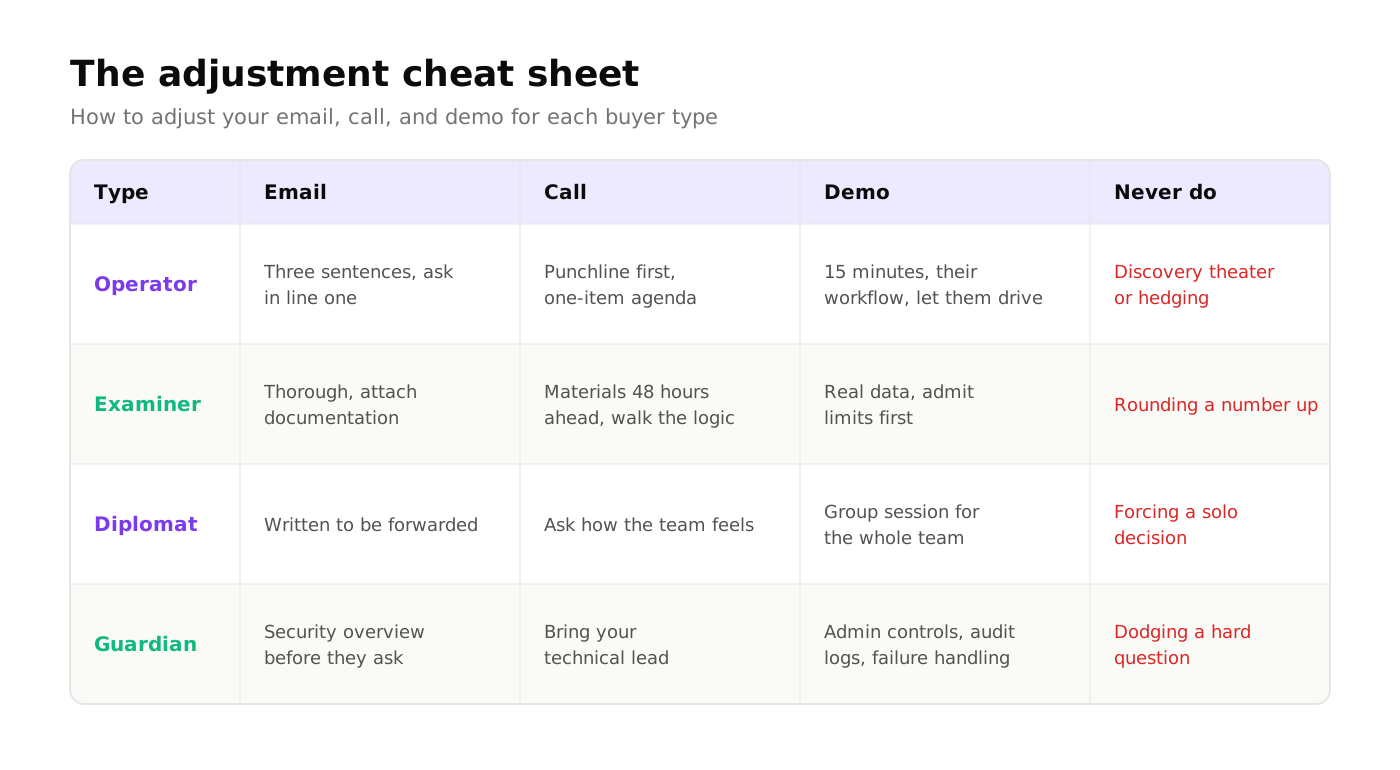
- Email: three sentences, ask in the first line, one link, no attachments.
- Call: punchline first, support after. One-item agendas.
- Demo: fifteen minutes inside their actual workflow. Let them drive; they trust their own hands more than your script.
Steal this line: "You'll know within 30 days whether this moves pipeline. If it doesn't, kill it." Operators respect anyone who hands them a fast exit.
The deal-killer. Discovery theater. Forcing an Operator through your seven-step qualification call is how you become the vendor they ghost. Hedging hurts too; an Operator hears "it depends" as "I don't know."
The Examiner wants the evidence
Every deal that crosses six figures has at least one. Finance leads, data and engineering leaders, the analyst the CFO actually trusts.
How they communicate. Numbered questions. Precise language. They'll quote your own pricing page back at you, and they read footnotes.
What they fear. Being fooled. Specifically, repeating your number to their boss and watching it fall apart in the meeting.
What convinces them. Methodology. Show how you got the number, where the data came from, and which edge cases break it.
The adjustments.
- Email: thorough beats brief. Attach the documentation; they'll actually read it.
- Call: send materials 48 hours ahead, then walk the logic instead of the highlights.
- Demo: real data over polished sample data, and admit limits before they're discovered. "Here's where the model gets fuzzy" buys more trust than any benchmark slide.
Steal this line: "I'd rather show you where this breaks than have you find it after you've vouched for us."
The deal-killer. One inflated number. Round a single stat up and every other figure you've presented becomes suspect. Examiners extend trust slowly and revoke it instantly.
The Diplomat wants the room on board
Nobody maps the Diplomat as a power center, and everybody pays for it. They run customer success, HR, and ops in matrixed orgs, and they decide by bringing people along.
How they communicate. Warm and inclusive, with a lot of "we." They cc colleagues, reschedule to accommodate others, and reply slowly because they're socializing your proposal internally.
What they fear. Forcing a tool on a team that resents it. Open conflict. Being remembered as the person who steamrolled the rollout.
What convinces them. Proof that end users like the product: adoption numbers, a change-management plan, a customer story where the team asked for the tool by name.
The adjustments.
- Email: shareable by design. Write every message knowing it will be forwarded.
- Call: ask how the team feels about the problem, and mean it.
- Demo: offer a group session so the tool becomes the team's idea rather than an edict.
Steal this line: "Would it help if we ran a 30-minute session with the team, so they're shaping this rather than receiving it?"
The deal-killer. Pushing them to decide alone, or going over their head. A Diplomat will never tell you the deal is dead. It will simply drift until the quarter ends.
The Guardian wants to know what breaks
Somewhere in your deal sits a person who is paid to imagine disasters. Security leads, legal, compliance, IT admins, plus any executive a vendor has burned before.
How they communicate. Failure-mode questions before feature questions. SLAs, data residency, breach history, exit clauses. They want answers in writing, because writing creates accountability.
What they fear. The 2 a.m. incident with their name in the postmortem.
What convinces them. Specifics, documented, with a named human accountable for each one. Treat their paranoia as professionalism, because inside their org it is.
The adjustments.
- Email: attach the security overview before they ask. Unprompted documentation is the fastest trust signal you can send.
- Call: bring your technical lead early. Guardians trust engineers more than reps, and honestly, fair.
- Demo: show admin controls, audit logs, and what failure looks like. They'll trust a product more after watching it handle a bad day.
Steal this line: "Ask us your worst-case questions first. If the answers don't hold, you'll save us both three weeks."
And skip the pressure play entirely. The research behind The JOLT Effect found that dialing up urgency on hesitant buyers backfires 84% of the time, and Guardians are the most pressure-resistant people in any building.
The deal-killer. Dodging. Gloss over one security question to protect your demo flow and the Guardian will remember it through every remaining meeting. They keep score, and the score never resets.
How to spot the type in ten minutes
You can type most buyers from one email and the first stretch of a call. The short version:
| Type | First email looks like | On a call they | First questions are about |
|---|---|---|---|
| Operator | Two lines, no greeting, asks for the point | Interrupt, push the pace, decide mid-sentence | Outcomes and timing |
| Examiner | Numbered questions, precise wording | Pause before answering, take notes | Methodology and data |
| Diplomat | Warm, cc's colleagues, flexible on time | Ask what other teams will think | Adoption and training |
| Guardian | Asks about security before pricing | Probe failure modes, request things in writing | Risk, compliance, exits |
The diagnostic instrument is your ears. Gong's research on talk-to-listen ratios found top sellers speak about 46% of the call and listen the rest, while average reps talk far more. You can't hear an Examiner's skeptical pause or a Diplomat's soft hedge while you're delivering slide twelve.
When all four sit on the same committee
Enterprise deals rarely serve you one type at a time. A typical committee hands you an Operator sponsor, an Examiner in finance, a Diplomat running the rollout, and a Guardian in security, all reading the same deck and hating different slides.
So stop sending one deck. Sequence it:
- Win the Operator first. Their sponsorship buys you patience from everyone else.
- Arm the Examiner with the model and methodology before the internal review, never during it.
- Give the Diplomat the adoption story and offer the team session.
- Reach the Guardian before they reach you. Documentation sent unprompted reads as confidence.
Holding four reads in your head across a 30-deal pipeline is the hard part, and that pattern-reading is what we productized in RevSage.ai's buyer dossiers. The read is directional rather than certain, and it sharpens as a buyer interacts, but a directional read beats walking in blind.
Sell to the human you actually have
A taxonomy earns its keep only if it changes your next email. Run the drill on one live deal: name the type of every stakeholder, then check whether what you sent them last week matches. The mismatch rate on a typical pipeline is humbling.
Treat each label as a hypothesis with a ten-minute expiry. Form it before the call, test it in the room, revise without ego. Buyers will forgive a wrong first read. What they remember is whether you adjusted, because adjusting is what listening looks like from their side of the table.
Frequently asked questions
- What are the main buyer types in B2B sales?
- Four patterns cover most B2B buyers: the Operator, who decides fast and wants outcomes; the Examiner, who needs evidence and methodology; the Diplomat, who buys when the whole team is on board; and the Guardian, who audits risk before anything else. Real buyers are blends, but one pattern usually leads.
- How do you sell to an analytical buyer?
- Lead with evidence and show your work. Send detailed material before the call, walk through methodology rather than highlights, and never round a number up. Analytical buyers move slowly until they trust your data, then become the most loyal customers on your book.
- How can you tell which buyer type you're talking to?
- Their first email usually tells you. Operators write two terse lines, Examiners send numbered questions, Diplomats loop in colleagues, and Guardians ask about security or compliance before pricing. Confirm the read on the first call by watching whether they push pace, proof, people, or protection.
- Should sales reps change their style for different buyers?
- Yes, within reason. Matching a buyer's pace, evidence preference, and risk tolerance changes how your message lands, while faking a personality reads as manipulation. Adapt the format and sequence of what you share; keep the substance and your honesty constant.
About the author
Rishi Patel, Founder & CEO, RevSage.ai. Rishi has spent 11 years building and scaling B2B SaaS companies, most of it obsessing over why some reps consistently read buyers right and most don't. He founded RevSage to give every rep the buyer intuition of their best teammate.