Sales Execution
The pre-call briefing top reps build before every meeting
What the 10-minute LinkedIn skim misses, a pre-call briefing template that covers every attendee, and how to test your hypothesis in the first ten minutes.
By Rishi Patel, Founder & CEO, RevSage.ai · · 6 min read
Two reps prepped for the same kind of meeting last spring. The first could recite the account: funding history, tech stack, recent press. The second knew that the VP of ops answers email at six in the morning in two-line sentences, had noticed which case study the champion forwarded internally, and had one question written down for each of the four people on the invite.
The first rep gave a competent demo to a polite room. The second ran a conversation the buyers were still referencing two calls later.
Both spent about twenty minutes preparing. They just spent it on different halves of the job, and most sales call preparation advice points reps at the wrong half.
Key takeaways
- The standard 10-minute LinkedIn skim produces trivia: facts about the company that don't change what you say to any person in the room.
- Company research sets context. People research decides what you actually do in the meeting, and it's the half reps skip.
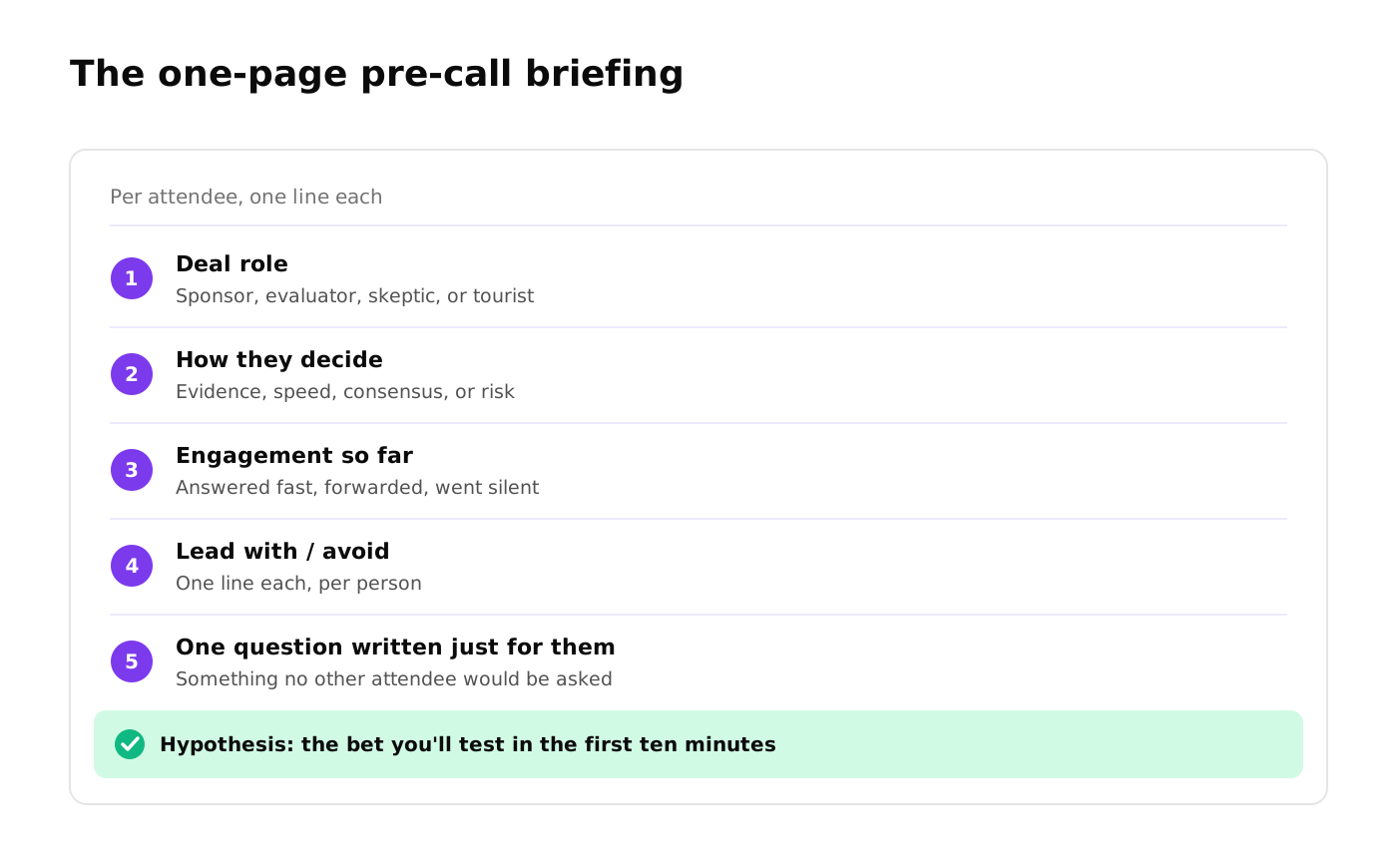
- A working briefing covers five things per attendee: who they are in the decision, how they decide, what they've responded to so far, what to lead with and avoid, and one question written just for them.
- Every briefing should end in a hypothesis you can test in the first ten minutes of the call.
- Briefings decay as deals move. A meeting run off notes from two stages ago is a meeting run against a deal that no longer exists.
What the LinkedIn skim misses
The standard version of pre-call research goes like this: open LinkedIn, skim the title and tenure, note the shared connection, glance at the company page and the latest funding announcement. Ten minutes. It feels responsible, and it produces almost nothing you can use in the room.
That skim answers who the person is on paper and leaves every useful question open. How do they decide? What evidence do they respond to? What pace do they move at? What happened the last time they bought something in your category?
Titles mislead constantly, too. I've sold to CFOs who decided in one meeting on gut feel, and to line managers who ran two-month evaluations with a scoring rubric. The title predicted none of it. The person did.
So the skim gives you a fact to open with ("I saw the Series C news, congrats") and nothing that changes your behavior after the pleasantries. That's decoration, and buyers can smell decoration.
There's also a subtler cost. A rep armed only with company trivia defaults to pitching the company's problems as they imagine them, at whoever holds the highest title on the call. The two most common meeting mistakes I see, wrong message and wrong target, both start in that ten-minute skim.
Company research and people research are different jobs
Company research is table stakes, and most of it is settable once per account: the business model, the initiative your deal attaches to, this quarter's pressures. You need it to avoid embarrassing yourself. Reciting it wins nothing, because buyers already know their own company.
People research is where meetings are won, and its unit is the individual attendee. Its questions are behavioral. How does this person write: two terse lines or numbered paragraphs? What have they engaged with across the deal so far: which email got a fast reply, which attachment got opened, which thread got silence? Who invited them to this meeting, and are they here to evaluate, to veto, or to watch?
The public record carries more of this than reps expect. How someone writes posts and comments, what they emphasize in a podcast interview, whether their conference bio leads with credentials or outcomes. None of it is proof. All of it is signal, and how those signals map to decision styles is the subject of our field guide to buyer psychology.
A read assembled this way is directional, never exact. Directional is enough to change what you lead with, and that changes meetings.
The briefing template
Here's the format I've settled on after years of writing these badly. One page per meeting, five lines per attendee.
Who's attending, and in what deal role. Skip the org chart title and write the decision role: sponsor, evaluator, skeptic, tourist. A VP who's a tourist matters less than a manager who's the real evaluator.
How each person decides. One line on style and pace. Needs evidence and method. Moves fast, allergic to process. Seeks consensus before committing. Protects against downside first.
What each has responded to so far. The engagement record, per person: opened, answered, forwarded, ignored. Silence is data. A stakeholder who's gone quiet since pricing landed belongs in bold.
What to lead with, and what to avoid. Per person, one line each. Lead with the pilot data for the analytical evaluator. Avoid open-ended vision talk with the sponsor who writes two-line emails at 6 a.m.
One question written for each attendee. The highest-leverage line on the page. A question aimed at the specific person ("You've run two CRM migrations; what would make this one easier on your team?") does two jobs at once: it produces information you need, and it tells that person they were seen. The craft of building these is covered in discovery call questions.
End the briefing with a hypothesis
A briefing that's only a dossier is trivia with better formatting. The last line on the page should be a bet: the thing you believe is true about this meeting, written down before it starts.
"The VP is the real decision maker and the director is gathering cover." "Security is the silent objection, because nobody in the room owns it." "The champion's enthusiasm has cooled since pricing went over."
A good hypothesis is specific enough to be wrong. "They care about ROI" can never fail, so it can never teach you anything. "The director will defer to the VP on budget within the first ten minutes" can fail visibly, which is exactly what makes it useful.
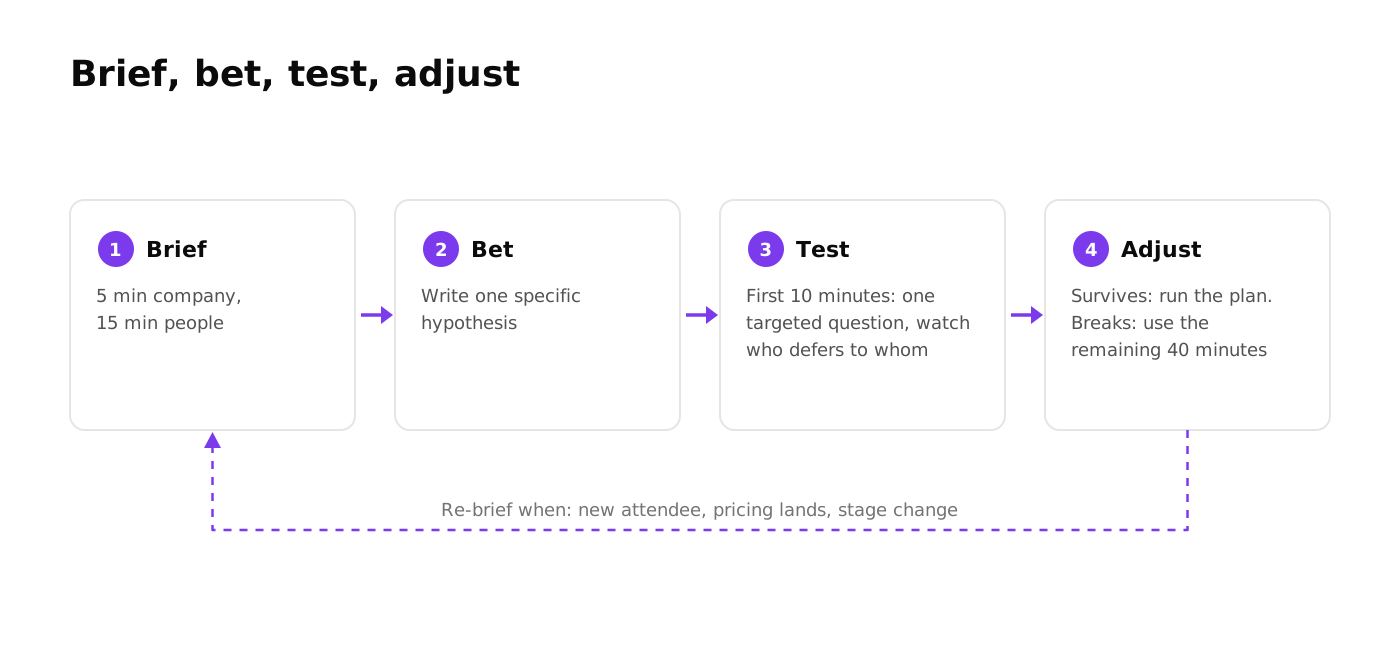
Then spend the first ten minutes of the call testing the bet. Open with the question aimed at the person your hypothesis says matters most. Watch who defers to whom when a hard question lands. Notice whether the energy matches the read you walked in with.
If the hypothesis survives ten minutes, run your plan with conviction. If it breaks, good: you've just learned the most important fact of the meeting while there are still forty minutes left to use it. Either outcome beats discovering the truth in the post-mortem.
Keep the briefing current
The quiet failure mode of pre-call prep is staleness. The notes were accurate in discovery. Then the deal moved: two stakeholders joined, pricing landed, your champion got reorged under a new boss. The next meeting gets run off a briefing describing a deal that no longer exists, which can be worse than no briefing, because it arrives with unearned confidence.
If you're maintaining briefings by hand, four events should trigger a rewrite: a new name on the invite, pricing going over, a stage change, and any change in your champion's situation. Each one can invalidate half the page, and the new attendee is the most dangerous, because you'll be reading a stranger cold in a meeting everyone else prepared for.
Manual prep usually collapses exactly here. Rewriting a five-line read per person, per meeting, across a full pipeline is hours nobody has on a Tuesday. It's the reason we built pre-call briefing intelligence into RevSage: it keeps the per-person read current as engagement shifts and rebuilds the briefing for whoever is actually on tomorrow's invite.
However you produce it, hold it to the same standard: a briefing describes the deal as it is this week, for the people who will actually be in the room.
Twenty minutes, differently spent
None of this asks for more prep time. It asks for a reallocation: five minutes on the company, fifteen on the people, one written bet at the bottom of the page.
Run it for a week of meetings and you'll notice the shift in the room. Buyers can tell the difference between a rep who researched the account and a rep who prepared for them, and they reward the second kind with the thing every deal actually runs on: honest answers to real questions.
Frequently asked questions
- What should pre-call research include?
- Two layers. Company context (the business model, the initiative your deal attaches to, the quarter's pressures) done once per account. Then people research per attendee: their role in the decision, how they decide, what they've engaged with across the deal so far, what to lead with and avoid, and one question written specifically for them.
- How long should sales call preparation take?
- Around twenty minutes for a meeting that matters, and allocation matters more than duration. A few minutes confirming company context, the bulk on the people attending, and the last two minutes writing a hypothesis about the meeting that you can test in its first ten minutes.
- What is a pre-call hypothesis?
- A written bet about the meeting, made before it starts: who really makes this decision, what the unspoken objection is, whether the champion's enthusiasm has cooled. You test it in the first ten minutes with a targeted question and by watching who defers to whom. If it breaks, you've learned the most important fact of the meeting with time left to use it.
- How do you research the people attending a sales call?
- Read how they write, in posts, comments, and their emails to you: length, pace, precision, and what they emphasize. Check the engagement record of the deal: which messages each person answered quickly, what they forwarded, where they went silent. Note who invited them. The result is a directional read, and you sharpen it live in the meeting.
About the author
Rishi Patel, Founder & CEO, RevSage.ai. Rishi has spent 11 years building and scaling B2B SaaS companies, most of it obsessing over why some reps consistently read buyers right and most don't. He founded RevSage to give every rep the buyer intuition of their best teammate.