Sales Execution
Discovery call questions that reveal how buyers actually decide
Most discovery call questions interrogate the project and miss the decision. A field-tested framework for surfacing who decides, how, and what burned them before.
By Rishi Patel, Founder & CEO, RevSage.ai · · 7 min read
I've sat in hundreds of deal reviews over eleven years of building B2B SaaS companies, and the discovery failure always looks the same on the recording. The rep asks reasonable questions. The buyer gives reasonable answers. Six weeks later the deal dies for a reason nobody asked about: a CFO no one knew existed, a procurement rule left over from a purchase that went badly two years ago, a champion who never had the authority everyone assumed she did.
Every question on that call hit the project. None of them hit the decision.
That gap is why most discovery question lists disappoint. They optimize for coverage (pain, budget, timeline, tech stack) when the real prize is a working model of how this specific company turns interest into a signature. Here is how I build that model: which questions surface it, what order to ask them in, and what to listen for while the buyer answers.
Key takeaways
- Most discovery lists fail because they interrogate the project and ignore the decision behind it.
- Gong's analysis of 519,000 sales calls found that 11 to 14 targeted questions, spread across the conversation, correlates with the highest success rates.
- The highest-value questions map the decision itself: who signs, how the last comparable purchase ran, and what burned the buyer before.
- How a buyer answers carries as much signal as the answer. Track speed, precision, and hedging.
- Discovery pays off only when you convert the answers into a decision map that shapes every message you send afterward.
Why most discovery lists fail
Search "discovery call questions" and you'll find 40-question checklists that read like intake forms. Reps run them top to bottom, buyers feel processed, and the call produces a tidy pile of facts with no view of how the deal will actually move.
I'll say the quiet part: qualification frameworks made this worse. BANT trained two generations of reps to extract four data points and call the job done. Extraction feels like rigor. Buyers experience it as a form they're filling out with their voice.
The data agrees with the buyers. Gong Labs analyzed more than 519,000 B2B sales calls and found that asking 11 to 14 targeted questions correlates with the highest success rates, while pushing past that drops results back to average (Gong Labs). The same research shows average reps front-load their questions as if clearing a checklist, while top performers spread them across the entire call.
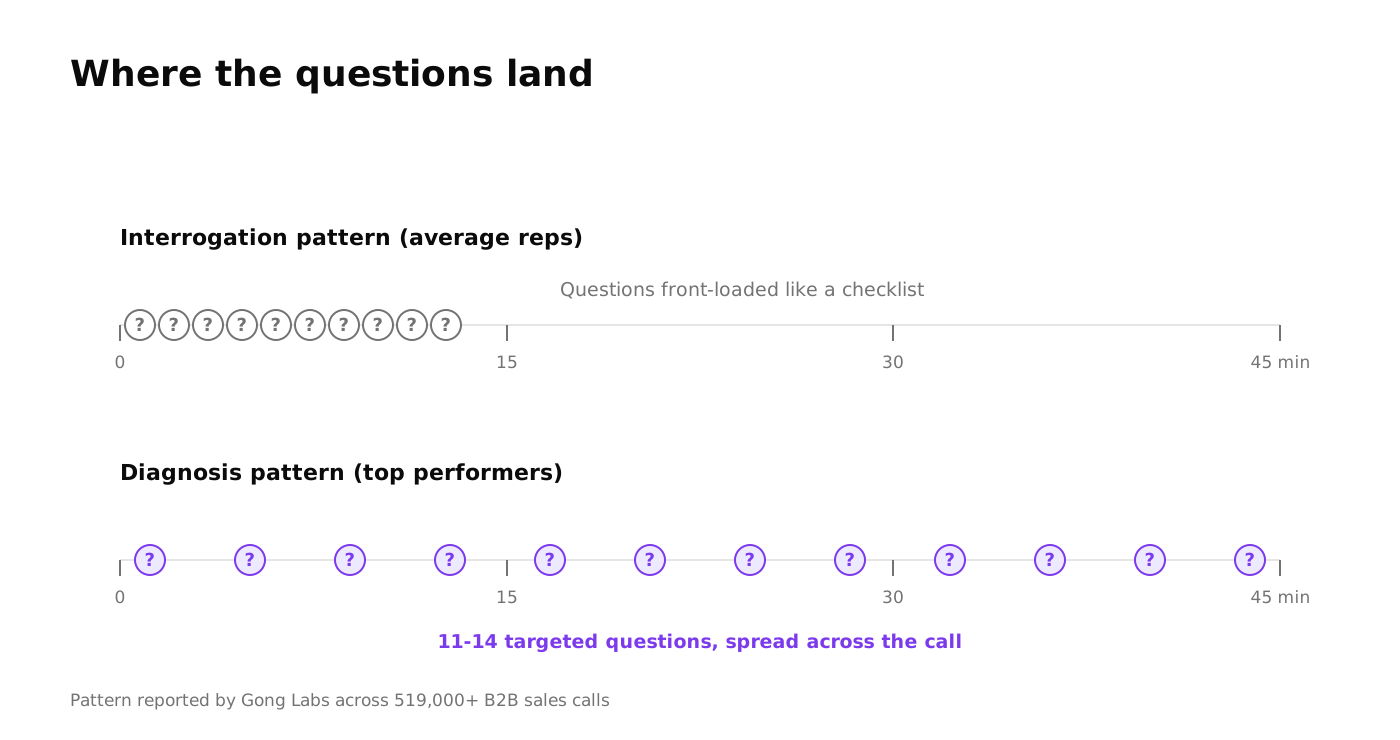
A doctor who fired 40 questions at you in the first five minutes and prescribed in minute six would lose patients fast. Discovery works the same way: fewer questions, sharper targets, sequenced so trust compounds as the call goes on.
The TRACE framework: five threads that map the decision
After enough lost deals taught me the same lesson, I started running discovery around five threads. I call it TRACE: Trigger, Roles, Antecedent, Criteria, Evidence. Pull all five and you leave the call with a map of the decision, on top of the usual project detail.
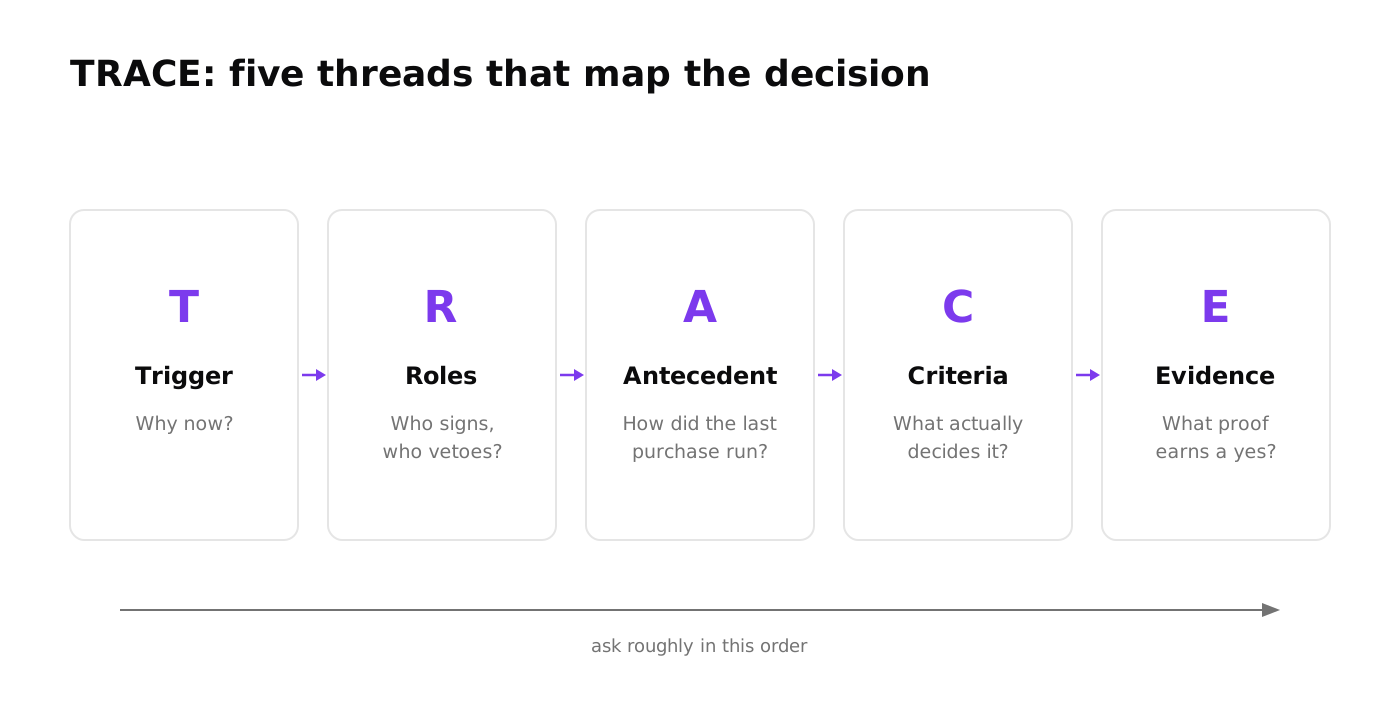
Sequence matters as much as selection. Open with the trigger, because buyers expect to explain why they took the meeting. Save the antecedent and evidence threads for the middle and back half of the call, after your early follow-ups have proven you actually listen.
Trigger
Find out why this matters now, in their words. "What happened that made this a priority this quarter?" and "What were you doing about this six months ago?" both work. A project with no trigger has no deadline, and a project with no deadline loses to inertia every time.
Roles
Map the cast before you fall in love with one actor. Ask "Who, besides you, has to be convinced?" and the question I rate above almost any other: "Who could veto this even if everyone else loves it?" Vetoes kill more deals than competitors do.
Antecedent
This is the thread most reps never pull, and it carries the most psychology. Ask "Walk me through the last tool your team bought. How did it get from idea to signature?" Then ask what went sideways. The story you get back contains the real process, the real timeline, and the scar tissue that will shape this purchase. People who got burned by a champion-led deal buy by committee the next time.
Criteria
Stated criteria live in the RFP. Operative criteria live in people. Ask "When you compare options, what will actually decide it?" and then "What does your CFO push back on in every purchase?" The second answer is usually worth more than the first.
Evidence
Close the loop on proof. "What would you need to see to recommend this with your name attached?" tells you whether this buyer trusts references, pilots, security reviews, or spreadsheets, and that determines what you build next week instead of guessing.
Listen to how they answer
Buyers answer decision questions in two layers. The first layer is the content. The second is the delivery, and delivery leaks information the content hides.
| What you observe | Example | Directional read |
|---|---|---|
| Speed | Instant, specific answer to "who signs off?" | The process is real and recently used |
| Hesitation | Long pause, then "probably my VP?" | The buying path is unmapped; expect surprise stakeholders |
| Precision | Names, dates, dollar figures | You're talking to someone close to the power |
| Vagueness | "Leadership", "at some point", "we'd find budget" | Distance from the decision, or a project without funding |
| Hedging | "In theory", "I'd have to check", "should be fine" | Unvalidated assumptions; verify before you forecast |
Treat every row as a directional read, never a verdict. A pause can mean an unmapped process, or simply a buyer choosing words carefully. I handle these tells the way a good doctor handles a symptom: a reason to run one more test, never a diagnosis on its own. The patterns underneath them are remarkably consistent, though, and we cover the mechanics in buyer psychology in B2B sales.
Probes that earn the second answer
First answers are rehearsed. Your buyer has already explained this project to colleagues, bosses, and three other vendors, so the opening response to any question is the polished version. The probe gets the real one.
Harvard research on conversational dynamics found that follow-up questions carry special power: they signal genuine listening, and people consistently like and open up to the person asking them (HBR, "The Surprising Power of Questions").
My four favorite probes:
- "What made that the deciding factor?"
- "Who pushed back, and what was their argument?"
- "You said it should be straightforward. Which part might not be?"
- "How did you feel about how that rollout went?"
The last one sounds soft. It produces the hardest information on the call, because feelings about the last purchase predict behavior in this one.
What this sounds like in a live call
Here's the antecedent thread running in a real conversation, condensed:
Rep: Before we get into our product, I'm curious about the last tool you bought for this team. What was it?
Buyer: A data enrichment platform, about 18 months ago.
Rep: How did that go from "we should look at this" to a signed contract?
Buyer: Slowly, honestly. Our VP sponsored it, but legal sat on the data agreement for two months, and by the time we launched, the person who picked it had left the company.
Rep: What would you do differently this time?
Buyer: Get legal in early. And get our CFO comfortable before we shortlist anything, because she killed a different tool last quarter over seat pricing.
Rep: What was it about the seat pricing that bothered her?
Buyer: She hates paying for licenses nobody uses. We had 40 seats and 12 active users on the last one.
Four questions. In return: a known legal bottleneck, a CFO with veto power and a specific named objection, and a buyer who has watched a champion-led purchase collapse. No 40-question checklist surfaces any of that, because none of it lives in a field on the intake form.
Turn the answers into a decision map
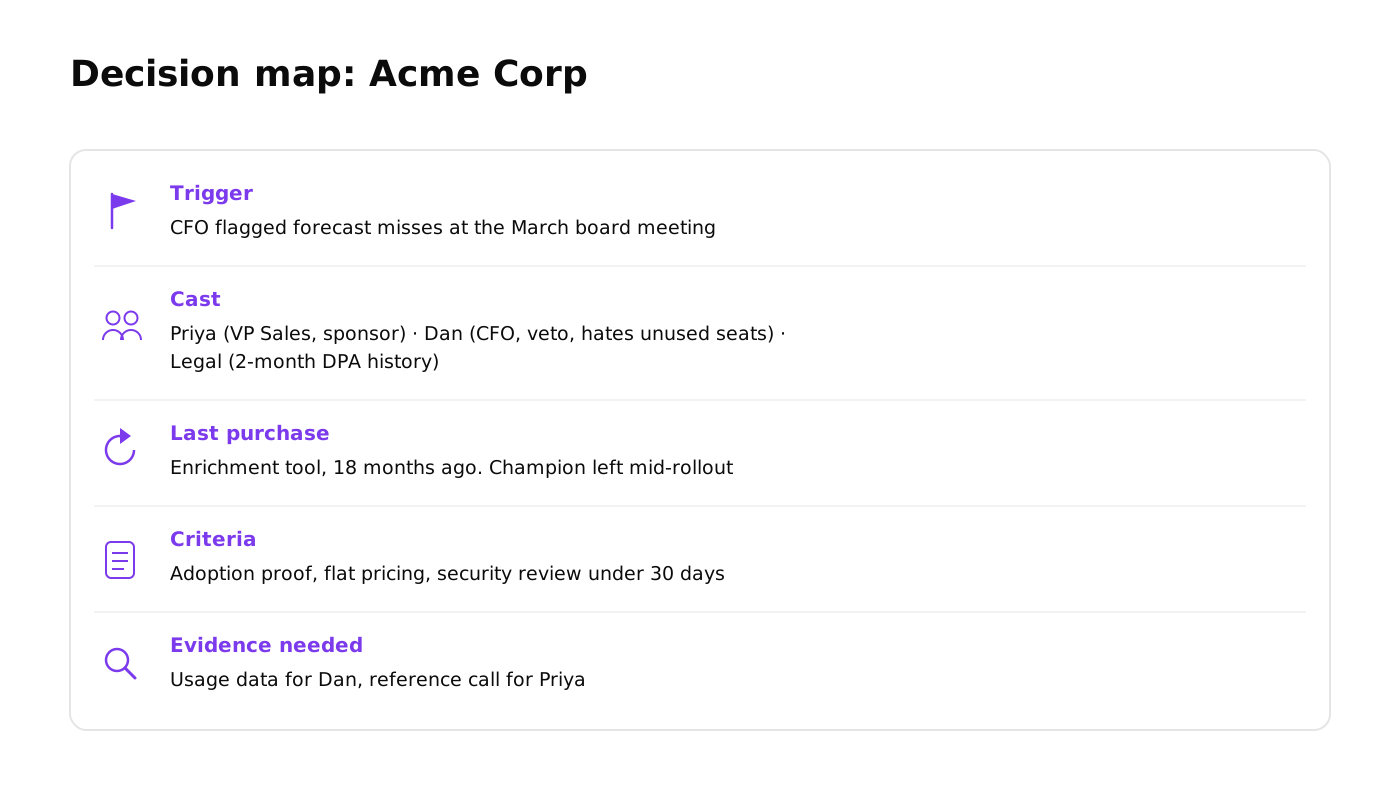
Discovery only converts when the answers survive the call. Within a day, while the delivery details are still fresh, write five things down:
- The trigger, in the buyer's exact words.
- The cast: economic buyer, influencers, veto holders, and the one thing each cares about.
- The antecedent story and its scar tissue.
- The criteria, official and operative.
- The evidence each stakeholder needs before saying yes.
Then classify the people on it. A skeptical CFO and a visionary VP need opposite proof from the same deck, and sending one message to both is how recaps die unread. Our breakdown of the four buyer types in B2B covers how each type processes evidence.
This mapping is also the job we built RevSage.ai around. It assembles public signals and observed behavior into a buyer intelligence dossier for each stakeholder, with a directional read on how they decide (as a design target, roughly 80% directional accuracy from public data, sharper with an assessment) and a recommended next message. The manual version above works too. It just demands a discipline most reps abandon by Thursday.
Three questions to steal for tomorrow's call
If you change nothing else this week, add these three:
- "What happened that made this a priority now?"
- "How did the last purchase like this actually get done here?"
- "What would you need to see to recommend this with your name on it?"
Ask them, probe the answers, and write down the delivery as well as the content. Run the call as a diagnosis and your forecast conversations get boring in the best way: you'll know who signs, what scares them, and exactly what to send next. That's the whole point of discovery.
Frequently asked questions
- How many questions should you ask on a discovery call?
- Gong's analysis of more than 519,000 B2B sales calls found that asking 11 to 14 targeted questions correlates with the highest success rates, and results drop back to average beyond that. Spread them across the whole conversation rather than front-loading them in the first ten minutes. Placement and relevance matter more than raw volume.
- What are the best discovery call questions for B2B sales?
- The highest-value questions map the buyer's decision rather than the project: what triggered the priority now, who has to sign and who can veto, how the last comparable purchase actually ran, which criteria will really decide it, and what evidence each stakeholder needs. Pair every big question with at least one follow-up probe.
- How do you ask about the decision process without sounding pushy?
- Anchor the question in the past instead of the future. Asking how the last comparable purchase went from idea to signature feels like curiosity, while asking who controls the budget feels like qualification. Buyers narrate history far more freely than they predict the future, and the history usually repeats.
- What should a rep do immediately after a discovery call?
- Within a day, turn the notes into a decision map: the trigger in the buyer's words, every stakeholder and what each cares about, the story of the last purchase, the real evaluation criteria, and the evidence each person needs. Then plan the next message against that map instead of sending a generic recap.
About the author
Rishi Patel, Founder & CEO, RevSage.ai. Rishi has spent 11 years building and scaling B2B SaaS companies, most of it obsessing over why some reps consistently read buyers right and most don't. He founded RevSage to give every rep the buyer intuition of their best teammate.