Sales Execution
What next best action means in sales (and when to trust it)
Next best action in sales, explained: where the idea came from, why per-deal task lists fail buying committees, and when a rep should override the machine.
By Rishi Patel, Founder & CEO, RevSage.ai · · 7 min read
Ask a rep what to do next on any deal and you'll hear the same words: follow up. Ask which person, on which channel, saying what, and the confidence drains out of the room. Most pipelines run on guesswork dressed up as cadence.
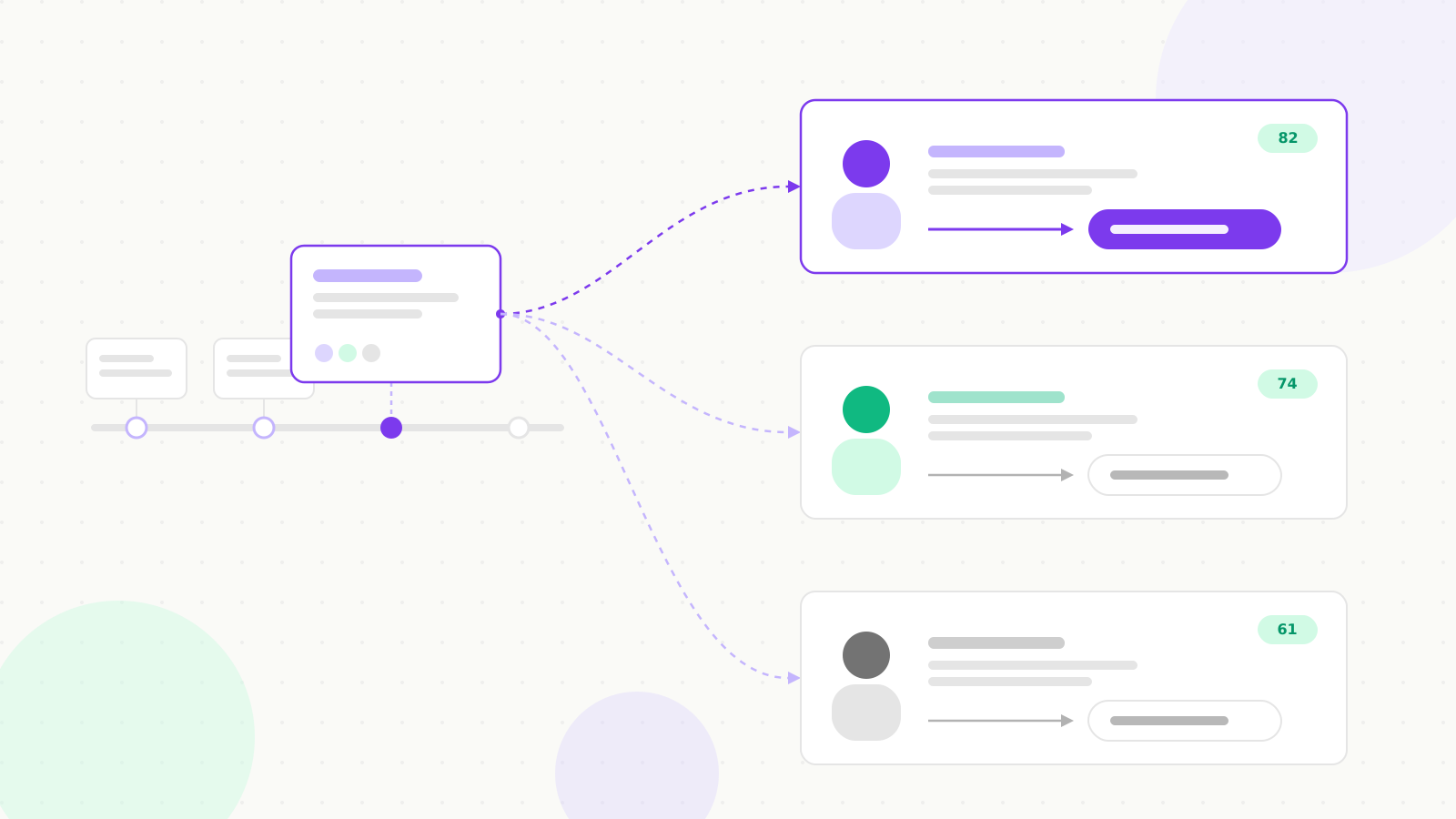
Next best action is the attempt to replace that guesswork with a recommendation. Given everything known about this deal and the people in it, here is the single most useful move right now. The idea is solid. Most implementations are worse than the idea deserves.
I've spent 11 years building B2B SaaS, and I've watched next best action travel from banking jargon to a checkbox on every sales tool's pricing page. So here's what the term actually means, what a recommendation has to earn before it deserves your trust, and when you should ignore it outright.
Key takeaways
- Next best action is a ranked recommendation of the single most useful move on a deal right now, scoped to a specific person, channel, and message angle.
- The concept comes from recommendation systems. Banks and telecoms ran "next best offer" engines long before sales tools borrowed the frame.
- One task list per deal fails multi-stakeholder deals because each stakeholder needs a different move, on a different channel, in a different week.
- A recommendation worth trusting needs three things: a per-person read, live updating as the deal moves, and an honest confidence score.
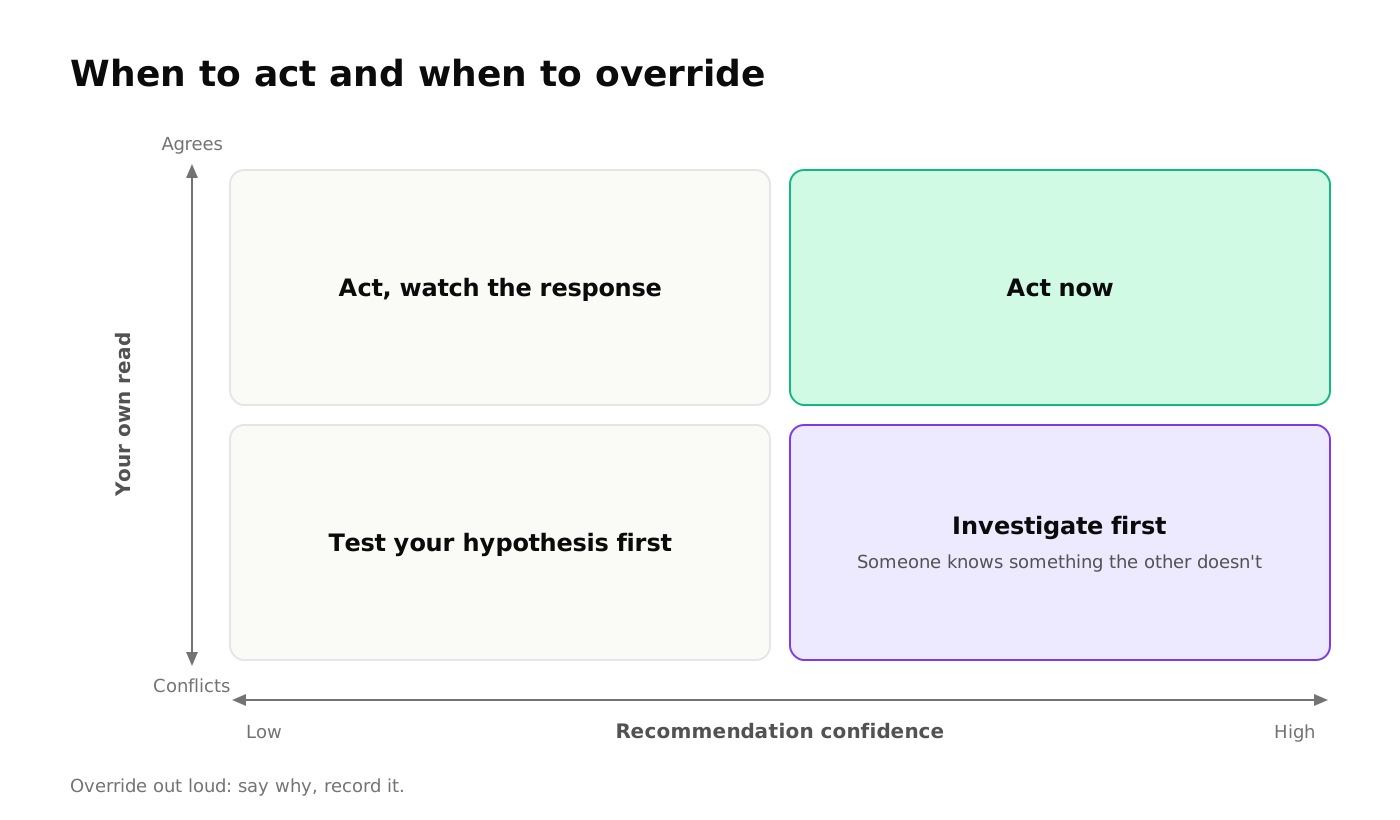
- High confidence means act. Low confidence means treat it as a hypothesis. A rep who holds information the system can't see should override it, out loud.
What next best action actually means
Strip away the vendor language and the definition is short. At any moment, a deal has a menu of possible moves: email the CFO, call your champion, send the security documentation, introduce your executive, or do nothing and wait. Next best action ranks that menu by expected usefulness and hands you the top item with the reasoning attached.
The important word is "next." This is a decision about the single move in front of you, made with current information, for a specific person.
That makes it different from a sequence. A sequence executes a plan written before the buyer said a word: day 1 email, day 3 call, day 7 breakup note. Next best action re-decides after every reply, every silence, and every meeting. When the buyer changes, the plan changes.
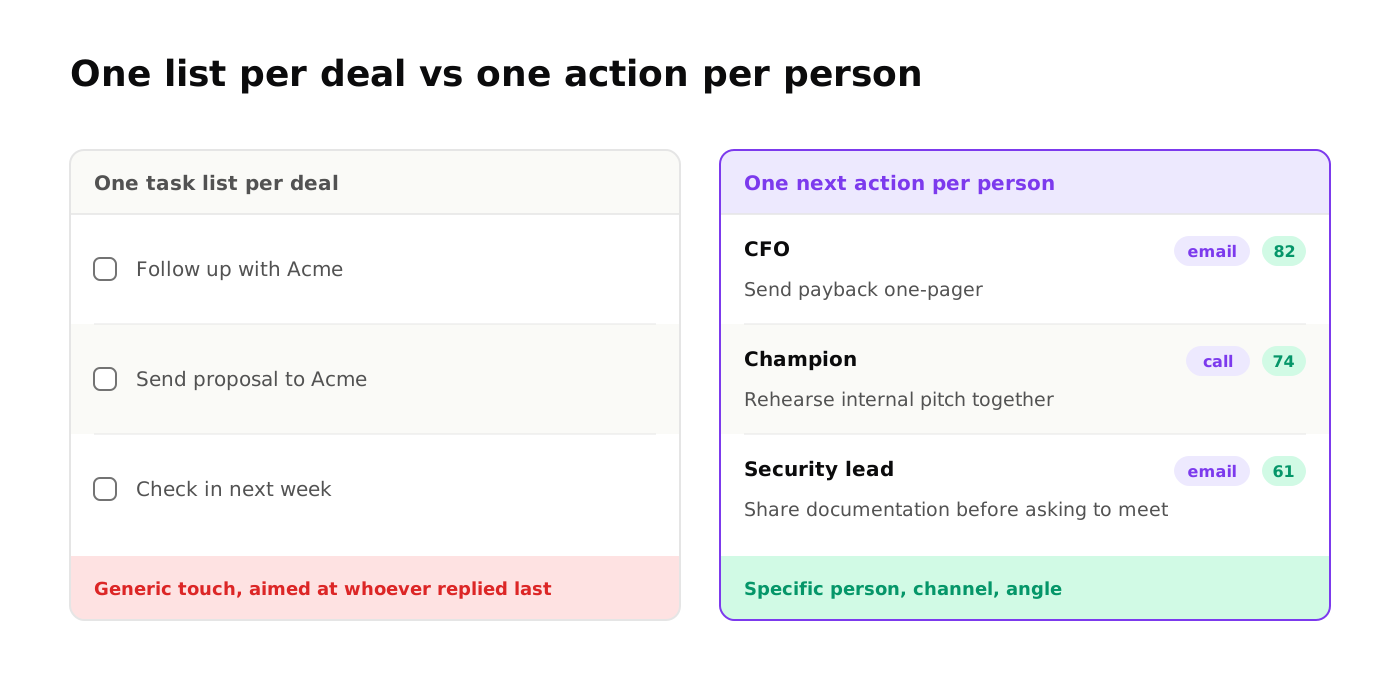
The other part of the definition that matters is scope. A real recommendation names a person, a channel, and an angle. "Follow up with Acme" fails all three tests.
Where the idea comes from
Next best action didn't start in sales. It grew out of recommendation systems, the same family of models that decides what a streaming service queues up for you. Banks and telecom carriers industrialized the approach in the 2000s under the name next best offer: given this customer's history, which product should the agent mention on this call?
The mechanics haven't changed much since. You need a model of the person, a library of possible actions, and a scoring function that ranks the actions for that person at that moment.
What changed when the idea crossed into B2B sales is the environment. A bank scores millions of similar customers with deep transaction history. A seller works a few dozen deals with sparse data on each human, higher stakes per decision, and a professional executing the move.
That difference matters more than any feature. In consumer settings, next best action justifies automation. In complex sales, it justifies ranked judgment: a strong opinion handed to someone qualified to overrule it. Vendors who miss this build autopilot. The good ones build an instrument panel.
Why one task list per deal fails
Most CRMs model a deal as a company with a stage and a task list. Follow up with Acme. Send proposal to Acme. But nobody at Acme experiences your deal as Acme. They experience it as individuals with different jobs, different fears, and different questions you haven't answered yet.
The deals that deserve this machinery are multi-stakeholder deals, and the committee never wants the same thing in the same week. The CFO needs payback math and an exit clause. The security lead wants documentation before she'll take a meeting. Your champion needs help selling internally, which is a different job from being sold to. I wrote about working that whole cast in multithreading in B2B sales, and the short version applies here: a deal is a set of relationships, and each relationship has its own next move.
A single task list collapses all of that into one generic touch aimed at whoever replied last. The rep dutifully "follows up," the three people who each needed something specific hear nothing, and the deal drifts.
So the unit of recommendation has to be the stakeholder, never the account.
What a good recommendation needs
Three ingredients separate a next best action worth reading from a to-do list with better branding.
A read on each person
The same message lands differently on different humans. Some stakeholders respond to a two-line note with a number in it. Others distrust anything that arrives without a methodology attached. A recommendation engine that ignores this is a mail merge with confidence theater on top. The foundation is a per-person read of how each stakeholder decides, which is the whole subject of our field guide to buyer psychology.
Live updating
Whatever read you had at discovery goes stale. A new stakeholder joins the thread. Your champion's replies get shorter. The evaluation slips past the fiscal quarter it was tied to. If recommendations don't re-rank when those signals land, you're executing last month's plan against this week's deal.
Confidence weighting
The system has to tell you how sure it is, recommendation by recommendation. Sparse data should produce hedged advice, visibly. This is the ingredient most tools skip because hedging demos poorly, and it's the one that decides whether reps still trust the output in month three.
How confidence works, in plain terms
A confidence score is evidence weighting. It answers a narrow question: how much support does this recommendation have, and how consistent is that support?
Three things push it up. More data on the person. Agreement across sources, where the public history, the email tone, and the meeting behavior all point the same way. And behavioral confirmation, when the stakeholder responds the way the read predicted they would.
Two things push it down: thin data, and conflict between signals. A profile built from one bio paragraph should score low, and the interface should say so plainly.
Notice what a confidence score stays silent about: whether the deal will close. It measures the quality of the evidence behind the read on a person, and nothing else.
When we built the recommendation layer in RevSage, we set roughly 80% directional accuracy from public data as the design target for a first-pass read, improving when a stakeholder completes an assessment. That is a design target, never a certainty about any individual, and any vendor quoting accuracy without that framing is selling you a horoscope.
When to override the machine
You should override a recommendation in three situations.
You hold information the system can't see. Your champion told you off the record that the CFO is on the way out. The room went cold at slide nine in a way no transcript captures. Complex deals leak information through channels no tool ingests, and the rep in the room is the only sensor that catches it.
The recommendation breaks a promise. If you told the buyer you'd wait until their board meeting and the machine wants a nudge email on Tuesday, the machine loses. Trust compounds across a deal. An optimization that spends it is negative even when it works.
Confidence is low and your read disagrees. A low-confidence recommendation is a hypothesis, and your own hypothesis has standing too. Test yours first.
One discipline turns overrides from noise into signal: say why, and record it. "Skipping this because the CFO is out this week" teaches the system, or at minimum teaches your future self at the pipeline review.
And watch your own pattern. If you override most recommendations, either the tool has no real read on your buyers, or you're overriding toward comfort, which usually looks like messaging the friendly champion again instead of the silent security lead. Honest reps will admit the second case is common.
A week of calibration
The best mental model I've found for this category: next best action, done right, behaves like a sales manager who has read every email, remembers every meeting, and states their confidence along with their opinion. You wouldn't obey that manager blindly. You wouldn't ignore them either.
So calibrate. For one week, before every meaningful touch, write down what you would do next and why. Then look at the recommendation. Where you agree, move fast. Where you disagree, dig into which of you knew something the other didn't.
That same test works in a vendor trial, and it's the standard I hold next best action software to as a category: the recommendation has to name the person, show its reasoning, admit its uncertainty, and survive a week of comparison against a good rep's instincts. Anything less is a task list wearing a lab coat.
Frequently asked questions
- What is next best action in sales?
- Next best action is a recommendation system for deals. At any moment it ranks every possible move (email a specific stakeholder, call your champion, send documentation, wait) by expected usefulness and surfaces the top one with reasoning attached. A good recommendation names a specific person, a channel, and a message angle, and it updates as the deal changes.
- How does next best action work?
- Three components do the work: a model of each stakeholder (how they decide, what they respond to), a library of possible actions, and a scoring function that ranks those actions for that person at that moment. Signals from the live deal, replies, silences, meeting behavior, feed back in so the ranking stays current instead of executing a stale plan.
- Where did the next best action concept come from?
- It grew out of recommendation systems. Banks and telecom carriers ran 'next best offer' engines in the 2000s to decide which product an agent should mention to a given customer. B2B sales borrowed the frame, but with a key difference: in complex sales the output is ranked judgment for a professional to weigh, never blind automation.
- When should a rep override a next best action recommendation?
- Override when you hold information the system can't see (an off-record comment, a cold room), when the recommendation would break a promise you made to the buyer, or when confidence is low and your own read disagrees. Say why and record it. Constant overrides with no pattern mean either the tool has no real read on your buyers or you're drifting toward comfortable actions.
About the author
Rishi Patel, Founder & CEO, RevSage.ai. Rishi has spent 11 years building and scaling B2B SaaS companies, most of it obsessing over why some reps consistently read buyers right and most don't. He founded RevSage to give every rep the buyer intuition of their best teammate.