Pipeline
Multithreading in B2B sales: selling to the whole buying committee
Single-threaded deals die with one job change. How to map the buying committee, multithread without burning your champion, and measure threading health.
By Rishi Patel, Founder & CEO, RevSage.ai · · 8 min read
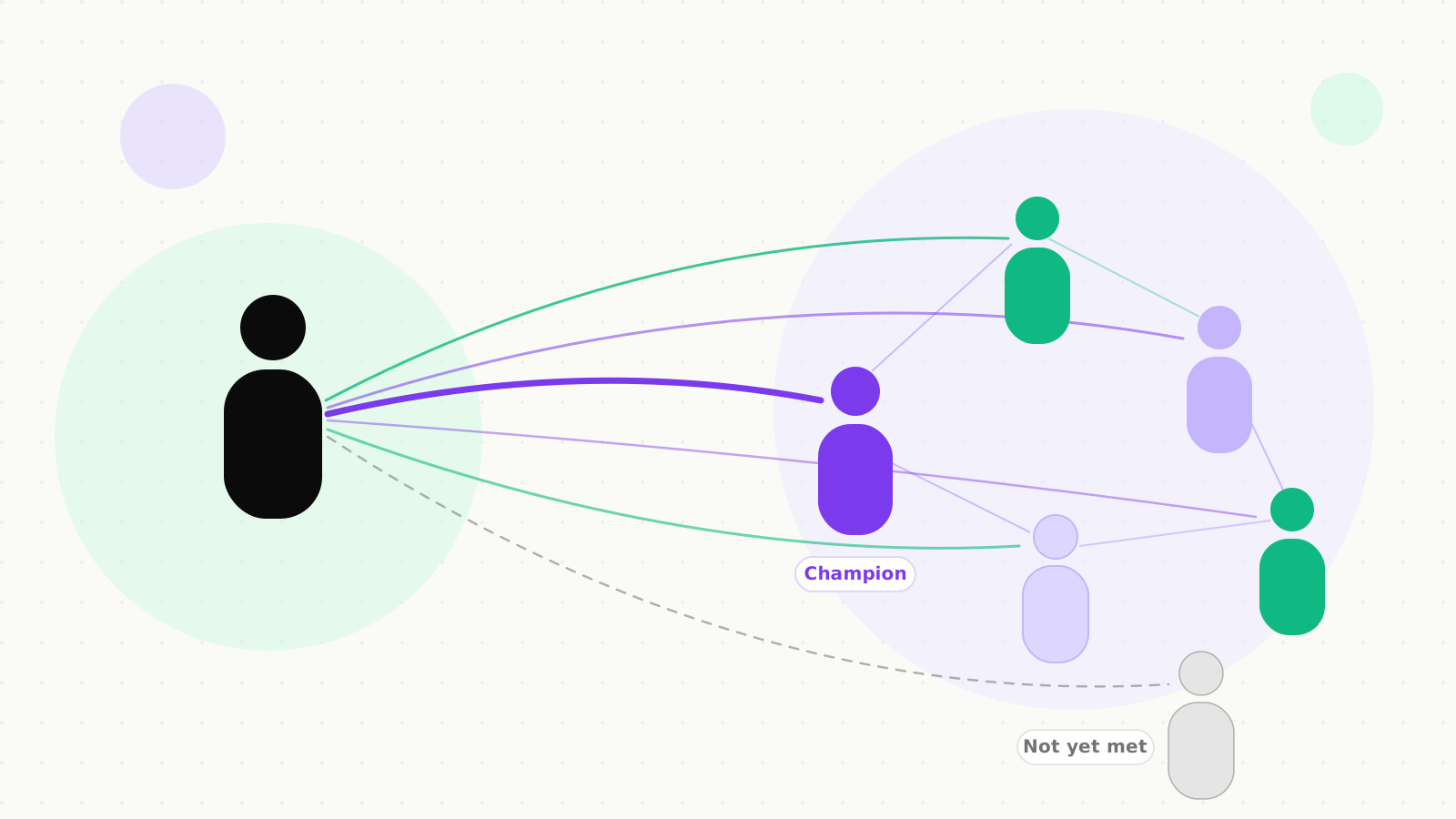
The deal was at 90% in the forecast. Champion engaged, security review passed, legal redlines nearly done. Then the champion took a job at another company, and within three weeks the deal didn't slip. It evaporated. There was nobody left inside the account who could explain why the purchase mattered.
I've watched that movie more times than I'd like to admit across 11 years of building B2B SaaS companies, and the rep's post-mortem is always the same sentence: "We had a great relationship." Singular. One relationship, holding up a six-figure deal, the way one nail holds up a heavy picture frame.
Multithreading is the unglamorous fix. It rarely feels urgent, because single-threaded deals look healthy right up until the moment they're dead. This is how I think about doing it well: who actually sits on the committee, how to read them, and how to build threads without making your champion feel ambushed.
Key takeaways
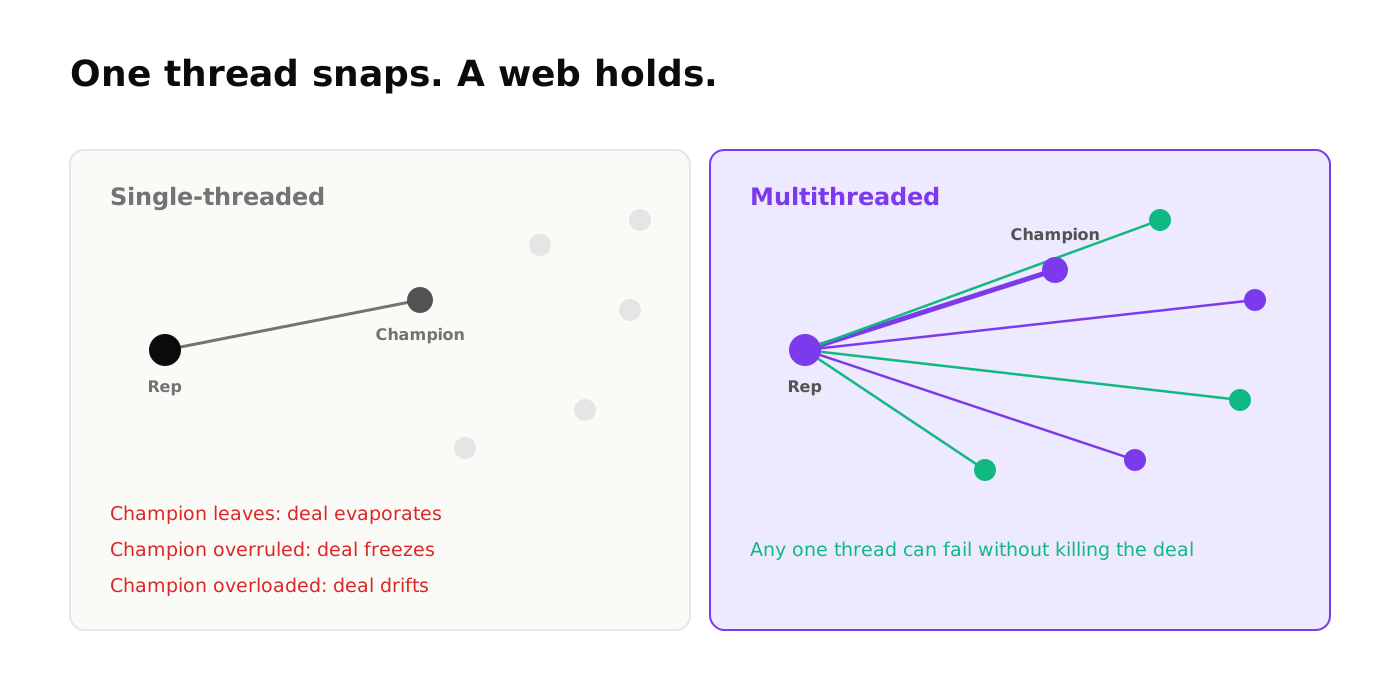
- Single-threaded deals die from three causes: the champion leaves, the champion gets overruled, or the champion can't sell the purchase alone.
- The committee is bigger than your contact list. Gartner puts a typical complex B2B buying group at six to ten people, and Gong found won deals between $50K and $250K typically involve at least ten stakeholders.
- Multithread through your champion, never around them. Every new thread should make their internal job easier.
- Each stakeholder needs a different message. The CFO, the end user, and the security lead are buying three different products.
- Threading health is measurable. Count active relationships per deal in every pipeline review, and treat one as a flag.
Why single-threaded deals die
Nobody plans to be single-threaded. It happens by default, because the champion is responsive and friendly and the rest of the org chart is work.
Then one of three things happens.
The champion changes jobs. People move, and B2B sales cycles are long enough that the two regularly collide. When your only relationship walks out the door, the deal's institutional memory walks out with them.
The champion gets overruled. Somewhere past the demo stage, a person you've never met asks a question your champion can't answer, and the deal freezes while the objection sits unaddressed. I covered how to spot that silent-stakeholder stall, and the restart play for it, in why deals stall.
The champion can't sell it alone. This one is the quietest. Your champion believes in the purchase but lacks the internal capital, the materials, or the patience to walk it through finance, security, and two skeptical peers. The bottleneck was always capacity, even while the enthusiasm looked great in your CRM notes.
Notice what's missing from that list: the product. Single-threaded deals rarely die because the buyer stopped liking what you sell. They die because exactly one person was carrying it.
The committee is bigger than your contact list
The numbers here should change how you run deals. Gartner's buying research puts the typical buying group for a complex B2B solution at six to ten decision makers, each showing up with research they gathered independently. The same work finds buyers spend only about 17% of the journey meeting with potential suppliers, all suppliers combined.
Deal size raises the stakes further. Gong's deal data shows that a won deal between $50K and $250K typically involves at least ten stakeholders, and that deal value climbs with the number of people involved.
Put those together and the math is uncomfortable. If ten people shape the outcome and you know two of them, eight votes on your deal belong to strangers. They're forming opinions from your champion's secondhand retelling, a pricing page, and whatever your category's reputation is that quarter.
Multithreading is simply deciding you'd rather those opinions form from contact with you.
Map the committee before you work it
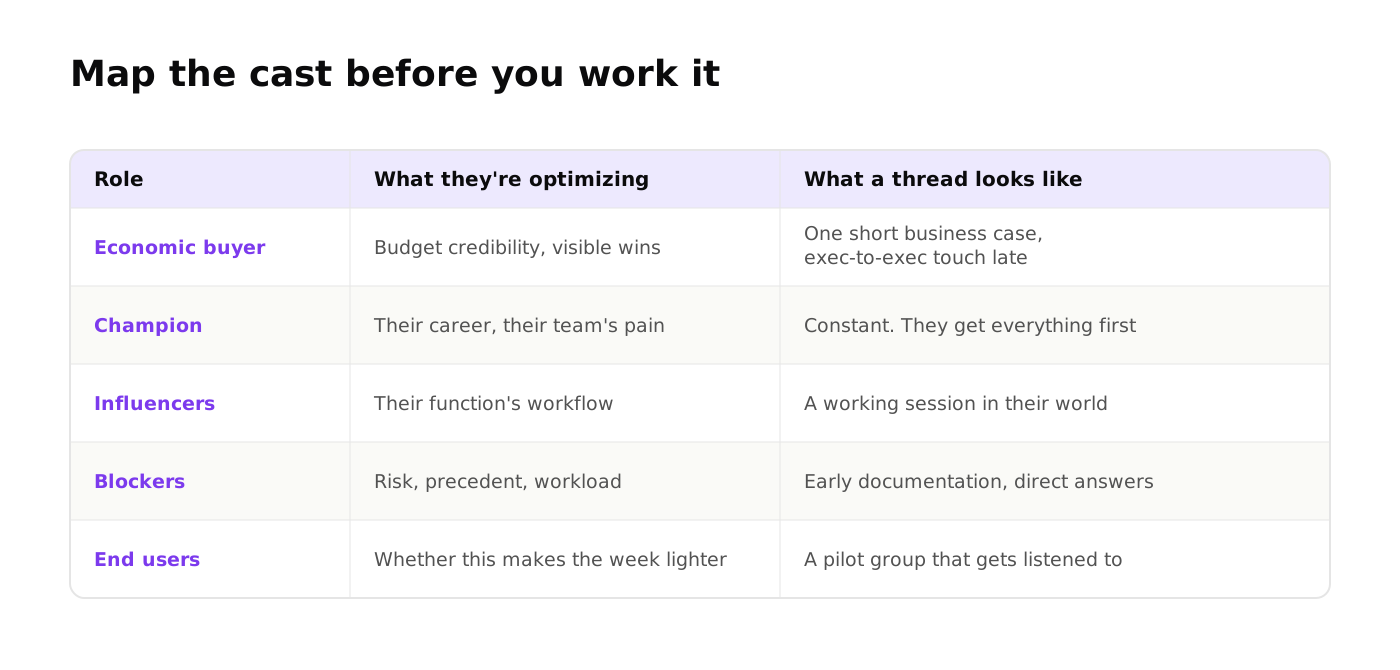
I run this as a fifteen-minute exercise on any deal worth real money. Draw the cast, then write one line per person: what they care about, and what their current disposition toward you probably is.
The roles repeat across almost every committee:
| Role | What they're optimizing | What a thread with them looks like |
|---|---|---|
| Economic buyer | Budget credibility, visible wins | One short business case, exec-to-exec touch late |
| Champion | Their career, their team's pain | Constant. They get everything first |
| Influencers | Their function's workflow | A working session in their world |
| Blockers | Risk, precedent, workload | Early documentation, direct answers |
| End users | Whether this makes the week lighter | A pilot group that gets listened to |
The mapping question reps skip is disposition. You usually can't survey the committee, but their behavior tells you plenty: who opens and forwards your materials, who joins meetings and who stopped, who asks hard questions (engaged skeptics are gifts) and who has gone quiet. A blocker who asks nothing is more dangerous than one who grills you for an hour. Reading individual stakeholders is its own skill, and the four patterns I keep meeting are broken down in the four buyer types.
Tracking that map by hand across a whole pipeline is where the discipline usually collapses. It's one of the jobs we built RevSage.ai to do: it watches engagement behavior per stakeholder, keeps a living read on each one, and flags deals whose threading has gone thin. The read on any individual is directional rather than certain, but a directional map beats two names and hope.
Multithread through your champion, not around them
The fastest way to kill a good champion relationship is to make them feel handled. Cold-emailing their CFO without warning reads as distrust, and champions repay distrust with information you no longer get.
So make every new thread a gift to them instead:
- Ask the question that opens doors. "Who else does this decision affect, and what will they want to know?" Champions answer it freely, because it's about their success, and the answer is your threading plan.
- Offer artifacts, then offer to deliver them. "Want me to put together a one-pager for your security lead? Happy to walk them through it directly so you don't have to play translator." You've just asked for an introduction without asking.
- Run a working session, never a second pitch. A 30-minute session where the ops lead brings real workflow questions builds a relationship. Forwarding the same deck builds nothing.
- Rehearse the internal meeting. Before the committee review, spend twenty minutes asking your champion what the hardest question will be and drafting the answer together. You're threading into a room you'll never enter.
Timing matters on the executive thread specifically. Gong's analysis of more than a million executive sales cycles found that win rates drop roughly 6% when an executive kicks off the evaluation, but rise about 5% when the executive enters around the third touchpoint. Executives respond to substance, so bring yours in once there's a real deal to discuss, pointed at their counterpart with a specific job: confirm priority, sponsor the timeline, own the relationship after signature.
One committee, three different sales
A deck that thrills your champion will bore their CFO and alarm their security lead. Stakeholders aren't buying the same product, so stop selling them the same story.
- For the CFO: one page, cost of the problem, cost of the fix, time to payback, and the exit terms. Resist the feature tour entirely.
- For end users: what changes on Monday morning, what stops being annoying, and proof you've made adoption painless somewhere like their team.
- For security and IT: documentation before they ask, your technical lead on the call, and straight answers about failure modes. Volunteered transparency is the fastest trust signal in that thread.
- For the ops or RevOps owner: how it fits the existing stack, what it replaces, and who owns the integration. They've inherited tool sprawl before, and they remember.
The discovery work that surfaces who needs which story is half the battle, and the questions that map a decision (who signs, who vetoes, what burned them last time) are laid out in discovery call questions.
Make threading visible in pipeline reviews
What gets inspected gets done. If your deal reviews only inspect stage and close date, reps will keep running one-thread deals, because threading is invisible in those two numbers.
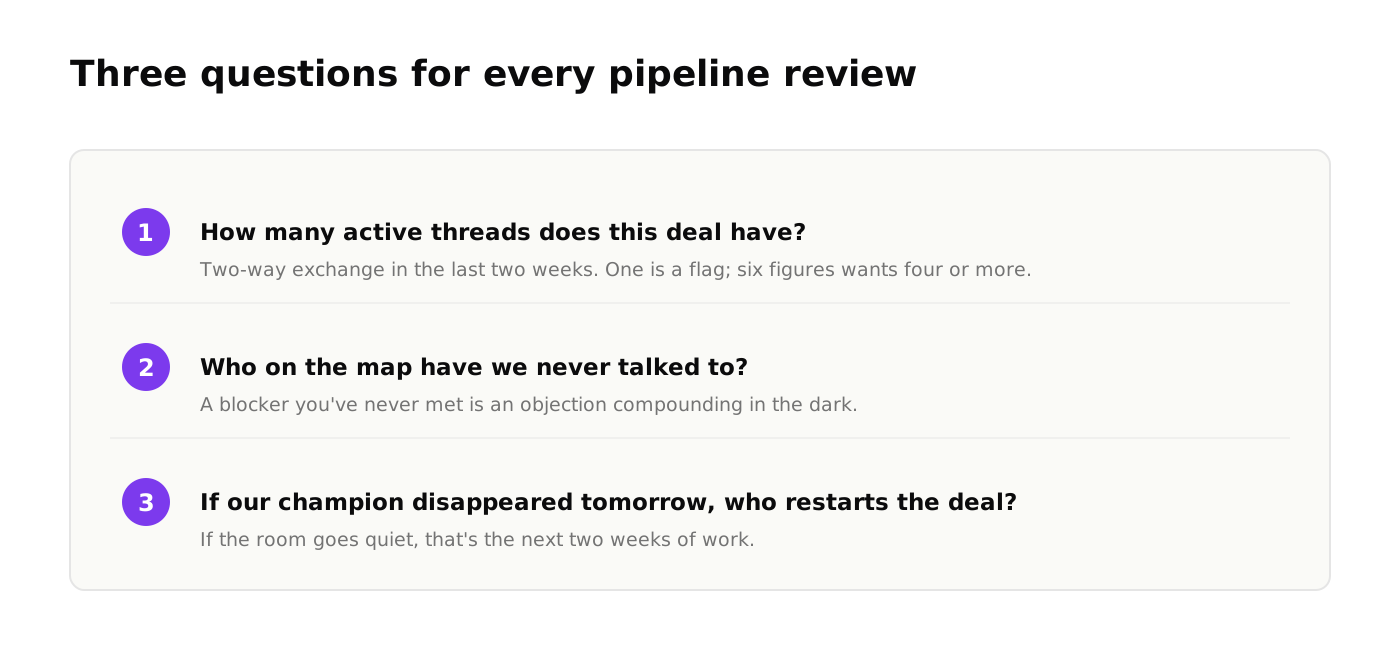
Three questions I push into every review:
- How many active threads does this deal have? Active means a two-way exchange in the last two weeks, not a name in the CRM. One is a flag, two is a start, and on six-figure deals I want four or more.
- Who on the map have we never talked to? Especially blockers. A blocker you've never met is an objection compounding interest in the dark.
- If our champion disappeared tomorrow, who restarts the deal? If the room goes quiet, that's the next two weeks of work, and it's worth saying so out loud.
A note on what not to do: don't turn threading into a quota. Five shallow contacts spammed with the same sequence is single-threading with extra steps. The metric is relationships that would take a call from you, not names touched.
Build the web before you need it
Multithreading has a timing problem: the moment you discover you needed it is the moment it's too late to start. The champion has resigned, the unknown CFO has said no, the deal is already cold.
So do it when it feels unnecessary. This week, take your three biggest deals and run the map: cast, one line each, threads active versus threads missing. Then send your champion the door-opening question and offer one artifact for one stakeholder you've never met.
The reps who survive job changes, reorgs, and surprise vetoes share one boring habit. They never let a deal rest on one nail.
Frequently asked questions
- What is multithreading in B2B sales?
- Multithreading means building relationships with several stakeholders inside a buyer's organization instead of relying on a single contact. In a typical complex B2B purchase, six to ten people shape the decision, so a deal that lives in one person's inbox is exposed to that one person's calendar, credibility, and career moves.
- Why do single-threaded deals fail so often?
- Three failures account for most of it: the champion changes jobs mid-deal, the champion gets overruled by a stakeholder the rep never met, or the champion simply can't sell the purchase internally without support. None of these mean the buyer disliked the product. They mean the deal had exactly one load-bearing relationship.
- How do you multithread without going around your champion?
- Frame every new relationship as help for your champion rather than a detour around them. Ask who else the decision affects, offer materials written for those specific people, and request introductions instead of cold-emailing the org chart. A champion who feels supported opens doors. A champion who feels bypassed closes them.
- When should you involve executives in a deal?
- Gong's analysis of over a million executive sales cycles found that win rates drop roughly 6% when an executive starts the evaluation, but rise about 5% when the executive enters around the third touchpoint. Bring your own executive in once the deal has substance, and aim them at their counterpart with a specific job to do.
About the author
Rishi Patel, Founder & CEO, RevSage.ai. Rishi has spent 11 years building and scaling B2B SaaS companies, most of it obsessing over why some reps consistently read buyers right and most don't. He founded RevSage to give every rep the buyer intuition of their best teammate.