Sales Execution
The dropped thread: how deals die from what buyers said once
Buyers raise what matters to them exactly once. When no seller ever returns to it, silence reads as an answer. How to find and reopen dropped threads.
By Rishi Patel, Founder & CEO, RevSage.ai · · 7 min read
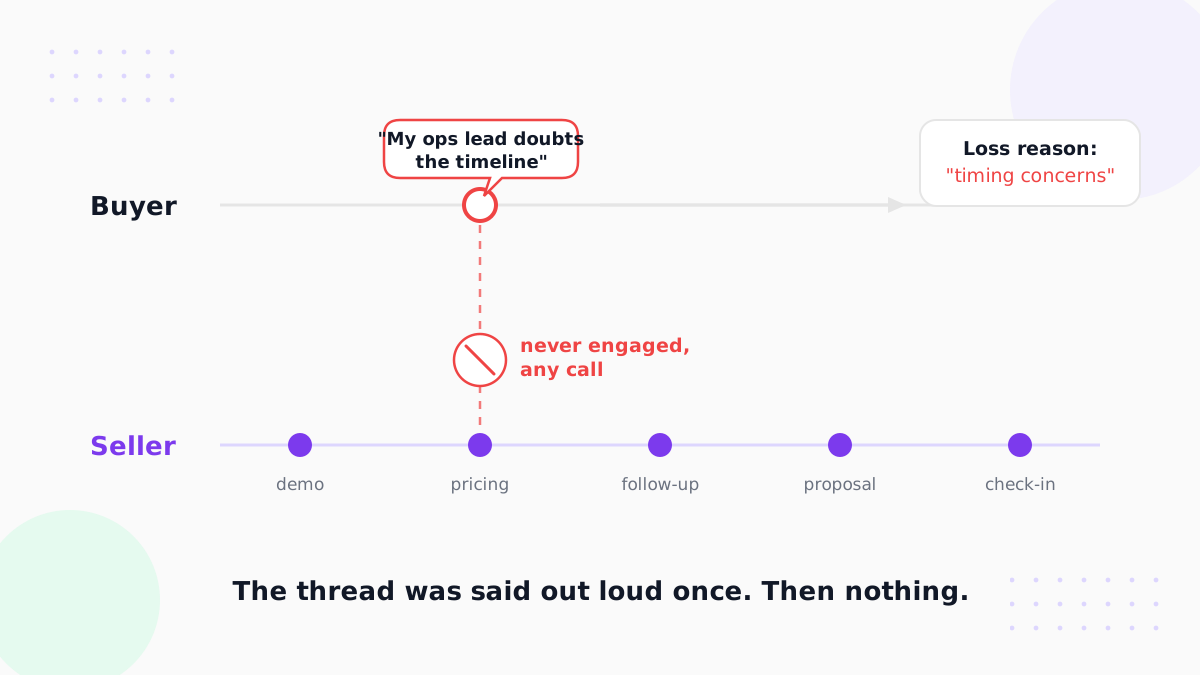
A buyer once mentioned, about forty minutes into a demo call I was reviewing, that her operations lead was skeptical the migration could land before their busy season. The rep said "that's a great point, we should dig into that," and moved to the next slide. I searched every later call in that deal for the words migration, timeline, and the ops lead's name.
Nothing. The topic never came back. The deal died seven weeks later with "timing concerns" in the loss reason field, and everyone acted surprised.
I've come to believe this is the most common failure I see in call reviews, and the least discussed. Sales training spends enormous energy on what to say. Almost nobody instruments the other side of it: the things a buyer said that never got answered.
Key takeaways
- A dropped thread is a topic the buyer raised that no seller ever engaged with, on that call or any later one. It's different from an objection you answered badly. This one you didn't answer at all.
- Buyers pay a small social cost to raise a concern. When it goes nowhere, most won't pay that cost twice. They just fold the silence into their decision.
- Your notes and CRM are structurally blind to this. They record your commitments and your next steps, and almost never the buyer's unengaged topics.
- With call recordings, "we never addressed this" stops being a feeling and becomes a checkable claim: you can search every call and prove the absence.
- The recovery play is simple and slightly uncomfortable. Open your next call with their unanswered item, by name, before anything of yours.
Silence reads as an answer
Think about what it costs a buyer to raise a concern in a live meeting. They're interrupting your flow. They're revealing something about their internal politics, their budget, or their fears. They're taking a small social risk in front of colleagues.
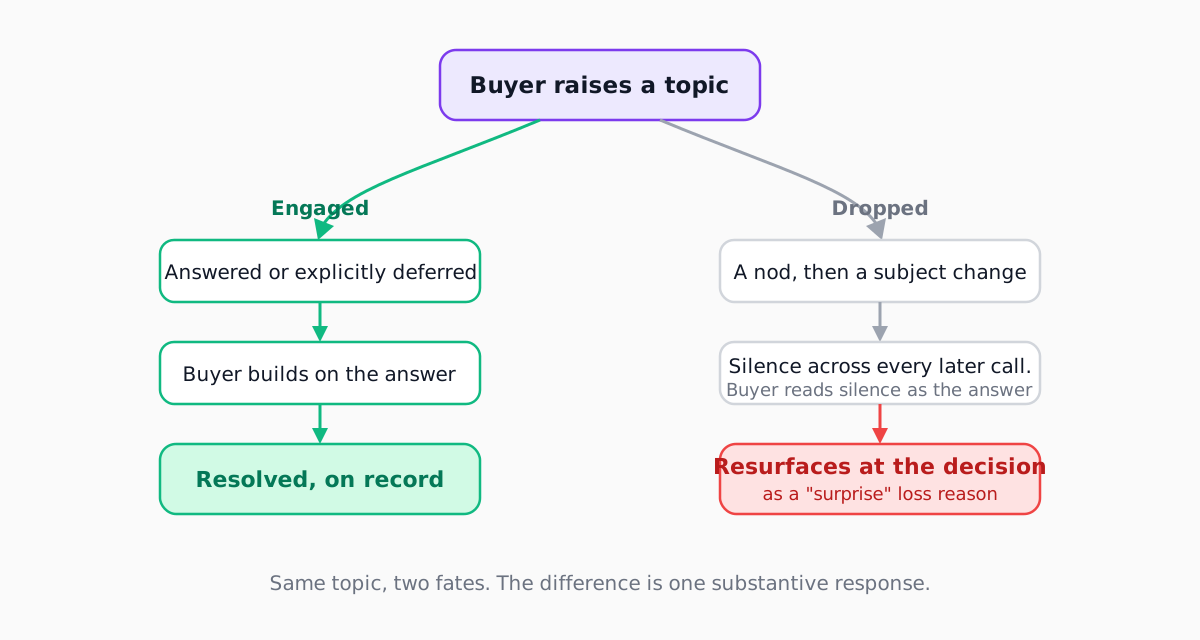
When that investment gets a nod and a subject change, the buyer draws a conclusion. Sometimes the conclusion is charitable: they forgot. More often it's one of these: they don't have an answer, they don't think my concern matters, or they heard me and hoped I'd drop it.
All three readings hurt you. And here's the asymmetry that makes dropped threads so expensive: the buyer almost never re-raises the topic in a cleaner, louder way. Re-raising feels like nagging. So the concern goes underground, does its work quietly, and resurfaces at the end as a "surprise" loss reason that was said out loud on a recorded call weeks earlier.
I wrote separately about what buyers don't say and how much signal lives in hesitation and omission. Dropped threads are the inverse and they're worse, because the buyer did say it. Out loud. Once.
Why good reps drop threads constantly
None of this comes from laziness. It comes from how attention works on a live call and how our tooling records what happened afterward.
The agenda has gravity
You come into a call with a plan: qualify the timeline, show the new reporting module, lock the next meeting. A buyer comment that fits the plan gets engaged. A comment that sits outside it, a worry about an internal system, a mention of another stakeholder's doubts, a half-question about pricing structure, registers as an interruption to route around, politely.
The better prepared the rep, the stronger this pull. I've watched genuinely skilled sellers acknowledge a buyer concern with real warmth and then continue exactly as if it hadn't happened. The acknowledgment felt like handling. It wasn't.
Notes capture your side, never theirs
Look at any rep's call notes and you'll find a faithful record of one thing: what the seller promised to do. Send the deck. Loop in the SE. Book the follow-up. Our note-taking habits exist to protect our own commitments.
The buyer's raised topics have no such protection. There's no CRM field called "things they said that we never answered." So the one artifact that survives the call systematically forgets the most dangerous item on it. If your discovery notes are thin to begin with, the problem compounds, which is why I keep coming back to the discovery questions that actually matter: a question you asked at least leaves a trace. A topic they volunteered leaves nothing.
The next call starts fresh
Even when a rep leaves a call knowing they owe the buyer an answer, the next call opens with a new agenda, new attendees, new momentum. The unanswered item from three weeks ago has to fight for space against everything current. It usually loses. Multiply by four or five calls in a cycle and threads drop through the gaps between meetings, where no one is looking.
Absence is now a checkable fact
Here's what changed in the last few years: this entire failure mode became measurable.
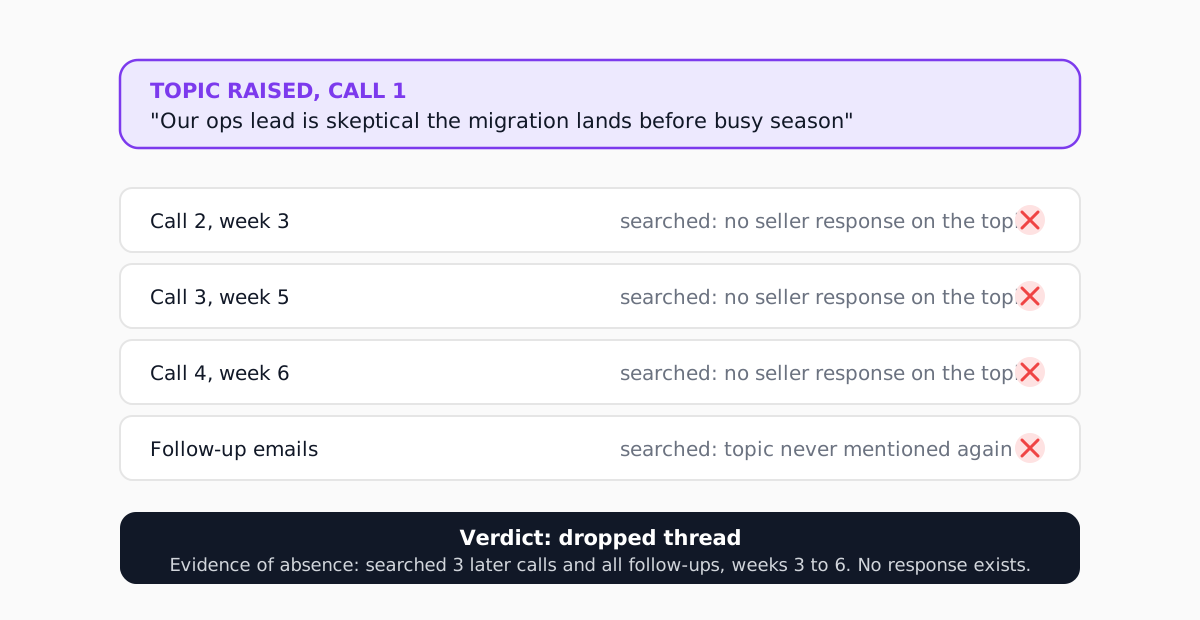
If your calls are recorded and transcribed, "we never addressed her migration concern" stops being an impression and becomes a claim you can verify. Take the topic, search every subsequent call, and either find a substantive seller response or prove there isn't one. Searched four calls across six weeks: no answer exists. That sentence has evidence behind it, with timestamps.
I find this genuinely changes the emotional register of pipeline reviews. "I think we might have left some things hanging" invites a shrug. "She raised the ops lead's skepticism on March 4th and no one has engaged it since" invites action.
A workable definition, if you want to audit your own deals:
| Element | Test |
|---|---|
| Buyer introduced it | The topic came from their side, unprompted or in response to something adjacent |
| It had substance | It named a number, a person, a system, a date, or a condition. Small talk doesn't count |
| No engagement followed | No seller answer, follow-up question, or explicit deferral the buyer accepted, in that call or any later one |
| The window was real | There were later calls or messages where engagement was possible |
That last row matters for fairness. A concern raised in the final ten minutes of the final call was dropped by circumstance. A concern raised in call two of five was dropped by inattention.
The recovery play: return to their agenda
Once you find a dropped thread, the fix is almost embarrassingly simple, and mildly uncomfortable, which is probably why it's rare.
Open your next call with their item. Before your agenda, before the demo, before the pricing update: "Last time you mentioned your ops lead had doubts about the migration timeline. We moved past that too fast, and I want to start there."
Three things happen. First, you get the real answer to the concern, which you needed anyway. Second, you signal that raising concerns with you is worth the social cost, which changes what the buyer tells you for the rest of the deal. Third, you often surface the stakeholder behind the concern, the skeptical ops lead you've never met, who was always going to weigh in eventually. Better now, on your initiative.
If the next call is far away, do it in writing. Quote their words back with the date they said them, give your actual answer or a dated commitment to produce one, and end with a question that lets them tell you whether it landed.
What I'd avoid: bundling the reopened thread into a general recap email where it becomes bullet four of seven. The entire point is that this item gets its own spotlight, because it went dark once already.
Instrumenting this so it stops depending on memory
You can run this discipline manually. A simple thread ledger per deal, one line per buyer-raised topic, with a column for "engaged or not," reviewed before each call, will catch most of it. The habit costs ten minutes per call and it will make you noticeably harder to surprise.
The honest limitation is that manual ledgers depend on the same attention that dropped the thread in the first place. The rep who missed the comment live is the same person writing the ledger afterward. That's the gap we built RevSage to close: it reads every call in the deal, tracks which buyer-raised topics never received a substantive response from anyone on your side, and flags them with the original quote and timestamp before the next meeting, alongside the other risk signals it finds through live root-cause analysis on the deal. The reopen note drafts itself from the buyer's own words.
Tooling or not, the underlying belief is the same, and it's one I hold with some conviction after years of watching post-mortems: most "surprise" losses were announced in advance, by the buyer, on a recording. The information was free. Somebody just had to go back for it.
Frequently asked questions
- What is a dropped buyer thread in sales?
- A dropped thread is a topic the buyer introduced on a call, usually a concern, a constraint, or a question that matters to them, which no seller ever engaged with substantively, on that call or any later one. The buyer notices the silence even when the seller doesn't, and often treats it as an answer.
- Why do salespeople miss topics that buyers raise on calls?
- Attention on a live call gravitates toward whatever advances the deal, so a buyer comment that doesn't fit the agenda gets a nod and then gets buried. Notes capture the seller's own commitments far more reliably than the buyer's raised topics, and no CRM field exists for a question you never answered.
- How do you find dropped threads in past sales calls?
- List every substantive topic the buyer introduced across your calls, then check each one for a seller response with actual content, an answer, a follow-up question, or an explicit deferral the buyer accepted. Anything without one is a dropped thread. Call recordings make this checkable instead of a matter of memory.
- What should you do after finding a dropped thread with a buyer?
- Open your next touchpoint with their unanswered item, by name, before anything of yours. Acknowledge the gap plainly, give a real answer or a dated commitment to one, and let them react. Reopening the thread late beats pretending the silence never happened.
About the author
Rishi Patel, Founder & CEO, RevSage.ai. Rishi has spent 11 years building and scaling B2B SaaS companies, most of it obsessing over why some reps consistently read buyers right and most don't. He founded RevSage to give every rep the buyer intuition of their best teammate.