Buyer Psychology
What buyers don't say: reading unsaid signals in B2B meetings
Hesitation before a pricing question, a tone shift, camera-off patterns: the unsaid signals that predict a B2B deal, and how to read them without overreaching.
By Rishi Patel, Founder & CEO, RevSage.ai · · 8 min read
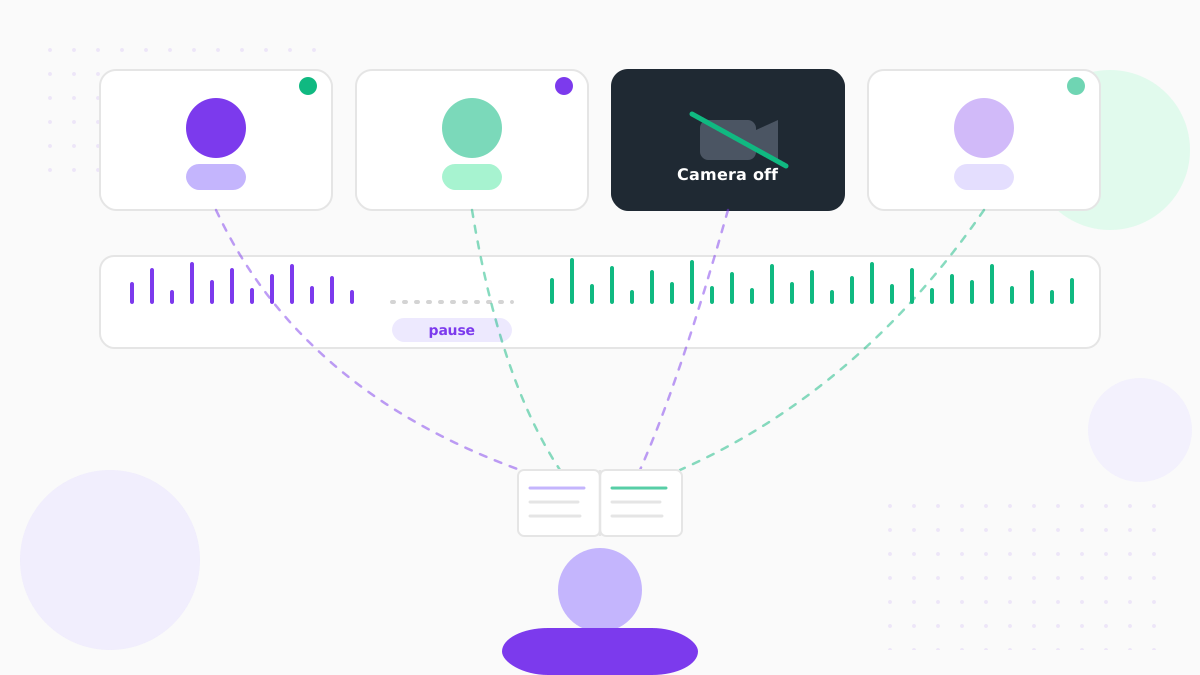
I once sat in on a deal review where the rep swore the deal was in great shape. Then I watched the recording. Every time the buyer's economic sponsor spoke, the champion's voice dropped half a register and her answers got shorter. Nobody said a word about budget risk that call. The tone said it first, three weeks before the deal actually stalled.
After 11 years building and scaling B2B SaaS, that's become the pattern I trust most: the transcript tells you what was said, and the deal usually turns on what wasn't. Pace, pauses, who goes quiet, who stays on camera and who doesn't. None of it shows up in a CRM field, and most of it never comes up in the deal review either, because the deal review usually runs off the same transcript that missed it the first time.
This isn't a case for psychoanalyzing buyers off a Zoom recording. It's closer to weather reading. A shift in the wind doesn't guarantee rain, but ignoring it is its own kind of forecast error.
Key takeaways
- The most predictive information in a B2B meeting is often nonverbal or para-verbal: hesitation before a pricing question, a tone shift tied to one stakeholder, camera-off patterns, and who goes quiet when security comes up.
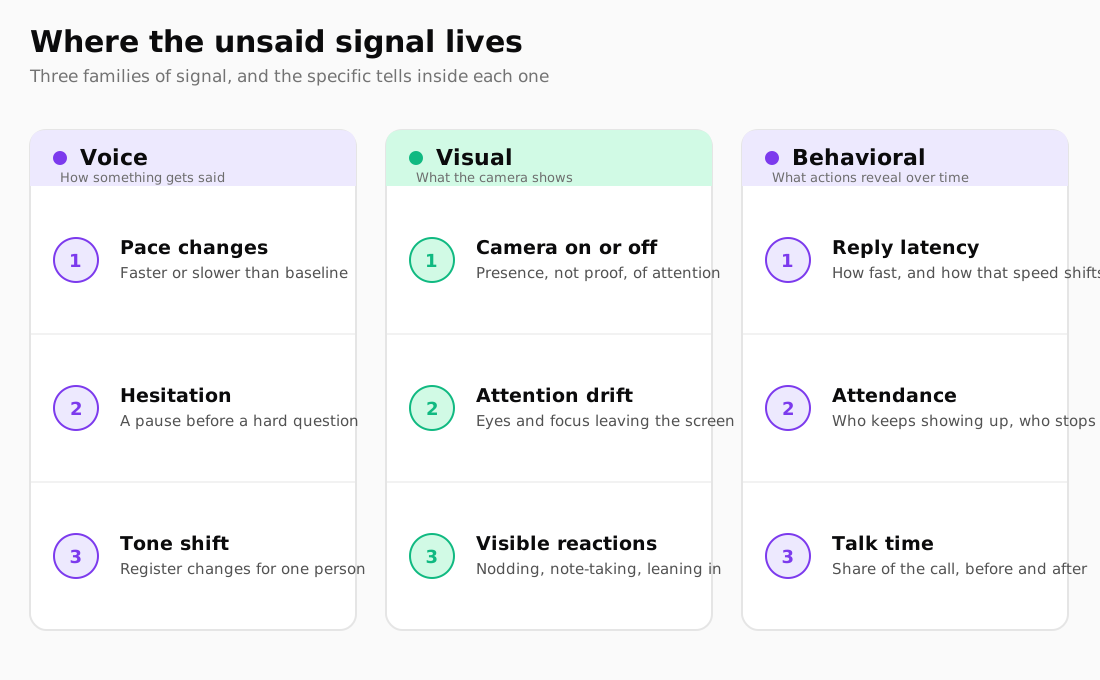
- Unsaid signals split into three families worth tracking on their own terms: voice (pace, hesitation, tone), visual (engagement, attention drift), and behavioral (reply latency, attendance patterns).
- Reps miss most of this live because presenting and reading a room draw on the same attention, and you cannot fully do both at once.
- Gong Labs' analysis of 326,000 sales calls found reps on closed-won deals talk noticeably less than reps on lost deals, one clue that listening bandwidth and outcome are linked.
- None of these signals are proof on their own. Treat each one as a hypothesis worth testing, never a verdict, and never a lie detector.
Where the unsaid signal actually lives
Three families of signal carry most of the weight, and they behave differently enough that lumping them together loses information.
Voice covers pace, hesitation, and tone: how fast someone talks, where they pause, and how their register shifts depending on who's in the room. Visual covers engagement and attention drift: where eyes go, who stays present on camera, who is visibly doing something else. Behavioral covers reply latency and attendance patterns: how fast someone answers, and who quietly stops showing up.
Academic interest in this predates SaaS by decades. Nalini Ambady and Robert Rosenthal's classic meta-analysis on "thin slices" of expressive behavior found that observers watching brief, often silent clips could predict real-world outcomes at rates well above chance.
The studies behind that finding weren't about sales calls. They covered teacher evaluations, negotiation outcomes, and clinical judgments. But the underlying claim holds up in a sales meeting too: a small amount of expressive behavior carries a disproportionate amount of signal, if someone is paying attention to it.
Voice: pace, hesitation, and tone
The clearest version of this I see on repeat: a buyer answers every question smoothly until pricing comes up, then there's a half-second gap before "yeah, that should work." The gap is the tell, not the words. I'll flag this one as illustrative rather than a lab finding. I haven't seen a published study measuring pause length before pricing questions specifically, but the pattern shows up often enough in call reviews to earn a rep's attention every time.
Tone shift tied to a specific stakeholder is a stronger, more repeatable version of the same idea. Watch what happens to a champion's voice the moment a skeptical VP joins the call. If it tightens, that VP carries more internal weight than the org chart suggests. Different buyer types carry stress differently in tone too, which is part of why the four behavioral types I mapped in the four buyer types every B2B rep sells to show distinct tells under pressure.
Visual: engagement and attention drift
On video, attention drift shows up as eyes moving off screen, a second monitor getting more interesting, or someone typing while your slide is up. It's a real signal, but read it carefully. A month-long field study led by researchers at the University of Georgia and University of Arizona found that camera use itself correlates with more fatigue, and, counterintuitively, with less engagement, not more.
A buyer with their camera off might be more present, not less. Don't score camera-off as disengagement by default.
Behavioral: reply latency and attendance patterns
Response latency and who shows up are the easiest signals to track, because they're already logged somewhere: your inbox and your calendar. A champion who answered within an hour for three weeks and now takes two days had a conversation you weren't part of. I've written more about reading these patterns deal by deal in buyer psychology in B2B sales.
Attendance carries a similar weight. A stakeholder who stopped joining calls is telling you something about priority, even when their calendar status still says "tentative."
Why reps miss it while it's happening
Here's the uncomfortable part: most reps aren't missing these signals because they're careless. They're missing them because presenting well and reading a room draw on the same limited attention, and delivering the pitch always wins that fight in the moment.
Gong Labs' analysis of talk-to-listen ratios across 326,000 sales calls backs this up sideways. Reps on closed-won deals talked about 57% of the time versus 62% on lost deals, and calls where the rep talked more than 65% of the time converted noticeably worse.
Part of that gap is persuasion mechanics. Part of it, I'd argue, is that a rep talking that much has almost no bandwidth left to notice a pause, a tone shift, or a stakeholder who went quiet. Talking and observing compete for the same resource, and talking usually wins without either side noticing it happened.
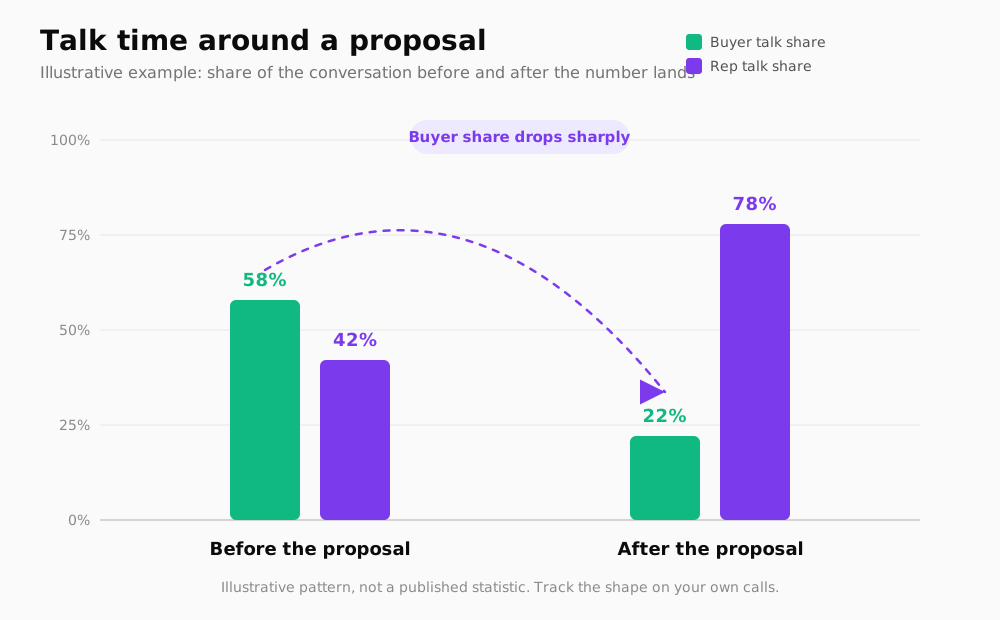
The moment I watch for most closely, because it's the one reps consistently miss live, is talk-time collapse right after a proposal lands. A buyer who was asking questions and building on your points suddenly goes monosyllabic once the number is on the table. In the room, that reads as processing. On the recording, watched a second time, it usually reads as retreat.
How to actually review a call for what wasn't said
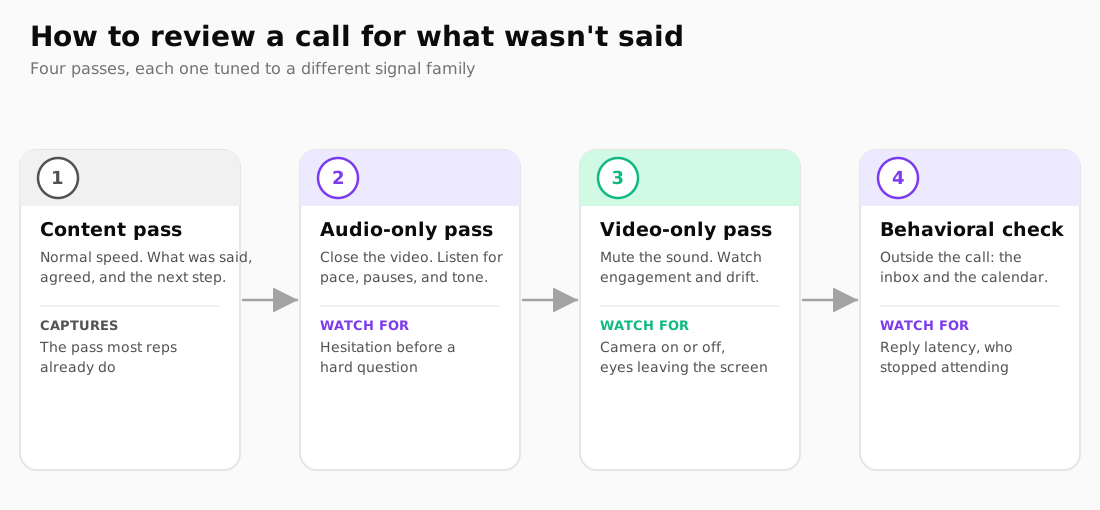
Watching a recording once, for content, is not the same exercise as watching it for what wasn't said. I run these as separate passes, and I'd recommend any rep serious about this do the same.
First pass, normal speed, for content: what was said, what was agreed, what's the next step. This is the pass most reps already do.
Second pass, audio only, for voice: close the video, listen for pace changes and pauses, and mark the timestamp anytime the tone shifts. You'll hear things you missed while reading faces the first time around.
Third pass, video only, muted: watch engagement and attention. Who's looking at the screen, who's looking away, who left the camera off the whole call versus who turned it off partway through.
Then check the behavioral layer outside the call entirely: reply times on the last five emails, who accepted the follow-up invite, and who's cc'd now that wasn't cc'd before.
Security questions deserve a special note here, since they surface a version of this that's easy to miss. Watch who goes quiet the moment security or data handling comes up. Silence from your technical evaluator at that exact moment is rarely nothing.
I've written a longer version of how to separate the stated objection from the real one in objection handling in live sales meetings. The same discipline applies to silence as it does to spoken pushback: diagnose before you react.
The honest limits: directional, never certain
I want to be blunt about where this stops being useful. Charles Bond and Bella DePaulo's meta-analysis of over 200 studies and roughly 24,000 judges found that people correctly spot lies from behavioral cues only about 54% of the time, barely better than a coin flip.
If trained researchers pooling decades of data land that close to chance, no rep, and no piece of software, should claim certainty from a paused sentence or an averted glance.
That's why I keep coming back to the word directional. A hesitation before a pricing question is a reason to ask a better follow-up question, not a reason to assume the deal is dead. A camera staying off might mean disengagement, or it might mean someone is finally paying full attention instead of managing how their face looks on screen.
Read one signal in isolation and you'll misread plenty of buyers. Read a pattern across several signals, over several touchpoints, and you start to see something real.
This is also where I'll mention what we do at RevSage.ai, briefly, because it's directly relevant: we analyze the whole deal context, including what was unsaid, using behavioral intelligence, voice intelligence, and computer vision, then flag risk early and generate hyperpersonalized artifacts inside the tools reps already use. None of that replaces judgment.
It's built to surface the pattern faster than a rep juggling forty open deals can spot it by hand, then hand back a directional read the rep can act on. You can see how the read comes together on our product page.
Three moves to try this week
Split your next call review into passes. Content once, audio only once, video only once. Twenty extra minutes on your best open deal will teach you more than an hour spent on five closed ones.
Build a stakeholder tone baseline. Note how your champion sounds in a normal week. The deviation from that baseline, not the tone itself, is the signal worth chasing.
Track talk time around your next proposal moment specifically. If the buyer's share of the conversation drops sharply right after you name a number, treat it as a prompt to ask what changed, not a reason to keep talking to fill the silence.
Read the quiet parts too
Most of what a deal tells you happens outside the words. A rep who only reviews the transcript is reading half the meeting, at best. The other half lives in the pause before the pricing answer, the tone that tightens when the CFO speaks, the camera that goes dark, and the reply that used to come in an hour and now takes two days.
None of it is certain. All of it is worth watching, especially on the deals your CRM still calls healthy.
Frequently asked questions
- How do you read buying signals on a sales call?
- Track three families separately: voice (pace, hesitation, tone), visual (engagement, attention drift), and behavioral (reply latency, attendance patterns). Review the recording in more than one pass, since presenting and reading a room compete for the same attention live. A shift from someone's normal baseline matters more than any single moment in isolation.
- What are negative buying signals in B2B sales?
- The common ones are a widening gap in reply latency, a champion's tone tightening around a specific stakeholder, talk time collapsing right after a proposal lands, and a technical evaluator going quiet exactly when security or data handling comes up. Each is a prompt to ask a direct question, not proof the deal is dead.
- Can AI detect buyer sentiment or emotion accurately?
- It can flag patterns across voice, visual, and behavioral signals faster than a rep juggling dozens of deals, but accuracy stays directional rather than certain. Research on human lie detection from behavioral cues puts accuracy barely above chance, so any tool making a similar inference should be treated as a hypothesis generator, not a verdict.
- Why do sales reps miss important buyer cues during a live call?
- Presenting well and reading a room draw on the same limited attention. Data from Gong Labs shows reps who talk more than 65% of a call convert worse, partly because there is little bandwidth left to notice a pause or a tone shift while carrying that much of the conversation.
- What does it mean when a buyer goes silent on video or turns off their camera?
- Not automatically disengagement. Field research on video meetings found camera use itself correlates with more fatigue and, in some cases, less participation, so a camera staying off can mean someone is more focused rather than less interested. Treat it as one data point, not a conclusion.
About the author
Rishi Patel, Founder & CEO, RevSage.ai. Rishi has spent 11 years building and scaling B2B SaaS companies, most of it obsessing over why some reps consistently read buyers right and most don't. He founded RevSage to give every rep the buyer intuition of their best teammate.