Sales Execution
Sales follow-up that gets replies: cadence, channel, and message
Why checking in never gets replies, what to send instead, how many follow-ups the data supports, and when a breakup email saves the deal.
By Rishi Patel, Founder & CEO, RevSage.ai · · 8 min read
Open your sent folder and reread your last ten follow-ups. If your pipeline looks like the dozens I've audited, at least seven of them say some version of "just checking in" or "bumping this to the top of your inbox." Every one of those emails asks the buyer to do your job for you: remember the deal, rebuild the business case, and report status to a vendor.
Buyers reply when a message changes something. What they know, what they need to do next, or how risky waiting feels. A status request changes nothing, so it earns nothing.
I've watched a stalled deal reopen because one follow-up contained a single sentence the buyer could forward to her CFO. That's the bar. What follows is how to clear it on purpose: what to write, how often to send it, and when to switch channels or walk away.
Key takeaways
- "Just checking in" fails because it adds no information and makes no specific ask. In Gong's data, the generic closer "Thoughts?" cuts meetings booked by 20%.
- Persistence is rational: 70% of cold email replies arrive after the first email, and returns hold up through the sixth or seventh touch.
- Every follow-up must pass a three-part test: new information, one specific ask, and a reason rooted in the buyer's world.
- Switch channels deliberately. Match the channel to how the buyer already behaves, and change it the moment a thread goes quiet.
- A breakup email is a tool. Send it on purpose at the end of a sequence, never out of frustration, and leave one specific door open.
Why checking in never works
A check-in is an invoice for attention with nothing attached. The buyer opens it, finds no new fact, no easier next step, and no reason that involves them, and archives it in four seconds.
The phrase-level data is brutal. Gong analyzed 304,174 follow-up prospecting emails and found that ending with "Thoughts?" decreases meetings booked by 20%, and that "following up" language also correlates with fewer meetings (Gong).
Here's my actual grievance: sequencing tools industrialized the check-in. They made it possible to be ignored at scale, and a generation of reps mistook the activity metrics for progress.
Silence rarely means rejection. Deals stall for structural reasons (a stakeholder left, a priority shifted, someone got nervous internally) far more often than buyers change their minds about the problem; we unpacked those patterns in why deals stall. A check-in addresses none of those causes. It just transfers the work of reviving the deal to the person with the least incentive to do it.
The three-part reply test
Every follow-up needs to clear three gates before it leaves your drafts:
- New information. Something the buyer didn't have yesterday: a sharper answer to their objection, a one-pager their CFO can read in 90 seconds, a change in their world such as funding news, a competitor move, or a deadline that just got real.
- One specific ask. Answerable from a phone in under a minute. "Does Thursday at 2 work for 20 minutes with your RevOps lead?" beats "any update on your end?"
- A reason rooted in their world. Their quarter end, their migration, the initiative they named on your last call. If the only reason for your email is your pipeline review, buyers can smell it.
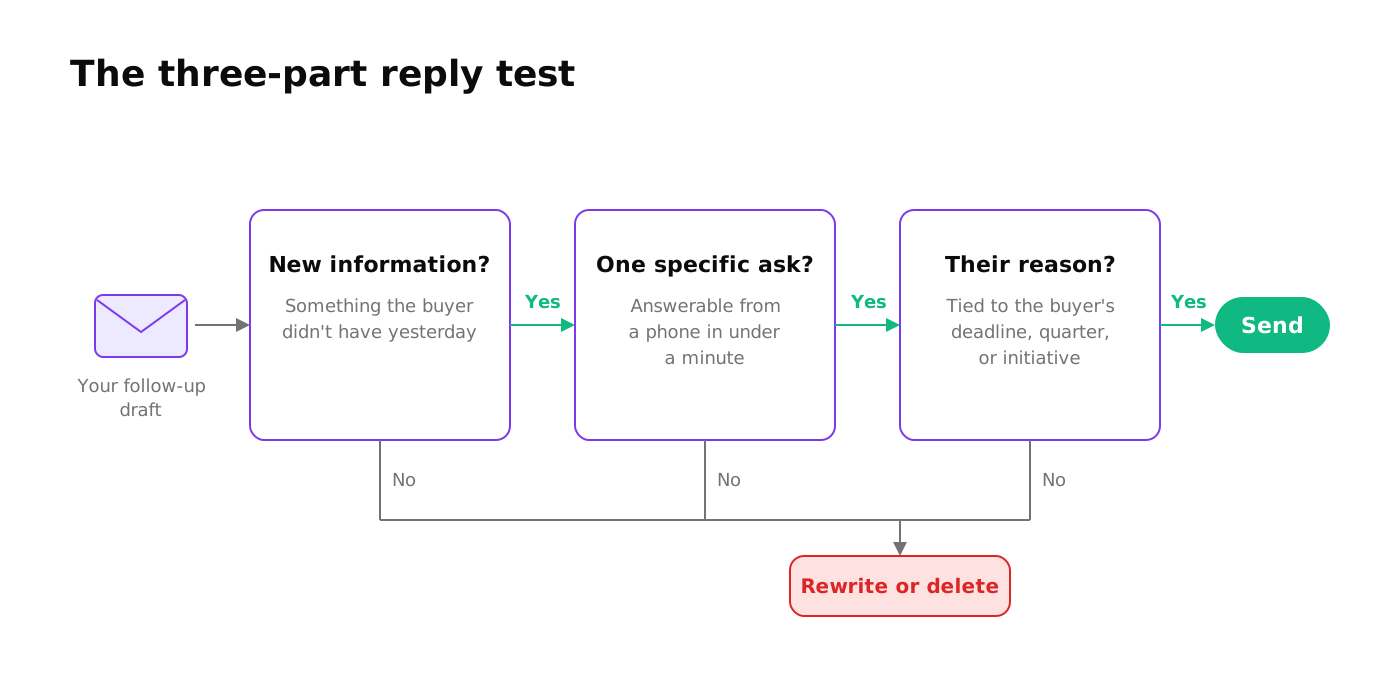
A strong follow-up clears all three gates. An email that clears none is a withdrawal from an account with a low balance, and you'll want that credibility later in the deal.
How many touches, how fast
Speed matters most at the start. A Harvard Business Review study of lead response found that firms contacting a new lead within an hour were nearly seven times as likely to qualify it as firms that waited even an hour longer (HBR). The earliest touches carry disproportionate weight, so spend your best material there.
Then keep going past the point where it feels comfortable. Backlinko's analysis of 12 million outreach emails found that a single follow-up boosts replies by 65.8% (Backlinko). And in the cold email dataset Gong built with 30 Minutes to President's Club from more than 85 million emails, 70% of replies arrive after the first email, with returns collapsing after six or seven (30MPC).
My working cadence, shaped by that data and my own teams:
| Window | Active deal (after a meeting) | Cold outreach |
|---|---|---|
| Day 0 | Recap with one clear next step, sent same day | First email, plus a LinkedIn follow |
| Week 1 | Value-add follow-up after two or three days | Short bump with a new angle, plus one call |
| Week 2 | Channel switch to a call, voicemail, or short video | Call plus voicemail, comment on their LinkedIn post |
| Week 3 | Forwardable asset aimed at the champion's boss | Email with a proof point, plus one more call |
| Week 4 | Breakup email, then a quarterly nurture rhythm | Breakup email, then a 90-day pause |
Treat the table as a starting rhythm and let the buyer's behavior overrule it. A reply, a meeting, or a trigger event resets the clock.
Switch channels on purpose
Buyers don't distribute attention evenly. Some live in email, some answer their phone between meetings or never, some reply to a LinkedIn DM within an hour after ignoring email for a month. In the same Gong dataset, sequences that layered calls and voicemails on top of email dramatically outperformed email-only sequences on replies.
Match the channel to observed behavior:
- Email wins for forwardable detail: pricing, one-pagers, anything the buyer needs to send upward.
- Phone wins for ambiguity. A question that takes three emails to settle takes one call.
- LinkedIn wins with buyers who post or comment weekly. Engage with their content first; a DM that references their own post lands far better than a cold one.
- Video (a 60 to 90 second recording) wins when effort is the message, or when the explanation needs a screen.
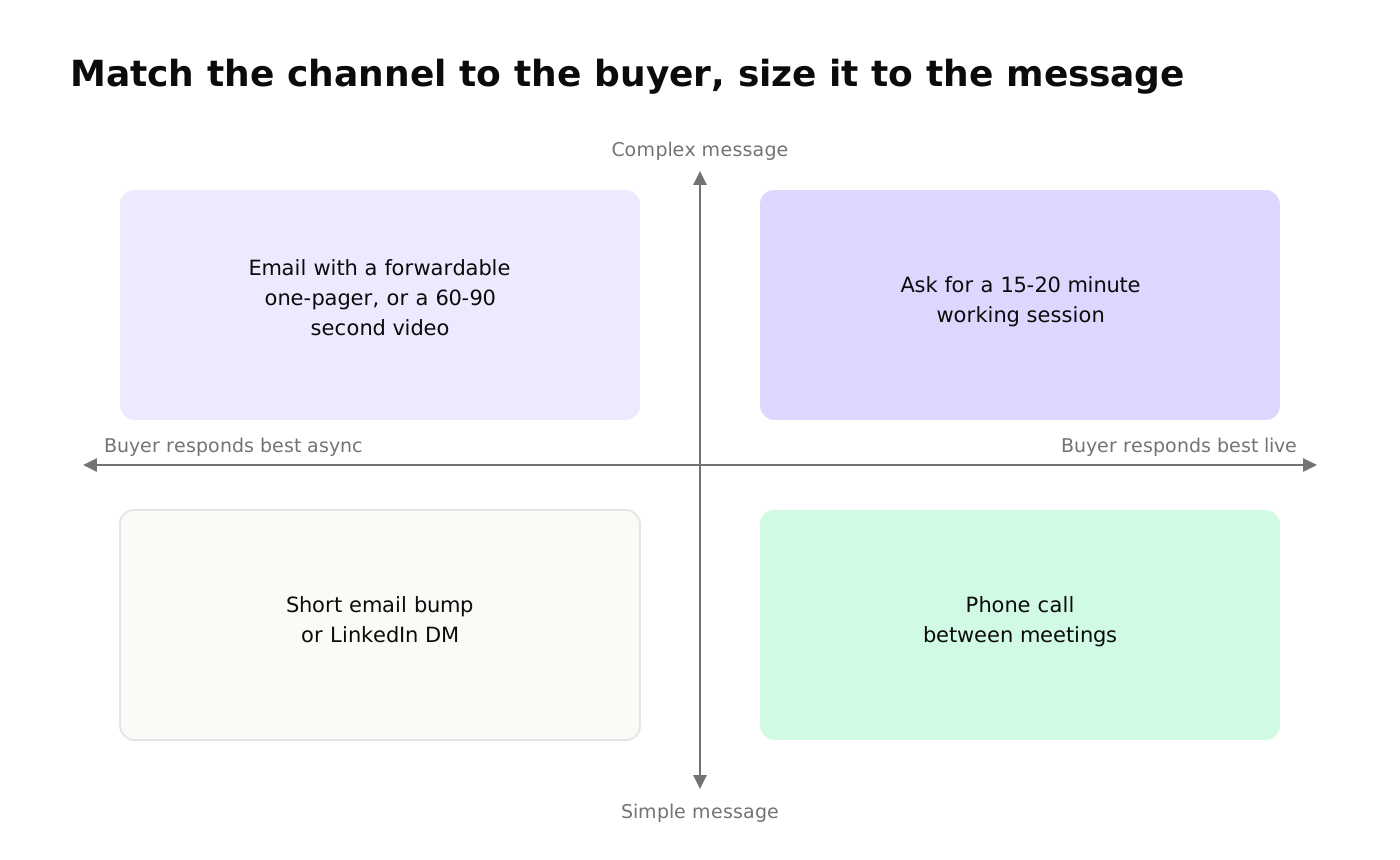
You learn these behaviors earlier than you think. How fast someone answers email, whether they pick up calls, how they show up on LinkedIn: all of it is observable before and during the sales cycle, and the best reps probe communication preferences directly with their discovery call questions. Reading those signals deal by deal is also exactly what we built RevSage.ai to do; it watches buyer behavior and recommends the next-best message and channel for each deal, so a rep with 50 open opportunities gets the read without doing the homework by hand.
Four follow-ups, rewritten
Theory is cheap, so here are four patterns I keep seeing in real pipelines, rewritten.
1. The check-in.
Before: "Hi Sarah, just checking in to see if you had any thoughts on my last email. Let me know!"
After: "Sarah, your CTO posted yesterday about consolidating the data stack. That answers the integration question you raised on our call, and it changes which vendors survive your shortlist. Worth 15 minutes Thursday to walk through it?"
Why it works: new information from her world, one ask, and a reason that has nothing to do with my pipeline.
2. The bump.
Before: "Bumping this to the top of your inbox in case it got buried."
After: "One thing I left out: the rollout plan we discussed assumes your Q3 change freeze holds. If that date moved, the math changes. Did it move?"
Why it works: it stays short, but now it carries a new angle and a question worth answering.
3. The proposal chaser.
Before: "Hi Marcus, thoughts on the proposal?"
After: "Marcus, page 4 is where your CFO will stop (the seat pricing). Most finance teams push back there, so I modeled a flat-rate option and attached it. Which version makes Thursday's review easier for you?"
Why it works: it anticipates the objection, hands him a forwardable artifact, and asks one answerable question.
4. The self-serving invite.
Before: "We're hosting a webinar next week on revenue intelligence and thought you might be interested!"
After: "You mentioned your reps ignore the forecast fields in the CRM. I wrote up the two-field workflow another team used to fix exactly that. Useful whether or not you ever buy from me. Want it?"
Why it works: it trades a favor for attention and proves I listened on the last call.
When to break up, and how
There's a point where persistence becomes noise. For me it arrives after six or seven genuinely valuable touches across at least two channels with zero engagement. At that point, send a breakup email, and send it like you mean it.
The data says buyers respond to a clean ending. In the Gong cold email analysis, breakup emails lifted reply rates by 89% compared with other final bumps (30MPC). Endings force decisions, and loss is clarifying.
A good breakup email does four things:
- Closes the loop honestly, without guilt-tripping.
- Gives an easy out.
- Restates your value in one line.
- Leaves one specific door open.
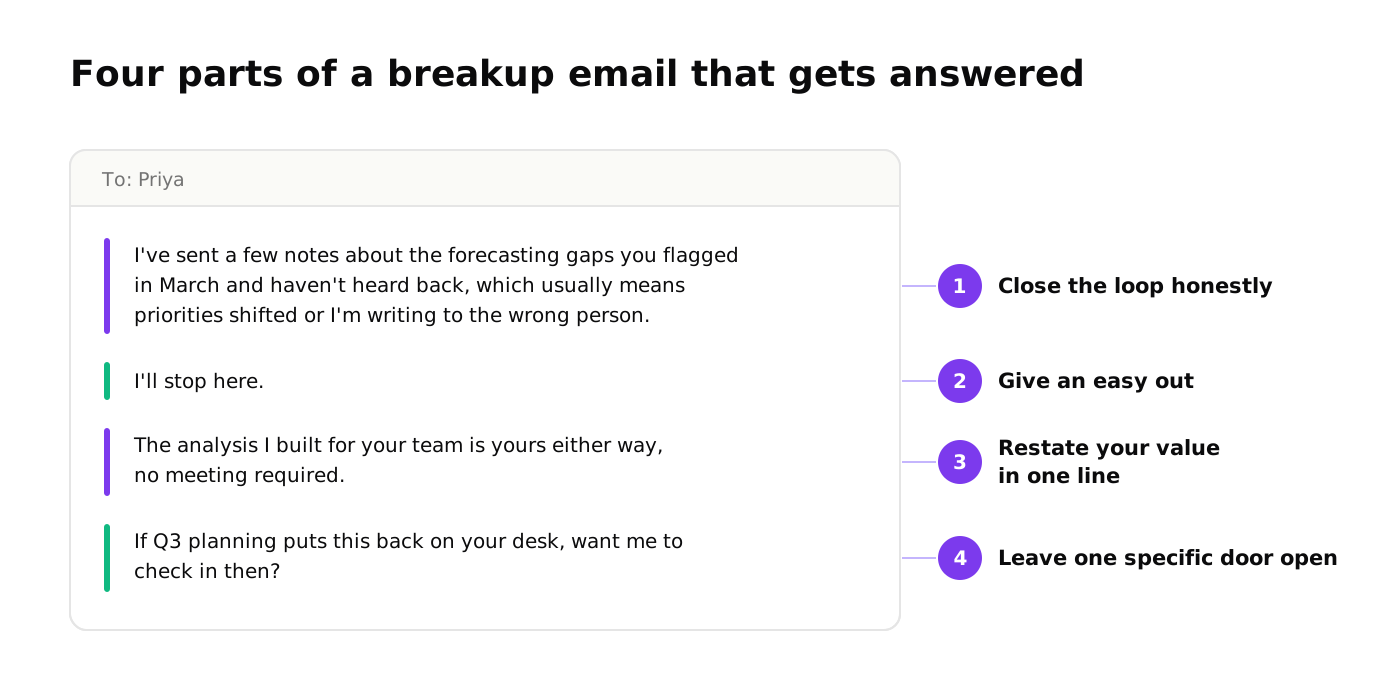
Here's one that works:
Priya, I've sent a few notes about the forecasting gaps you flagged in March and haven't heard back, which usually means priorities shifted or I'm writing to the wrong person. I'll stop here. The analysis I built for your team is yours either way, no meeting required. If Q3 planning puts this back on your desk, want me to check in then?
Never send the passive-aggressive cousin ("Since I haven't heard from you, I assume improving revenue is no longer a priority..."). Buyers remember the guilt trip long after they've forgotten your product.
Every touch should cost you something
The test I give my own team: if writing the follow-up took you less effort than reading it will take the buyer, delete it. Five touches with real work behind them beat fifteen automated nudges, in replies and in how the buyer talks about you internally afterward.
So before each send, run the three gates. New information, one ask, their reason. Pick the channel they already use. And when you run out of things worth saying, say so cleanly and leave. Buyers can tell persistence from noise, and they reward the first one.
Frequently asked questions
- How many follow-up emails should you send before giving up?
- Cold email data from Gong's analysis of more than 85 million emails shows that 70% of replies arrive after the first email, with returns collapsing after six or seven touches. Plan five to seven follow-ups spread across at least two channels over three to four weeks. Then send a clear breakup email and pause the sequence.
- Why do 'just checking in' emails get ignored?
- A check-in adds no new information and makes no specific ask, so it gives the buyer nothing to respond to. Gong's phrase-level research found generic closers like 'Thoughts?' measurably reduce meetings booked. Replace the check-in with one new fact, one clear question, and a reason tied to the buyer's own deadlines.
- Should you follow up by email, phone, or LinkedIn?
- Match the channel to the buyer's observed behavior. Fast email responders get email, buyers who post on LinkedIn weekly get a DM that references their content, and hard-to-reach executives often answer a direct call between meetings. When one channel stays silent for two touches, switch channels instead of repeating yourself.
- What should a breakup email say?
- A good breakup email closes the loop without guilt, restates your value in one line, gives an easy out, and offers one specific way to reopen the conversation later. In Gong's cold email data, breakup emails lifted reply rates by 89% compared with other final follow-ups. Keep it to three or four sentences and mean it when you say you'll stop.
About the author
Rishi Patel, Founder & CEO, RevSage.ai. Rishi has spent 11 years building and scaling B2B SaaS companies, most of it obsessing over why some reps consistently read buyers right and most don't. He founded RevSage to give every rep the buyer intuition of their best teammate.