RevOps & Stack
Sales tech stack consolidation: the math nobody runs
Licenses are the visible cost of a sprawling sales stack. Run the full TCO math with a worked example, consolidation criteria, and a one-week audit plan.
By Rishi Patel, Founder & CEO, RevSage.ai · · 8 min read
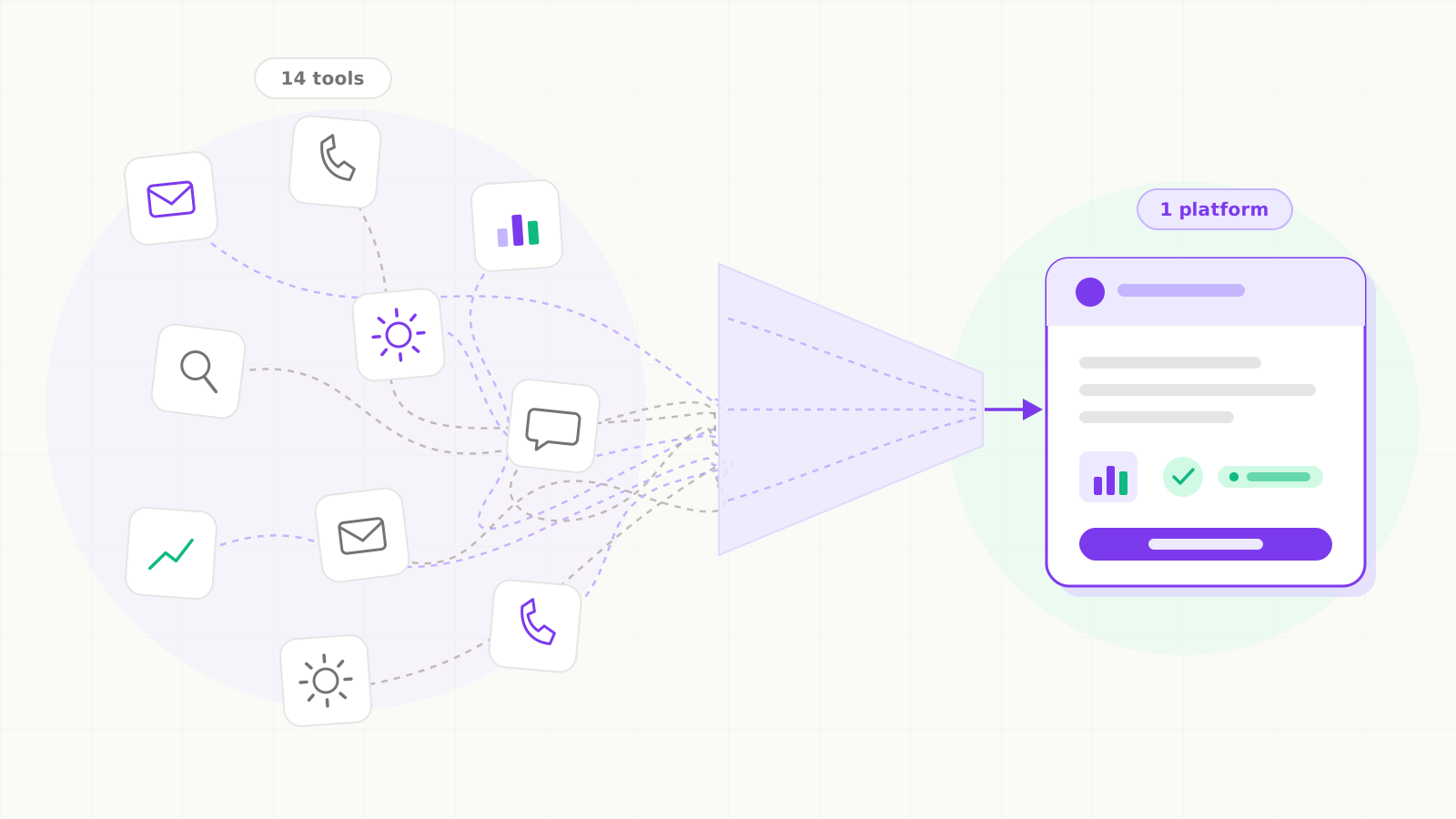
Nobody plans a fourteen-tool stack. It accretes. A VP of Sales buys a dialer in March because connect rates dipped. Enablement adds a coaching platform after QBRs go sideways. Marketing expenses an enrichment tool, and sales quietly starts borrowing the logins. Three years later a RevOps leader inherits the pile and gets asked why the team feels slower than it did at half the headcount.
I've walked through this teardown with dozens of revenue teams since founding RevSage.ai, and after 11 years building B2B SaaS I can tell you which number shocks people. It is never the license total. Licenses are the visible cost. The invoice nobody sees covers admin hours, integration repair, and the slow leak of rep attention across nine browser tabs.
So this piece is the math. How stacks sprawl, what they actually cost, a worked example you can copy into a spreadsheet this afternoon, and how to run a consolidation audit in five working days.
Key takeaways
- Stacks sprawl one reasonable purchase at a time, because every problem gets its own tool and every tool gets its own owner.
- License fees are typically a third of the true cost once you count admin time, integration upkeep, and rep context switching.
- A defensible TCO model needs four inputs per tool: license cost, admin hours, integration hours, and minutes of daily rep switching.
- Consolidate overlapping point tools. Keep your system of record and anything your reps would riot over losing.
- One week of usage data beats a quarter of opinions. Run the audit before your next renewal, never after.
How a stack gets to fourteen tools
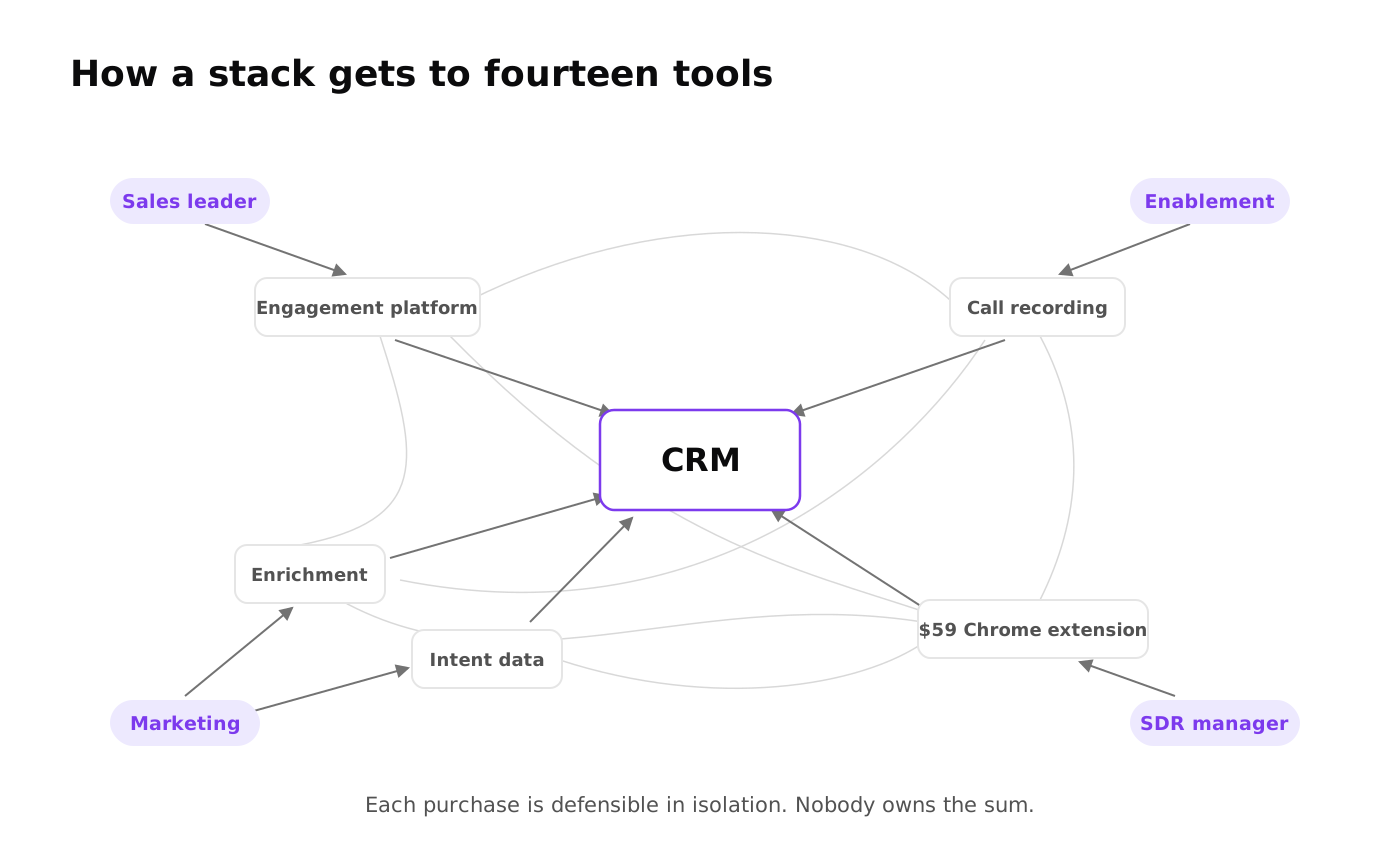
No one ever proposes building a bloated stack. Sprawl happens because tools get bought to solve single problems by people who own single metrics.
The sales leader owns pipeline, so she buys an engagement platform. Enablement owns ramp time, so they buy call recording. Marketing owns sourced pipeline, so they buy enrichment and intent data. An SDR manager expenses a $59 Chrome extension that writes better openers. Each purchase is defensible in isolation. Nobody is accountable for the sum.
My favorite specimen from a real audit: a 30-rep org paying for three separate tools that all claimed to tell reps when a prospect opened an email. Each reported different numbers. Nobody trusted any of them, so the team had quietly gone back to gut feel, which at least carried no renewal date.
The scale of this is well documented. Salesforce's State of Sales research found sales teams use an average of 10 tools to close a deal, and 94% of sales organizations said they planned to consolidate their stack within the year (Salesforce). The intent to consolidate is nearly universal. The follow-through is rare, because almost nobody runs the math that would make the decision obvious.
The licenses are the cheap part
When I ask a CFO what the sales stack costs, they quote the license total. When I ask the RevOps leader who lives in it, they laugh. Both answers are sincere. Only one of those people has rebuilt a broken CRM sync the night before a board meeting.
Here is what sits underneath the line items:
- Admin time. Every tool needs an owner: permission sets, deduping rules, sequence governance, provisioning and deprovisioning. Stack enough tools and administration becomes a stealth quarter-FTE, then a full one.
- Integration maintenance. Each new tool ships with a native integration that works until someone renames a CRM field. Mappings rot quietly, and you find out during pipeline review.
- Data silos. Your engagement platform, your enrichment tool, and your CRM each hold a slightly different version of the same contact. Reps learn to trust none of them.
- Context switching. Reps toggle between tools all day, re-finding context every time. The same Salesforce research found reps spend only 28% of their week actually selling, and tool overload is one of the named culprits.
- Login fatigue. Adoption decays in the dark. The tool that looked indispensable in the demo becomes shelfware by month seven, still billing per seat.
A worked TCO example you can copy
Steal this scenario and replace my numbers with your contracts. The setup: 10 quota-carrying reps, four common stack categories. I'm using published list prices where vendors publish them and reported contract ranges where they don't. Every figure below is an illustrative category comparison, never a quote and never a promised saving.
| Stack category | What it does | Illustrative per-seat list, monthly | Monthly cost, 10 reps |
|---|---|---|---|
| Sales engagement | Sequences, dialer, shared inbox | $130 | $1,300 |
| Conversation intelligence | Recording, coaching, deal alerts | $135 | $1,350 |
| Data and enrichment | Contacts, intent, technographics | $99 | $990 |
| Personality and messaging overlay | Buyer profiles, writing help | $59 | $590 |
| Category total | ~$423 per rep | ~$4,230 |
Some reality anchors for those rows. Salesloft keeps list prices private, but contract data puts its Advanced tier at $125 to $150 per user per month billed annually (Vendr). Gong typically lands between $1,200 and $2,400 per seat per year, and the median buyer pays $54,900 a year (Vendr). Apollo's published tiers run roughly $49 to $149 per user per month depending on plan and billing (Apollo). Several vendors also quote a platform fee on top of seats, which I've left out to keep the model conservative.
Now add the rows that never make the first draft of the spreadsheet:
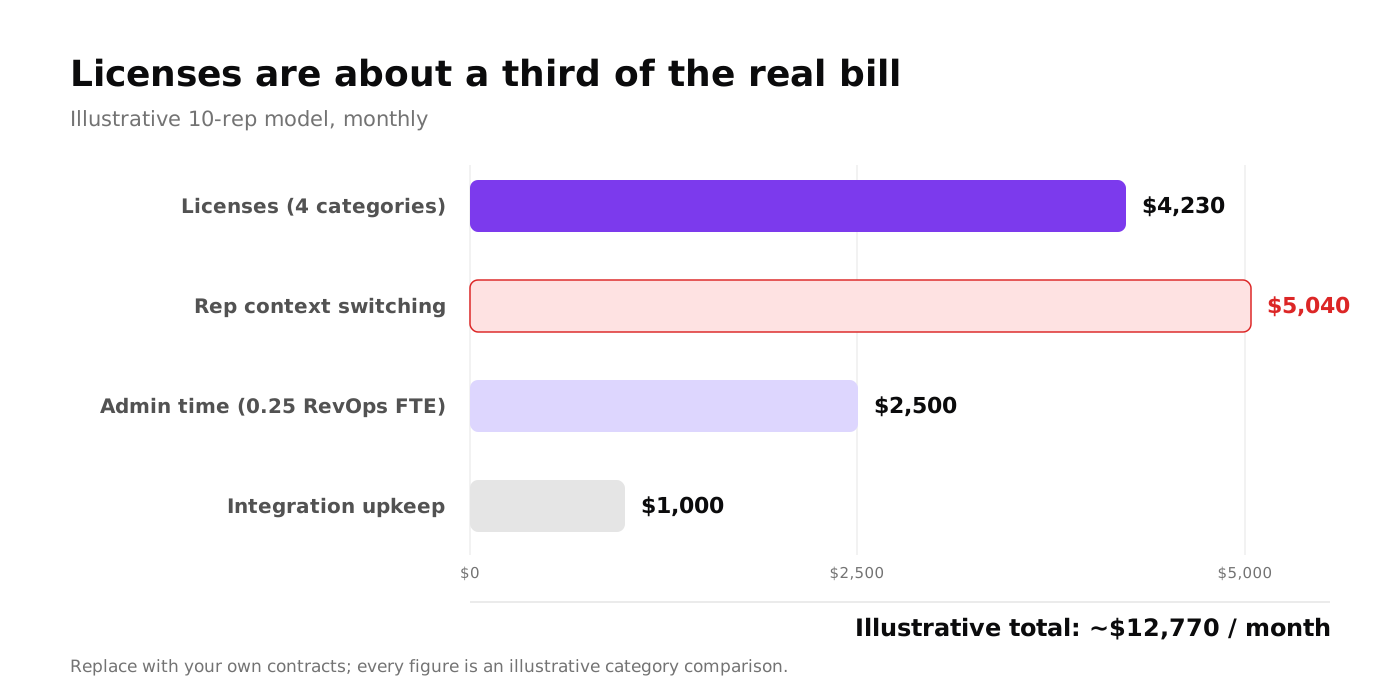
- Admin. A quarter of a $120,000 loaded RevOps salary is $2,500 a month.
- Integration upkeep. Eight hours a month at $125 an hour is $1,000.
- Switching tax. If each rep loses 20 minutes a day to tool-hopping, at a $150,000 loaded cost per rep that is roughly $5,040 a month across ten reps.
Illustrative grand total: about $12,770 a month for a stack with a $4,230 sticker. The licenses are a third of the bill. If you'd rather skip building the sheet, our ROI calculator runs this model with your own inputs.
Category math like this is also why we priced RevSage.ai at $299 a month. The intelligence, profiling, and outreach categories above stack to $2,000 to $5,000 a month at list for a typical team, and I want to be precise about that claim: it is an illustrative category comparison, never a customer-proven savings figure. Your contracts will differ. The gap still deserves a row in your spreadsheet, and the details live on our pricing page.
What to consolidate and what to keep
Consolidation works as a filter, and the filter has four signs that a tool should fold into something broader:
- Overlapping function. Two tools send sequenced emails. One survives.
- Low usage. Under 40% weekly active across licensed seats, with no compliance reason, means either the seat count or the tool is wrong.
- Single-purpose overlay. A point tool whose entire job is feeding one field into another system is a feature priced as a product. Personality overlays earn extra scrutiny here; before renewing one, read what the science actually supports in personality-based selling.
- Output without a decision. A dashboard nobody acts on is decoration with a renewal date.
The keep list matters just as much:
- Your system of record. CRM migrations cost more than they save in year one. Keep it, almost without exception.
- Tools with deep adoption. If reps would riot, the tool is earning its seat.
- Irreplaceable data. Proprietary intent or product usage signals can justify a silo.
- Anything load-bearing for compliance.
Sequence matters as much as selection. Kill the obvious overlaps first, bank the savings, and let that early win fund the political capital you'll need for the harder calls.
Integration beats rip-and-replace as the default move. We built RevSage.ai on that assumption: native outreach channels are included for teams that want one surface, and teams attached to an engagement platform they love can integrate it and keep it.
Remember why you're doing this at all. Tool count is a vanity metric. The prize is rep attention, freed up for the work that actually moves deals, which is reading the buyer. I've written about that side of the equation in buyer psychology in B2B sales.
Run the audit in one week
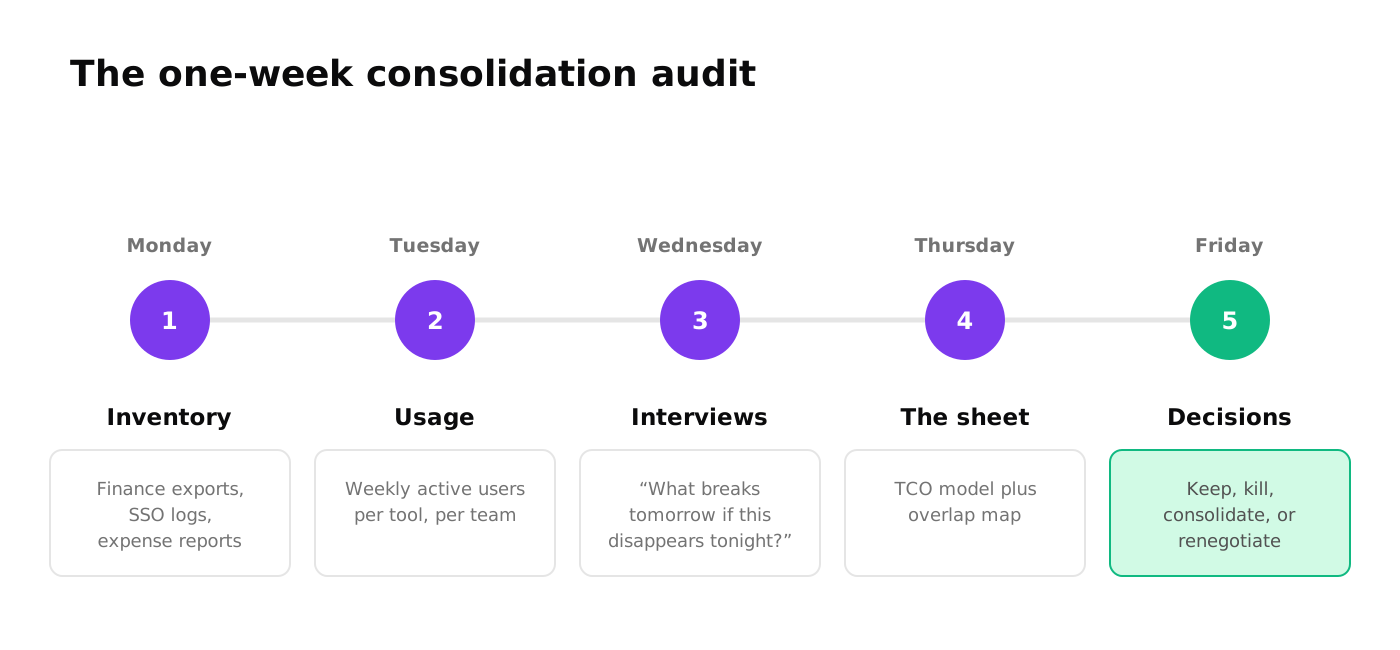
Most consolidation projects die from scope. Treat the audit as a five-day sprint with a decision at the end, and it actually ships.
- Monday, inventory. Pull finance exports, SSO logs, and expense reports. You're hunting for tools nobody remembers buying. Expect to find three.
- Tuesday, usage. Weekly active users per tool, per team. Vendors hand over usage data quickly once they sense a renewal question coming.
- Wednesday, interviews. Fifteen minutes per tool owner, anchored on one question: what breaks tomorrow if this disappears tonight?
- Thursday, the sheet. Build the TCO model from the section above, then map overlaps. Any job two tools both claim goes on a review list.
- Friday, decisions. Keep, kill, consolidate, or renegotiate, with a renewal calendar so every decision has a date attached.
Negotiation leverage you didn't know you had
A finished audit changes your posture at every renewal. You walk in knowing the tool's real usage, its overlap with something you already own, and its true cost with admin and integration time included. Vendors price against your ignorance of exactly those three numbers.
Three practical moves follow. Time consolidation decisions to land a quarter before renewals, when the account team is motivated. Ask the overlapping vendor what they'd charge to absorb the other tool's job, which often surfaces discounts that never appear on a rate card. And write the walkaway option down internally before the call, because a credible alternative is the only thing that reliably moves price, and consolidation hands you one for every category in the stack.
Open the spreadsheet before the next renewal
You don't need a transformation program. You need one week, one sheet, and the willingness to put real numbers on costs everyone prefers to keep vague.
In my experience the first audit pays for itself at the first renegotiated renewal, and the attention you hand back to your reps compounds quietly long after that. Run the math. The stack that survives it will be smaller, and your team will actually use it.
Frequently asked questions
- How much does a typical B2B sales tech stack cost per rep?
- At published list prices, a stack covering engagement, conversation intelligence, enrichment, and messaging overlays commonly lands between $300 and $500 per rep per month before platform fees. Hidden costs like admin time, integration upkeep, and context switching often double that figure. Treat any benchmark as an illustrative starting point and price your own contracts.
- What sales tools should we consolidate first?
- Start with overlapping point tools, anything under roughly 40% weekly active usage, and single-purpose overlays that exist to feed one field into another system. Keep your CRM, tools with deep rep adoption, and data sources you cannot replace. Consolidation should remove redundancy while preserving the capabilities your team depends on.
- How long does a sales stack audit take?
- A focused audit fits in five working days: inventory on Monday, usage data on Tuesday, owner interviews on Wednesday, TCO modeling on Thursday, and keep-kill-consolidate decisions on Friday. Commit to a decision date before you start. Open-ended audits tend to become standing committees.
- Does consolidating sales tools actually save money?
- Usually, though license savings are the smaller share. The bigger gains come from reduced admin load, fewer broken integrations, and reps spending less time switching between tools. Consolidation also creates negotiation leverage at every renewal because you arrive with a credible alternative.
About the author
Rishi Patel, Founder & CEO, RevSage.ai. Rishi has spent 11 years building and scaling B2B SaaS companies, most of it obsessing over why some reps consistently read buyers right and most don't. He founded RevSage to give every rep the buyer intuition of their best teammate.